Food & Recipes
Food connects us to seasons, soil, culture and each other. Yet the journey from ingredient to memorable meal involves far more than following recipes. It encompasses understanding where food comes from, recognising quality, mastering techniques that unlock flavour, exploring sensory dimensions beyond taste alone, and orchestrating experiences that nourish both body and spirit.
This approach to food transforms cooking from routine task into creative practice. Whether you’re navigating organic labels on a budget, learning why timing matters as much as temperature, or discovering how texture can elevate simple ingredients, each element builds upon the others. The goal isn’t perfection or exhaustive knowledge, but rather developing confidence and curiosity that makes every meal more intentional and satisfying.
What follows is an introduction to the core dimensions of thoughtful cooking and eating: sourcing ingredients with awareness, understanding flavour fundamentals, exploring texture creatively, presenting food beautifully, and designing dining experiences that create lasting memories. Each area offers its own rewards, and together they form a holistic framework for deepening your relationship with food.
Sourcing Ingredients With Intention and Awareness
Understanding where your ingredients come from and how they’re produced forms the foundation of thoughtful cooking. Yet navigating the landscape of organic labels, farmers’ markets, and sustainability claims requires discernment rather than blind faith.
Decoding Organic Labels and Making Smart Choices
Organic certification varies significantly between certifying bodies, and not all organic labels guarantee the same standards. Some certifications focus primarily on pesticide restrictions, whilst others encompass soil health, animal welfare, and broader ecosystem impacts. Learning to read beyond the “organic” stamp helps you align purchases with your actual values rather than marketing promises.
Budget constraints are real, and buying everything organic is neither necessary nor always the most impactful choice. Certain crops absorb more pesticide residues than others, making them worthwhile organic purchases, whilst others have naturally protective skins or lower contamination rates. Prioritising strategically allows you to maximise benefit within financial limits.
Building Genuine Farm-to-Table Connections
True farm-to-table eating extends beyond aesthetic Instagram narratives. It involves understanding seasonal limitations, building relationships with actual producers, and accepting that local isn’t automatically superior in every context. A hothouse tomato grown locally in winter may have a larger environmental footprint than one transported from a region where it grows naturally in season.
Creating personal connections with farmers and producers doesn’t require committing to expensive weekly box schemes. Visiting farmers’ markets regularly, asking questions about growing methods, and purchasing even small amounts builds relationships over time. These conversations provide insights no label can convey: soil practices, seed selection, harvest timing, and the complex decisions farmers make balancing ecology and economics.
Recognising Food’s Ecological Context
Every food choice ripples through local ecosystems, affecting soil health, pollinator populations, water quality, and biodiversity. Understanding these connections transforms shopping from transaction into participation in larger ecological systems. Supporting regenerative agriculture, choosing foods grown with minimal inputs, and valuing crop diversity all contribute to ecosystem recovery rather than depletion.
This awareness can also be shared through cooking experiences, particularly with children. Discussing where food comes from, how it grows, and what it needs to thrive creates understanding that outlasts any single meal.
Understanding and Maximising Flavour
Flavour isn’t inherent in ingredients alone—it emerges through the interaction of quality, timing, and technique. The same vegetable can taste mediocre or extraordinary depending on when you buy it, how you store it, and how you apply heat, acid, salt, and fat.
Why Timing and Seasonality Matter
Produce harvested at peak ripeness contains different compounds than the same variety picked early for shipping. Seasonality affects not just availability but fundamental flavour development. Strawberries in June taste categorically different from strawberries in December—not merely “better,” but chemically distinct in sugar development, acid balance, and aromatic compounds.
Learning to recognise when specific ingredients are truly in season, rather than merely available, allows you to cook them at their flavour peak. This often means adjusting your cooking around what’s excellent now rather than forcing ingredients to perform out of season.
Foundational Techniques That Unlock Flavour
Proper technique matters more than premium ingredients for achieving peak flavour. Understanding how heat transforms texture and develops flavour through Maillard reactions, how salt enhances rather than merely seasons, how acid brightens and balances, and how fat carries flavour compounds—these fundamentals apply universally across cuisines and recipes.
Common flavour-killing mistakes often stem from rushing these processes: not allowing proteins to properly brown, adding salt too late in cooking, using acid timidly, or fearing fat altogether. Mastering the basics creates more flavour improvement than buying expensive specialty ingredients.
Training Your Palate
Developing the ability to recognise and achieve peak flavour requires deliberate attention. Tasting ingredients raw before cooking them, noticing how flavours develop through different cooking stages, and comparing similar ingredients side-by-side all sharpen your palate over time.
This isn’t about cultivating elitist discernment, but rather building the sensory vocabulary that helps you make confident adjustments whilst cooking and recognise when something has reached its potential.
Exploring Texture as a Creative Dimension
Whilst flavour often receives primary attention, texture profoundly affects eating satisfaction. Adding contrasting textures to simple dishes creates perceived complexity and interest that single-texture preparations, however well-flavoured, cannot achieve.
Understanding texture as a creative medium opens entirely new approaches to cooking. Fermentation develops tangy complexity whilst softening vegetables. Dehydration concentrates flavour and creates crunch. Emulsification transforms thin liquids into luxurious sauces. Each technique offers distinct textural and flavour possibilities.
Learning to combine textures thoughtfully—pairing creamy with crunchy, soft with chewy, smooth with granular—creates dishes that remain interesting from first bite to last. A soup becomes more satisfying with crispy garnish. A salad gains dimension through multiple textures rather than uniform leaves.
Expanding your texture preferences happens gradually. Pushing yourself toward textures you actively dislike creates negative associations, whilst gently exploring variations on familiar textures broadens your range naturally. Someone who dislikes mushy vegetables might appreciate the same vegetable roasted until crispy, creating a bridge to other preparations.
As you become comfortable with various textures, texture itself can become your primary creative focus rather than flavour alone, leading to entirely different approaches to dish development.
The Visual Language of Plating
How food appears on the plate affects how it tastes. This isn’t superficial vanity—research consistently demonstrates that visual presentation influences flavour perception, satisfaction, and even digestion. Beautiful plating makes food genuinely taste better through psychological and physiological mechanisms.
Core Plating Principles That Work at Home
Professional plating techniques can be adapted for home cooking without stress or excessive time. Fundamental principles like creating height rather than spreading ingredients flat, using odd numbers of elements, leaving empty space on the plate, and considering colour contrast can be applied in under 90 seconds per plate once internalised.
The difference between meaningful garnishes and pointless decoration lies in whether they add flavour, texture, or aromatic dimension. A herb sprig that’s merely decorative feels pretentious, whilst the same herb torn and scattered adds fragrance and completes the dish.
Choosing Plates and Tools Thoughtfully
Plate shape, size, and colour dramatically affect how food appears. White plates provide neutral backgrounds that make colours pop. Darker plates create drama but can make portion sizes difficult to judge. Oversized plates allow negative space; undersized plates make portions appear cramped.
Certain tools genuinely improve plating results: squeeze bottles for sauce control, offset spatulas for smoothing, tweezers for precise placement. Others are purely decorative novelties. Investing in a few versatile tools supports better results without cluttering your kitchen.
Developing Your Personal Plating Aesthetic
Rather than imitating restaurant trends, developing a plating style that feels authentic to you creates more satisfying results. Your aesthetic might be rustic and abundant, minimal and precise, colourful and playful, or elegant and restrained. What matters is consistency with your broader cooking philosophy and comfort level.
Knowing when to invest time in beautiful plating versus when casual presentation is more appropriate prevents plating from becoming performative obligation. A Tuesday dinner might need only basic attention, whilst a special occasion warrants greater care.
Designing Complete Dining Experiences
Individual dishes form only part of what makes meals memorable. Atmosphere, sequence, pacing, conversation, and intention all contribute to whether a meal becomes a cherished memory or fades within days.
Creating elevated dining experiences at home doesn’t require expensive ingredients or professional skill. Atmosphere—lighting, music, table setting—establishes mood before food arrives. Sequencing courses to build flavour intensity and vary textures maintains interest. Intentional pacing allows conversation to flow rather than rushing through courses.
Orchestrating all sensory elements so they work together rather than competing requires thinking beyond the plate. Strongly scented candles can overpower delicate dishes. Loud music prevents conversation. Overly bright lighting creates canteen atmosphere rather than intimacy.
The goal is creating experiences that feel warm and generous rather than showy or stressful for the cook. This often means preparing components in advance, choosing forgiving recipes for key courses, and accepting that perfection isn’t the point—connection is.
Developing three to five signature dining experiences that reflect your values and bring you joy to host provides templates you can refine over time. One might be an intimate dinner for two, another a casual gathering for eight, another a celebration meal. Each has different requirements for food, atmosphere, and execution.
Whether you’re creating a simple weeknight meal or an elaborate celebration, approaching the experience holistically—considering sourcing, flavour, texture, presentation, and atmosphere together—transforms cooking from mere sustenance into meaningful practice.
Thoughtful cooking isn’t about mastering every technique or sourcing every ingredient perfectly. It’s about developing awareness, curiosity, and intention across the interconnected dimensions of food: where it comes from, how to maximise its potential, and how to present and share it in ways that create satisfaction and meaning.
Each area explored here—ingredient sourcing, flavour development, texture exploration, visual presentation, and experience design—offers depth worth exploring further. You might feel drawn to one dimension more than others, and that’s entirely appropriate. What matters is approaching food with greater consciousness and confidence, allowing each meal to become an opportunity for creativity, connection, and genuine nourishment.
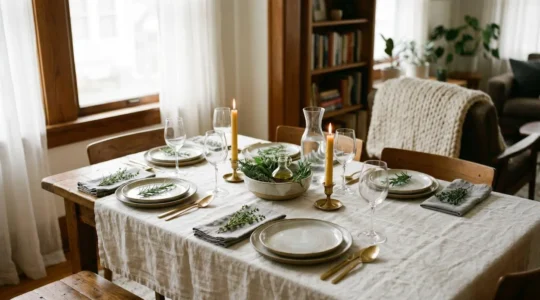
How to Design Dining Experiences at Home That Create Emotional Connection, Beauty, and Lasting Memories
The secret to unforgettable meals isn’t the food, but the intentional design of a multi-sensory and emotional experience. Memory is not a perfect recording; it’s shaped by the most intense (peak) and final (end) moments of an event. Atmosphere, sequence,…
Read more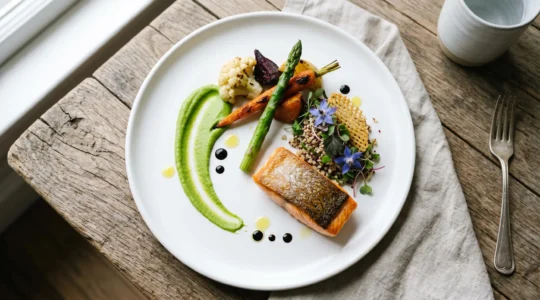
How to Create Well-Plated Dishes That Look Beautiful, Taste Exceptional and Feel Satisfying to Serve?
Many home cooks follow established plating ‘rules’ yet feel their dishes lack a certain soul. This guide reveals that the secret isn’t more rules, but cultivating compositional intent. This is a holistic approach where every choice—from the plate itself to…
Read more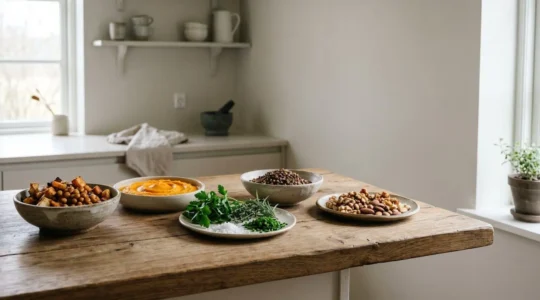
Beyond Flavour: A Guide to Mastering Texture for More Creative and Joyful Cooking
The single biggest leap in your cooking won’t come from a new spice, but from mastering texture as a primary creative tool. Contrasting textures biologically trigger pleasure centres in the brain, making simple food taste more complex. Techniques like fermentation…
Read more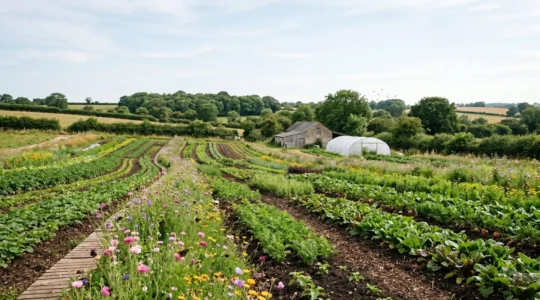
How to Deepen Your Relationship With Local Ecosystems Through Food Choices and Awareness?
The most impactful food choice isn’t just “local” or “organic,” but one based on deep ecological literacy and an understanding of the real trade-offs involved. “Local” can sometimes have a higher environmental cost than imported goods, especially when it relies…
Read more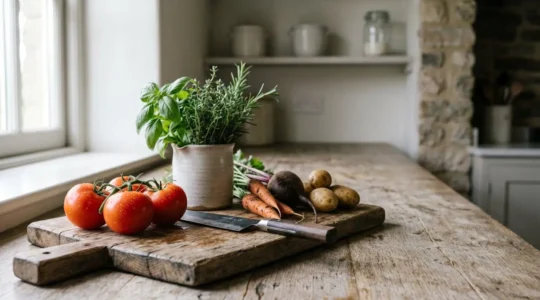
Unlocking Peak Flavour: The Science of Cooking Ingredients with Perfect Timing and Technique
Contrary to popular belief, exceptional flavour isn’t found in expensive ingredients, but is engineered through the mastery of technique and timing. The flavour potential of any ingredient is dictated more by its seasonality and the cooking method applied than its…
Read more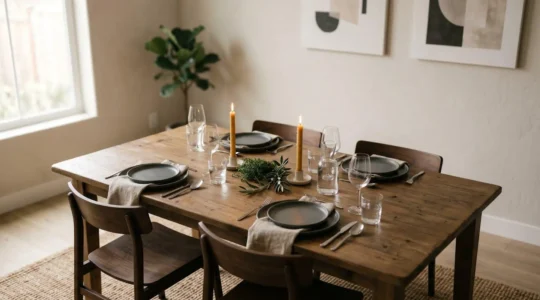
Design Gastronomic Experiences at Home: Create Lasting Memories and Deep Satisfaction
Contrary to popular belief, a memorable meal has little to do with expensive ingredients or culinary perfection. It’s about intentional design. The atmosphere, sequence of events, and emotional connection you build are far more powerful than the food on the…
Read more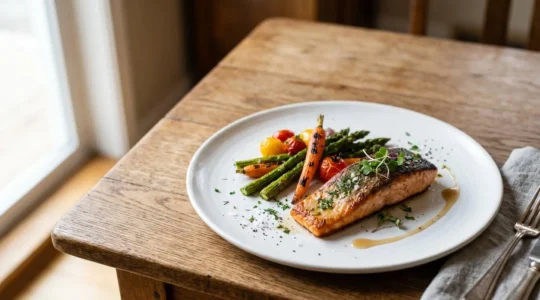
Mastering Artistic Plating at Home: Elevate Flavour and Joy Without the Stress
Contrary to the belief that beautiful plating requires hours and expensive tools, the secret lies in quick, joyful techniques that actively enhance how we perceive flavour. This guide moves beyond complex rules, showing you how to use simple principles of…
Read more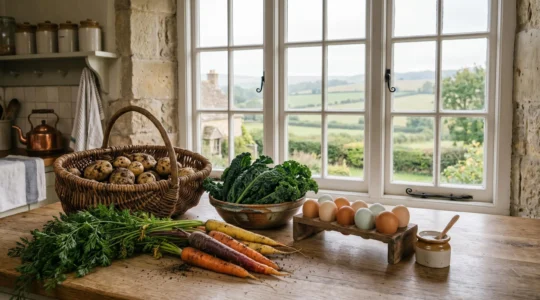
How to Create a Realistic Farm-to-Table System That Fits UK Life Without Becoming Extreme or Expensive?
The key to a successful farm-to-table lifestyle in the UK isn’t perfection, but a practical, hybrid system that works with your real life. Instead of aiming for 100% local, strategically source high-impact items like seasonal fruit, asparagus, and pasture-raised meat…
Read more
How to Source Authentic Organic Ingredients Without Falling for Greenwashing
The key to sourcing authentic organic food isn’t finding the right logo, but learning to assess the producer’s transparency and methods. True quality is revealed by ingredient specificity and the ‘flaw of authenticity’ (e.g., bread that stales quickly), not a…
Read more