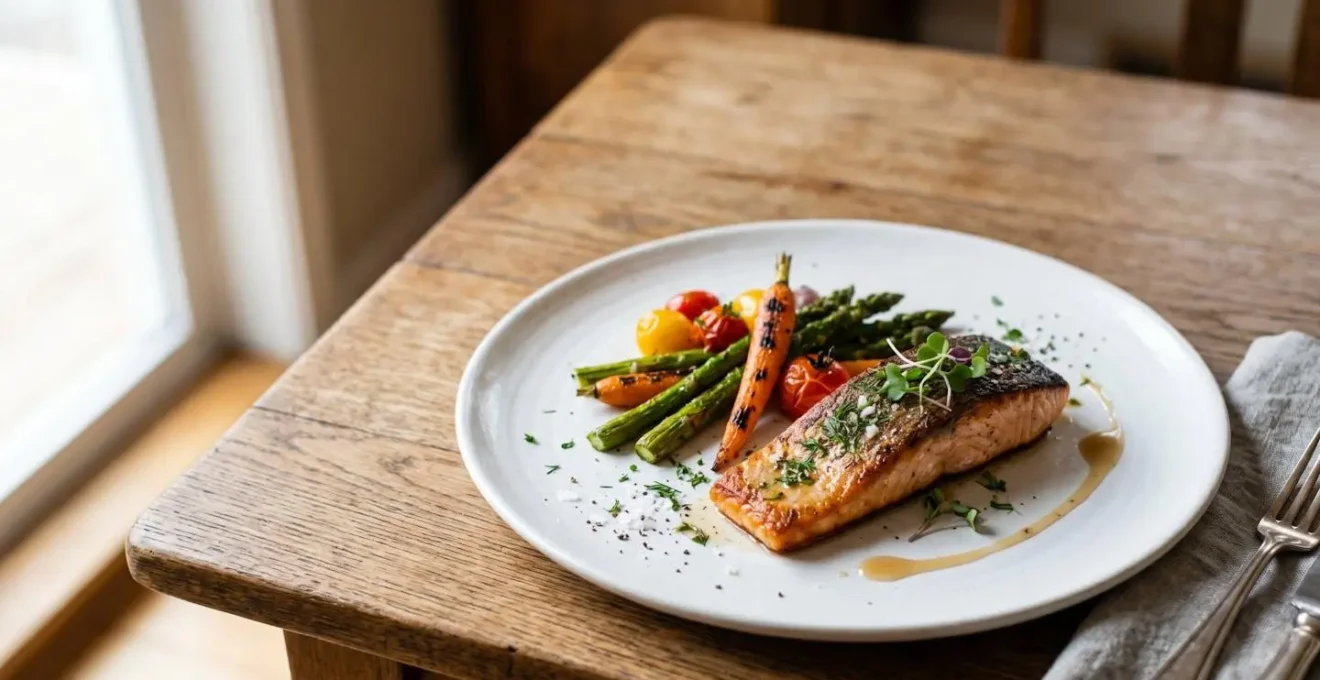
Contrary to the belief that beautiful plating requires hours and expensive tools, the secret lies in quick, joyful techniques that actively enhance how we perceive flavour. This guide moves beyond complex rules, showing you how to use simple principles of sensory guidance in under 90 seconds per plate to make your home-cooked meals not only look stunning but genuinely taste more delicious.
You’ve spent an hour crafting a delicious meal. The aromas are intoxicating, the flavours are perfectly balanced, but when you serve it, the plate looks… a little flat. There’s a disconnect between how wonderful it tastes and how it appears. For many home cooks, the world of food presentation feels intimidating, dominated by images from fine-dining restaurants and complex rules about “the rule of thirds” or “creating towering height” that seem impractical for a Tuesday night dinner.
The common advice often pushes us towards accumulating single-use gadgets or spending so much time on arrangement that the food gets cold. This pressure turns a creative act into a stressful chore. But what if the goal wasn’t to replicate a restaurant’s museum piece, but to embrace a more joyful, practical philosophy? What if the true purpose of plating wasn’t just decoration, but a powerful tool to make your food taste even better?
This is the core of mindful plating: using simple, elegant techniques to guide the senses and amplify pleasure. It’s about transforming the dining experience through thoughtful presentation that takes seconds, not minutes. This guide will walk you through the science of why beautiful food tastes better, introduce five core principles you can apply instantly, and help you distinguish essential tools from decorative clutter. We’ll explore how to balance visual elements so nothing feels accidental, and ultimately, how to create dishes that are a deep satisfaction to both prepare and serve.
This article provides a comprehensive roadmap to mastering the art of presentation at home. Below, you will find a summary that breaks down the key stages, from understanding the psychology of taste to applying practical, stress-free techniques.
Summary: How to Master Artistic Plating at Home That Enhances Flavour Perception and Dining Pleasure Without Stress?
- Why Beautifully Plated Food Actually Tastes Better: The Science and Psychology?
- How to Apply 5 Core Plating Principles That Take Under 90 Seconds Per Plate?
- Which Crockery and Tools Actually Improve Plating Results at Home Versus Being Purely Decorative?
- The Trap of Creating Plates That Look Stunning but Taste Worse Than Simple Presentation
- When to Invest Time in Beautiful Plating vs When Casual Presentation Is More Suitable?
- How to Balance All Visual Elements on a Plate So Nothing Feels Accidental?
- Why Hierarchy, Contrast and Alignment Transform Amateur Designs into Professional-Looking Work?
- How to Create Well-Plated Dishes That Look Beautiful, Taste Exceptional and Feel Satisfying to Serve?
Why Beautifully Plated Food Actually Tastes Better: The Science and Psychology?
The old adage “we eat with our eyes first” is not just a poetic expression; it’s a scientifically-backed neurological fact. Before a single bite reaches our tongue, our brain has already formed a powerful set of expectations based on visual cues. This process, known as sensory expectation, directly influences our perception of flavour, satisfaction, and even the value we place on a meal. When we see a beautifully composed plate, our brain anticipates a high-quality, delicious, and carefully prepared dish. This anticipation triggers a physiological response, including the production of saliva, which contains enzymes that begin the digestive process and enhance our ability to taste.
A thoughtfully arranged plate does more than just look pretty; it communicates care and intention. It signals that the food is not just fuel but an experience to be savoured. This psychological priming makes us more mindful diners, paying closer attention to the textures, aromas, and flavours of the dish. Studies in gastrophysics have repeatedly shown that the same food, when presented in an artistic and organized manner, is rated as tasting better than when served sloppily. The shape and colour of the plate, the arrangement of the components, and the harmony of the visual elements all contribute to a multi-sensory story that begins long before the first mouthful.
Ultimately, beautiful plating isn’t about deception; it’s about alignment. It aligns the visual promise with the culinary reality, creating a more cohesive and intensely pleasurable dining experience. By investing a small amount of effort into presentation, you are not just decorating; you are actively amplifying the perceived flavour and enjoyment of the food you worked so hard to create. It’s a simple, powerful way to honour your own cooking and elevate a meal from routine to remarkable.
This understanding transforms plating from a superficial task into a meaningful part of the cooking process itself.
How to Apply 5 Core Plating Principles That Take Under 90 Seconds Per Plate?
Adopting an artistic approach to plating doesn’t mean spending thirty minutes on each dish. It’s about mastering a few high-impact techniques that become second nature. The goal is the “90-second plate”: a joyful, efficient process that yields beautiful results. Here are five core principles to integrate into your routine:
- Use the Clock as a Guide: Imagine your plate as a clock face. For a classic, balanced look, place your carbohydrate (like rice or potato) at 11 o’clock, vegetables at 2 o’clock, and the main protein at 6 o’clock. This simple framework creates immediate structure and prevents a chaotic arrangement.
- Create a Focal Point: A plate without a focal point can look busy and accidental. Decide which element is the star of the dish—usually the protein—and build around it. Stacking elements vertically (creating height) is a simple way to draw the eye, but even just leaning components against your focal point creates a more dynamic and intentional look.
- Embrace Negative Space: The most common mistake in home plating is overcrowding the plate. Don’t fill every inch of ceramic. The empty space, or “negative space,” is just as important as the food. It acts as a frame, making the dish look more elegant, refined, and less overwhelming. Choose a plate that is large enough to allow for this breathing room.
- Guide the Senses with Sauce: A sauce isn’t just for flavour; it’s a directional tool. Instead of pouring it over everything, use it to create movement and guide the diner’s eye (and fork). An elegant “swoosh” or a series of well-placed drops can connect the elements on the plate and add a professional touch.
- Garnish with Purpose: Move away from the sad, obligatory parsley sprig. Every element on the plate should be edible and complementary. A good garnish adds a “flavour bite”—a contrasting texture, a pop of fresh flavour, or a complementary aroma. Think toasted nuts, fresh herbs that are in the dish, or a zest of citrus.
One of the most effective and simple techniques is the sauce swoosh. It provides direction, elegance, and a professional finish, demonstrating the principle of using every element to guide the dining experience.
As you can see, the deliberate movement creates a visual pathway. This isn’t just decoration; it’s a form of sensory guidance that makes the entire composition feel more cohesive and intentional. Mastering this single skill can instantly elevate your presentation.
With a little practice, these steps become an effortless and joyful part of serving a meal you’re proud of.
Which Crockery and Tools Actually Improve Plating Results at Home Versus Being Purely Decorative?
The internet is flooded with recommendations for specialized plating tools, from complex mold sets to a dozen different types of tweezers. This can be overwhelming and lead to the belief that you need an arsenal of expensive gadgets. The truth is, for impactful home plating, you should focus on versatile “workhorse” tools rather than single-task “show ponies.” Many of the most effective tools are likely already in your kitchen drawers.
Essential vs. Single-Task Plating Tools Analysis
Professional chefs consistently identify multi-purpose workhorse tools as essential for home plating: offset spatulas (great for spreading and lifting), straight tweezers (for precise placement of proteins and larger components), and squeeze bottles (for controlled sauce application). An analysis shows that single-task “show pony” tools like specialized tweezer sets and complex molds often add more stress and cost than they do proportional improvement for the average home cook, cluttering drawers and complicating a joyful process.
Regarding crockery, the principle is simple: let the food be the star. While ornate, patterned plates can be beautiful on their own, they often compete with the food. For most dishes, a set of simple, high-quality plates in a neutral colour (white, off-white, charcoal) provides the perfect canvas. A slightly larger plate with a wide rim instantly makes a dish look more elegant by providing ample negative space. Don’t underestimate the power of shallow bowls, which are incredibly versatile for everything from pastas and salads to stews, naturally cradling the food and creating a sense of abundance.
To clarify the distinction between high-value and low-value tools, a comparative analysis shows where to invest your attention and budget for the best return on plating improvement.
| Tool Category | Workhorse (High ROI) | Show Pony (Low Priority) |
|---|---|---|
| Sauce Application | Metal spoon from cutlery drawer, basic squeeze bottle | Specialty saucier spoons with complex spouts |
| Precision Placement | Offset spatula, standard kitchen tweezers | Multiple specialized tweezer sets (angled, superfine, offset) |
| Height & Structure | Simple metal ring mold, repurposed kitchen items | Complex architectural molds, specialty stacking tools |
| Garnish Distribution | Tea strainer for powders, fork for dragging | Dedicated garnishing kits with single-use tools |
Ultimately, the best tools are the ones that feel comfortable in your hand and help you achieve your vision without adding stress. Focus on mastering a few versatile items before expanding your collection.
The Trap of Creating Plates That Look Stunning but Taste Worse Than Simple Presentation
In the pursuit of a visually stunning plate, it’s surprisingly easy to fall into a critical trap: creating food that looks better than it tastes. This happens when the focus on aesthetics overrides the fundamental principles of good cooking and enjoyable eating. The most common pitfall is temperature. An elaborate, multi-step plating process can mean that by the time the dish is served, the hot components are lukewarm and the cold elements have warmed up. A beautiful but cold steak is a culinary tragedy. This is where the “90-second plate” philosophy is essential; it prioritizes speed and efficiency to preserve the integrity of the food.
Another common error is deconstruction for the sake of it. Separating components that are meant to be eaten together—like a sauce that is artfully smeared on the opposite side of the plate from the protein it’s meant to accompany—can disrupt the intended flavour harmony. The diner is forced to scrape and combine elements, which can be awkward and messy. A well-plated dish should not only look good but also be intuitive to eat. Every swipe of sauce and placement of an ingredient should facilitate a perfect bite, not hinder it.
Finally, the trap of the inedible or flavourless garnish is a classic sign of style over substance. As the culinary team at WebstaurantStore points out, the days of decorative but pointless additions are over:
Modern garnishes pair thoughtfully with the meal to create flavor bites. In the past, chefs casually threw a piece of kale and an orange slice onto every plate. However, these garnishes added nothing exciting to the dish, and few guests ate them.
– WebstaurantStore Culinary Team, Easy Food Presentation & Plating Techniques Guide
This highlights the importance of the “flavour bite”—a garnish that contributes meaningfully to the dish’s taste and texture. Instead of a random sprig of parsley, consider toasted seeds for crunch, a microgreen with a peppery bite, or a drizzle of flavourful oil. The goal is a plate where beauty and taste are not just in harmony but are actively enhancing one another.
Remember, the ultimate compliment is not “it looked too good to eat,” but “it tasted even better than it looked.”
When to Invest Time in Beautiful Plating vs When Casual Presentation Is More Suitable?
The art of mindful plating is not about turning every single meal into a gallery-worthy masterpiece. That would be exhausting and unsustainable. Instead, it’s about knowing when to apply a delicate touch and when to embrace a more relaxed, rustic approach. The key is to match the presentation style to the occasion, the audience, and your own energy levels. There is a time for the precise, individual plate, and there is a time for generous, family-style abundance.
Invest your plating energy on occasions that call for a little extra magic: a celebratory dinner, a date night at home, or when you’re serving a dish you’re particularly proud of. It’s also a wonderful practice when you’re cooking for yourself and want to turn a simple meal into a moment of self-care. On these occasions, taking a few extra minutes to thoughtfully arrange the plate can elevate the entire experience, making it feel more special and memorable. It’s a gesture of care, both for your guests and for yourself.
Conversely, for many everyday situations—a hectic weeknight dinner with the family, a quick lunch, or a casual backyard barbecue—a more casual presentation is not only appropriate but often preferable. In these contexts, the focus should be on generosity, warmth, and ease. This is where the concept of “curated abundance” shines. Instead of individual plates, consider serving food on a large, beautiful platter. The artistry here lies in arranging the components in an appealing way—grouping vegetables by colour, nestling the protein in the centre, and scattering fresh herbs over the top—while still encouraging a communal, shareable experience.
A beautiful family-style platter feels generous and welcoming, inviting everyone to dig in. It celebrates the food in a different but equally valid way, focusing on community and connection rather than individual precision.
This style of presentation demonstrates that beauty in food is not limited to one aesthetic. It can be found in the artful chaos of a shared meal just as easily as in the clean lines of a minimalist dish.
By learning to choose the right approach for the right moment, you can make food presentation a source of joy rather than a source of pressure.
How to Balance All Visual Elements on a Plate So Nothing Feels Accidental?
A plate that looks professional and intentional is one where every element feels like it belongs. The secret to achieving this sense of visual harmony lies in balance. It’s not about perfect symmetry, but about distributing the visual weight of the components—considering their size, shape, colour, and texture—so that the entire composition feels stable and pleasing to the eye. As culinary experts often note, the plate is a canvas, and the chef is an artist who must consciously orchestrate these elements.
One of the most effective foundational systems for creating balance is the concept of a visual anchor. This is a technique professional chefs use to ground the composition and ensure no element appears to be floating aimlessly. By establishing a clear anchor point, everything else can be arranged in relation to it, creating a cohesive and logical design.
Creating Visual Anchors in Professional Plating
Professional chefs often emphasize the clock analogy for classical plating as a foundational visual anchor system. The main protein is positioned prominently, with vegetables placed strategically, and starches completing the composition. When plating, the key is to always highlight the most important ingredient. As one chef training guide from Unilever Food Solutions explains, nobody wants to order a steak and find the plate crowded with sides while the beef itself is hidden. This anchoring principle ensures nothing feels random or lost on the plate.
Beyond the main components, balance is also achieved through the interplay of colour and texture. Avoid a monochromatic plate by consciously including elements with contrasting or complementary colours. A sprinkle of green herbs, a dash of red paprika, or a side of vibrant purple cabbage can transform a visually dull dish. Similarly, layer different textures. The smoothness of a purée is enhanced when placed next to the crunch of a toasted nut; the tenderness of a piece of fish is more satisfying with a crispy skin. This thoughtful combination of elements is what makes a dish not only look balanced but also feel more exciting and dynamic to eat.
When you learn to see your plate through the lens of balance, proportion, and anchors, you move from simply placing food to composing a small work of art.
Why Hierarchy, Contrast and Alignment Transform Amateur Designs into Professional-Looking Work?
If balance provides the foundation, then the design principles of hierarchy, contrast, and alignment provide the sophisticated finish that separates an amateur plate from a professional one. These concepts, borrowed directly from the world of graphic design and art, are what give a dish its visual “pop” and direct the diner’s experience in a deliberate, elegant way. Understanding them is the key to creating compositions that feel both dynamic and effortlessly correct.
Visual hierarchy is about guiding the eye by making some elements more prominent than others. On a plate, this means deciding what the “hero” is. Is it the perfectly seared scallop? The vibrant green asparagus? Once you’ve chosen your star, you use size, placement, and colour to ensure it draws the most attention. The other elements become the supporting cast, essential to the whole but not competing for the spotlight. This prevents visual chaos and tells a clear story.
Contrast is what creates excitement and prevents a plate from looking flat or boring. This goes far beyond just colour. Think about contrasting shapes (a round scoop of mash next to long, thin green beans), textures (a creamy sauce under a crispy piece of chicken skin), and even temperatures (a warm brownie with a scoop of cold ice cream). Every point of contrast creates a point of interest, making the dish more engaging to both the eye and the palate. Finally, alignment brings a sense of order and intention. This doesn’t mean everything must be in a straight line. It means creating invisible lines—whether radial, parallel, or curved—that connect the elements. Leaning asparagus spears in the same direction or arranging garnishes along a consistent arc creates a subtle but powerful sense of purpose and elegance.
Your 5-Point Plating Design Audit
- Identify the Hero: Before placing anything, point to the single most important component on the plate. Does your final arrangement make it the clear focal point?
- Check Colour Contrast: Look at your plate from a distance. Is it a sea of beige? Identify one opportunity to add a complementary or contrasting colour with a garnish or side.
- Audit Textural Variety: Name three different textures on your plate (e.g., creamy, crunchy, tender). If you can’t, think of one simple addition—like toasted seeds or a crispy herb—to introduce contrast.
- Find the Invisible Lines: Do your components feel randomly scattered? Reposition one or two elements to create a subtle line (a curve, a diagonal) that guides the eye across the plate.
- Assess Negative Space: Is the rim of the plate clean? Is there breathing room around the central composition? If not, consider using a slightly smaller portion or a larger plate next time.
By consciously applying them, you can transform your home cooking into edible art that feels both intentional and beautiful.
Key takeaways
- Plating is not just decoration; visual appeal scientifically enhances the perception of flavour by setting positive expectations.
- Focus on quick, high-impact “90-second” techniques and “workhorse” tools you already own, rather than on complex, time-consuming methods.
- Prioritize taste above all. Ensure plating enhances the eating experience with edible, flavourful garnishes and by preserving the food’s temperature.
How to Create Well-Plated Dishes That Look Beautiful, Taste Exceptional and Feel Satisfying to Serve?
We’ve journeyed through the science, the principles, and the practical tools of beautiful plating. But the final, most crucial ingredient is joy. The goal is not to add another stressful task to your kitchen routine, but to discover a new avenue for creative expression that deepens your connection to the food you make. The path to creating dishes that look, taste, and feel exceptional is paved with practice, not pressure. To that end, one of the most transformative techniques used in professional kitchens is perfectly adaptable to the home cook: the practice plate.
This simple method removes all the pressure of a “live performance” in front of guests. Before you serve, take an empty plate and play. Experiment with different arrangements, test your sauce swoosh, and see how the colours and shapes interact. This is your low-stakes sandbox. It allows you to work out the composition and build muscle memory, so that when it’s time to plate the final dishes, the process is fluid, fast, and confident.
The Practice Plate Method for Stress-Free Plating
Professional culinary training consistently emphasizes the importance of conceptualizing plating before execution. As detailed in training programs from institutions like Ecole Ducasse, the practice plate is a core technique. By creating a trial plate first, home cooks can experiment with arrangement and balance risk-free. This method builds confidence and ensures that the final plates served to guests achieve their intended visual story, whether it’s rustic farm-to-table or modern cuisine with clean lines. With practice, the art of food presentation becomes second nature, helping to create stunning displays that elevate the entire dining experience.
Embracing this mindset of joyful experimentation is the key to unlocking your personal plating style. There is no single “right” way to plate a dish. Let your ingredients, the occasion, and your own aesthetic sense be your guide. Over time, you’ll develop a signature touch, and the act of composing a plate will become as intuitive and satisfying as the act of cooking itself. It’s the final, loving touch that transforms a meal from something you’ve made into something you’ve created.
Start today by choosing one small principle to apply to your next meal. Don’t aim for perfection; aim for pleasure, and watch as your confidence and creativity blossom on the plate.