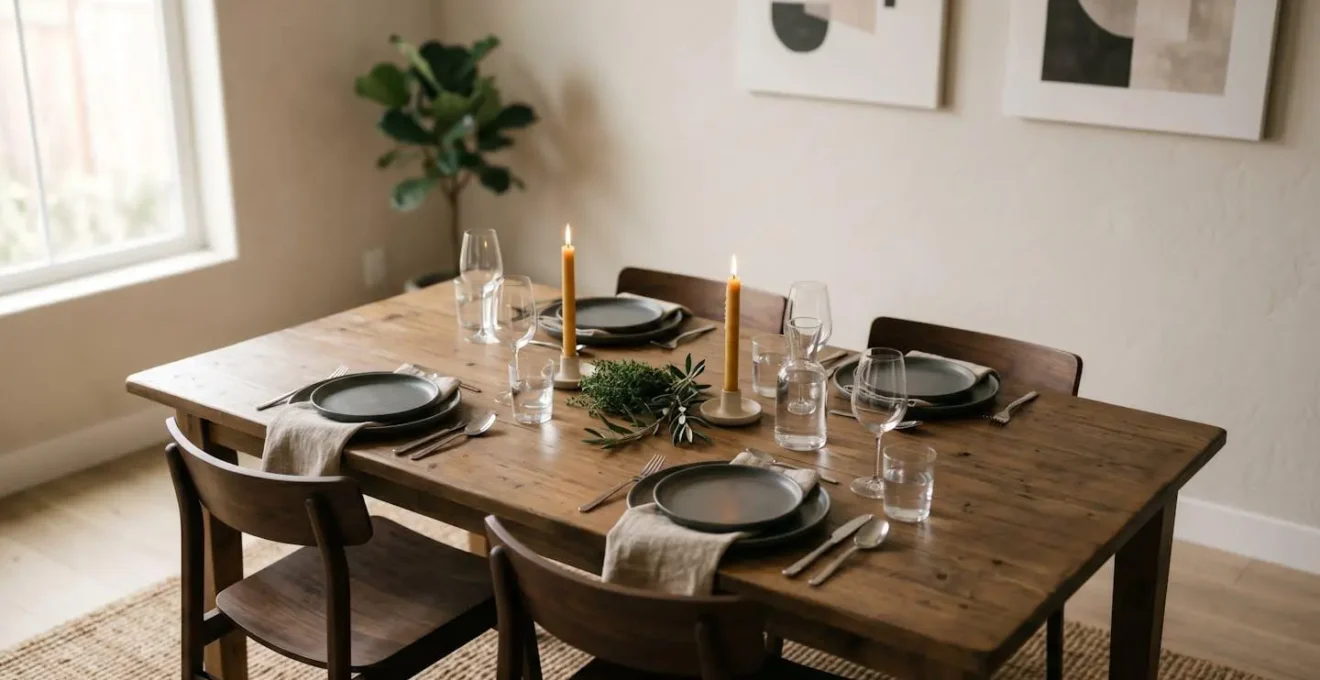
Contrary to popular belief, a memorable meal has little to do with expensive ingredients or culinary perfection. It’s about intentional design.
- The atmosphere, sequence of events, and emotional connection you build are far more powerful than the food on the plate.
- By choreographing sensory elements and focusing on generosity, you can craft profound experiences without exhausting yourself.
Recommendation: Stop thinking like a cook and start thinking like an experience designer. Focus on the emotional arc of the evening, not just the menu.
There’s a quiet longing many of us feel. We invest time, energy, and love into preparing a meal for people we care about, only for it to vanish from memory by the next day. We follow the common advice: buy the best ingredients, find a complex recipe, light a few candles. Yet, the experience often falls flat, feeling more like a performance than a genuine connection. We see that, according to a recent survey, 65% of people want to recreate fine dining at home, but the “how” remains elusive, often leading to stress and disappointment.
The chase for culinary perfection is a distraction. We’ve been taught to focus entirely on what’s on the plate, believing that a perfectly cooked steak or an exotic spice is the key to a remarkable evening. This approach overlooks the fundamental truth of human experience: we remember how we feel far more than what we eat. The true art of hosting doesn’t lie in the kitchen, but in the deliberate and thoughtful curation of the entire environment.
But what if the secret wasn’t in mastering a soufflé, but in mastering the flow of the evening? What if you could become a choreographer of moments, a designer of sensory journeys? This is the shift from cook to domestic experience designer. It’s a perspective that prioritizes intention, atmosphere, and emotional pacing. It’s about understanding that the weight of the cutlery, the tempo of the music, and the story behind a dish are the real ingredients of a lasting memory.
This guide will walk you through the principles of designing, not just cooking, a meal. We will explore how to orchestrate the senses, create warmth without showing off, and understand the psychology that transforms a simple dinner into a cherished memory. Prepare to leave the pressure of perfection behind and embrace the joy of creating truly meaningful connections around your table.
Summary: How to Design Full Dining Experiences at Home That Create Emotional Connection, Beauty and Lasting Memory
- Why Atmosphere, Sequence and Intention Matter More Than Expensive Ingredients?
- How to Create Signature Dining Experiences at Home That Feel Special Without Exhausting the Cook?
- How to Orchestrate All Sensory Elements So They Work Together Rather Than Competing?
- How to Create Elevated Dining Experiences That Feel Warm and Generous Rather Than Showy?
- Intimate Dinner for Two vs Dinner Party for Eight: How Should Your Gastronomic Approach Change?
- Why Some Meals Become Cherished Memories While Others Are Forgotten Within Days?
- Why Most “Cultural” Experiences in the UK Remain Surface-Level Tourism?
- How to Design Full Dining Experiences at Home That Create Emotional Connection, Beauty and Lasting Memory?
Why Atmosphere, Sequence and Intention Matter More Than Expensive Ingredients?
We’ve been conditioned to believe that luxury is synonymous with price. A lavish meal, therefore, must involve truffle oil, premium cuts of meat, and rare wines. But this misses the point entirely. The human brain doesn’t register a meal as a simple list of ingredients; it processes it as a holistic, multi-sensory event. The feeling of a space, the flow from one moment to the next, and the thought behind each detail are what truly elevate an experience from sustenance to celebration.
Consider the science of “gastrophysics,” which studies how our environment shapes our perception of food and drink. Research consistently shows that external cues can dramatically alter taste. For example, the work of gastrophysicist Charles Spence has demonstrated that something as simple as using heavy cutlery enhances diners’ enjoyment and perceived value of the food. The weight in the hand sends a subconscious signal of quality and importance, a signal far more potent than knowing the price of the olive oil.
This is the power of intentional design. When you decide on the texture of the napkins, the softness of the lighting, or the sequence of dishes (perhaps moving from light and crisp to rich and comforting), you are not just setting a table; you are directing an emotional journey. An expensive ingredient served in a chaotic, brightly lit room will always be less memorable than a simple, heartfelt dish presented in a thoughtfully curated atmosphere. The intention behind the experience is the most valuable ingredient you have, turning simple acts into a tapestry of sensory delight.
How to Create Signature Dining Experiences at Home That Feel Special Without Exhausting the Cook?
The image of the frazzled host, emerging from a smoke-filled kitchen only to find the party is already over, is a tragic cliché. The goal of generous hosting is to share in the connection, not to martyr yourself at the stove. The key to creating a special experience without burnout is a single, powerful concept borrowed from professional kitchens: mise en place. This French term, meaning “everything in its place,” is more than just a technique; it’s a philosophy of calm and control.
Instead of frantic, last-minute chopping and measuring while guests are arriving, mise en place involves preparing every single ingredient and component hours, or even a day, in advance. Vegetables are washed and cut, spices are measured into small bowls, sauces are made and stored. This transforms the act of cooking from a chaotic sprint into a graceful, final assembly. Your time during the event is freed up for what truly matters: engaging with your guests, guiding the conversation, and being present in the beautiful atmosphere you’ve created.
This preparation is the hidden architecture of a relaxed, signature experience. The visual below embodies this spirit of serene organization. It isn’t about being a professional chef; it’s about giving yourself the gift of time. By front-loading the work, you ensure the actual event is one of effortless execution, not exhausting labor. Your guests will feel your calm, relaxed energy, which is far more contagious and memorable than any complex dish you could have struggled to prepare.
Ultimately, a “signature” experience isn’t defined by a complicated recipe. It’s defined by a feeling. It could be a simple, perfect pasta dish where the sauce was lovingly prepared the day before, or a build-your-own taco bar where every topping is beautifully presented. The signature is your presence and the palpable sense of ease that comes from thoughtful, intelligent preparation.
How to Orchestrate All Sensory Elements So They Work Together Rather Than Competing?
A dining experience is a symphony, and you are the conductor. Each sensory element—sight, sound, smell, touch, and taste—is an instrument. Played in harmony, they create a breathtaking composition. When they are dissonant or competing, they create noise and confusion. The goal of sensory orchestration is to ensure every element is working in concert to support a single, unified emotional tone.
Start by defining the feeling you want to evoke. Is it “cozy and nostalgic,” “vibrant and celebratory,” or “serene and intimate”? This core intention becomes your guide. For a “cozy” theme, you might choose a playlist of gentle instrumental music, the scent of baking bread or cinnamon, soft-textured linens, and warm, low lighting. For a “vibrant” theme, you’d opt for upbeat music, the fresh scent of citrus, bright colors in your tableware, and crisp, clean lighting. The food itself then becomes the final, harmonious note.
The mistake is to treat these elements as a checklist. Lighting candles, playing music, and choosing nice plates is not enough. You must ask *how* they relate. Does the fast-paced jazz playlist clash with the tranquil, romantic meal you’ve prepared? Does the overpowering floral centerpiece compete with the delicate aroma of the food? This is where the artistry lies. As studies demonstrate, 80% of what we perceive as taste is actually smell, highlighting how critical it is for aromas to be complementary, not conflicting. The scent of your home upon arrival is the first act of the meal.
Think of it as layering. The auditory environment sets the tempo. The olfactory landscape (scent) creates the mood. The tactile world (textures of napkins, weight of glasses) grounds the experience in physicality. The visual presentation (color, composition on the plate and table) tells the story. When all these layers are aligned with your core intention, the taste of the food is amplified, becoming part of a much larger, more resonant experience.
How to Create Elevated Dining Experiences That Feel Warm and Generous Rather Than Showy?
There is a fine line between an experience that feels elevated and one that feels pretentious. The former creates connection; the latter creates distance. The difference lies not in the quality of the ingredients or the complexity of the techniques, but in the host’s intention. A “showy” experience is about demonstrating skill and status. A “warm and generous” experience is about creating a space of comfort, care, and genuine human connection.
The most powerful tool for achieving this is vulnerability. Instead of trying to replicate the flawless, impersonal service of a three-Michelin-star restaurant, lean into the personal. Share the story behind a dish. Perhaps the recipe was passed down from a grandparent, or the main ingredient was discovered on a meaningful trip. This narrative context transforms a simple plate of food into a shared story, inviting guests into your world. As the hosting experts at LiveGreensPDX wisely note:
great hosting has almost nothing to do with cooking. Your guests want connection, not culinary perfection.
– LiveGreensPDX, How to Host a Stress-Free Dinner Party When You Don’t Like Cooking
This focus on connection over perfection is the heart of generosity. It means anticipating your guests’ needs—a glass of water before they ask, an extra cushion for their chair, remembering their dietary preferences. It means that the host is relaxed and present, signaling to everyone that their company is the main event. A perfectly seared scallop served with a side of stress is far less enjoyable than a simple bowl of soup offered with a warm smile and undivided attention.
Case Study: The Power of Storytelling in Private Dining
Leading private chefs are moving away from purely technical displays. Instead, they weave storytelling into their meals, with each dish highlighting a special ingredient’s origin, a forgotten culinary technique, or a personal memory. This approach turns dinner into an engaging narrative. As noted by event experts, the vulnerability of sharing the personal stories behind recipes fosters a genuine connection where a technically flawless but sterile dish might create emotional distance. This demonstrates that thoughtfulness and narrative are the true markers of an elevated, memorable event.
Ultimately, warmth is born from authenticity. Embrace the imperfections of a home-cooked meal. Laugh if something doesn’t turn out exactly as planned. Your grace and ease will put everyone else at ease, creating a generous space where everyone feels seen, cared for, and truly welcome.
Intimate Dinner for Two vs Dinner Party for Eight: How Should Your Gastronomic Approach Change?
The art of experience design is not one-size-fits-all. The choreography for an intimate dinner for two should be fundamentally different from that of a lively dinner party for eight. The goal shifts from fostering deep, focused connection to managing group energy and facilitating broad social interaction. Adapting your approach is crucial for success.
For an intimate dinner for two, the focus is on dialogue and shared experience. The environment should be a cocoon, minimizing distractions to encourage conversation. This is the time for more complex flavors that can be discussed, a shared bottle of a special wine, and perhaps even an activity like cooking a course together. The sensory orchestration should be subtle and romantic: soft, focused lighting, a quiet and emotive playlist, and a table setting that feels close and personal. The energy is directed inward, between two people.
The image below captures this essence perfectly—the world fades away, leaving only the connection between the two individuals. The experience is the conversation, and the food is its beautiful accompaniment.
A dinner party for eight, conversely, is about creating flow and buzz. Your role as host shifts from participant to facilitator. Here, simplicity and logistics are paramount. Choose a menu that can be largely prepared in advance; family-style service on large platters is brilliant for this, as it encourages interaction and creates a relaxed, communal atmosphere. Instead of one central conversation, your goal is to create pockets of connection. A dedicated drink station, for instance, encourages guests to get up and mingle. Remember to check for any special dietary needs from all guests well in advance to plan a menu that feels inclusive and generous to everyone. The energy is directed outward, creating a vibrant, collective hum.
Why Some Meals Become Cherished Memories While Others Are Forgotten Within Days?
Have you ever had a good, but ultimately forgettable, meal at a restaurant? And yet, you can vividly recall a simple picnic from years ago? The difference isn’t the quality of the food, but the way our brains form memories. We don’t remember experiences as a complete, averaged-out recording. Instead, our memory is disproportionately shaped by just two moments: the most intense point (the “peak”) and the very end. This psychological heuristic is known as the Peak-End Rule.
Understanding this rule is the single most powerful tool for designing memorable experiences. It means you don’t have to make every single moment perfect. In fact, it’s more effective to have a generally pleasant experience with one or two spectacular, deliberately designed “peak” moments and a strong, positive ending. As Nobel laureate Daniel Kahneman’s research explains:
people judge an experience largely based on how they felt at its peak and at its end, rather than based on the total sum or average of every moment.
– Daniel Kahneman, Peak-End Rule psychological research
A peak could be a moment of surprise and delight—bringing out a surprise birthday dessert, a theatrical cocktail preparation, or a dish with an incredible, intense flavor that stands out from the rest. The “end” is just as crucial. A stressful farewell or a messy cleanup can sour the memory of an otherwise lovely evening. A thoughtful end might be a beautiful, simple dessert, a small parting gift (like a small bag of homemade cookies), or a warm, personal goodbye at the door. It’s the final feeling you leave them with.
Case Study: Eleven Madison Park’s Mastery of the Peak-End Rule
To become the world’s best restaurant, Eleven Madison Park didn’t just make every dish slightly better; they strategically applied the Peak-End Rule. They understood it was more memorable to serve three good wines followed by one truly exceptional, unforgettable wine than four very good wines. They concentrated resources to create specific, engineered peaks and a flawless end, deliberately sacrificing a little in other areas to make these moments shine. This created a powerful, lasting positive memory in diners, proving that strategic highs are more effective than uniform consistency.
Stop trying to maintain a high level of intensity all night. It’s exhausting for you and overwhelming for your guests. Instead, focus your energy on creating one dazzling peak and a graceful, warm conclusion. That is the secret to lodging a meal in someone’s cherished memories.
Why Most “Cultural” Experiences in the UK Remain Surface-Level Tourism?
When we attempt to create a “themed” dinner party—be it “An Evening in Tuscany” or a “Moroccan Night”—we often risk falling into the same trap as surface-level tourism. We grab the most obvious signifiers: a checkered tablecloth for Italy, a tagine for Morocco, a playlist of mariachi music for Mexico. While well-intentioned, this approach often presents a caricature of a culture, not an authentic experience. It’s the equivalent of a tourist visiting London, taking a picture of a red bus, and believing they’ve understood the city.
This surface-level approach lacks depth and, most importantly, personal connection. It’s a collection of props, not a cohesive, heartfelt story. A truly immersive cultural experience, whether travelling abroad or hosting at home, goes deeper. It seeks to understand the *why* behind the *what*. Why are certain ingredients used in a region? What do mealtime rituals signify? What stories do local families share around their tables? It’s about finding a genuine, personal entry point into that culture.
Instead of a generic “Italian night,” focus on a specific, personal story. Perhaps it’s an experience built around the memory of a single, perfect lemon tasted on the Amalfi coast, where the entire meal, the scent of the room, and the music all work to evoke that one specific, authentic moment. This is where storytelling enriches the intersection of taste and ambience, transforming a theme from a costume party into a meaningful journey. It’s the difference between observing a culture from the outside and inviting your guests to step inside it with you.
The lesson from lackluster tourism is clear: authenticity and personal narrative trump generic representation every time. Don’t just show your guests a postcard of another culture. Share a piece of your own journey with it, no matter how small. That specificity is what creates a deep, resonant experience that feels true, rather than a collection of clichés.
Key Takeaways
- Memorable dining is an act of design, not just cooking. Focus on choreographing the experience.
- The atmosphere, sequence of events, and emotional connection you build are more impactful than expensive ingredients.
- Use the Peak-End Rule: concentrate your energy on creating one standout “peak” moment and a strong, positive ending.
How to Design Full Dining Experiences at Home That Create Emotional Connection, Beauty and Lasting Memory?
We’ve explored the why—the psychology of memory, the power of sensory orchestration, and the importance of intention. Now, we arrive at the how: a practical framework for designing a complete dining experience from start to finish. This is where you transition fully from cook to choreographer. By thinking of the evening as a five-act play, you can structure the emotional and sensory arc, ensuring a cohesive journey that builds connection and leaves a lasting, beautiful impression.
This blueprint isn’t about rigid rules; it’s a guide to help you think through every stage of the guest experience, long before they knock on your door and long after they’ve left. It ensures that every detail, from the invitation to the follow-up, is part of a single, intentional design. It’s the ultimate tool for weaving together atmosphere, emotion, and flavor into a memorable whole.
By adopting this structured approach, you replace pre-dinner anxiety with creative purpose. Each act has a specific role in building the overall narrative, allowing you to focus your energy where it matters most at each stage. This is how you build an experience that feels both effortlessly elegant and deeply personal, creating the emotional resonance that is the hallmark of true hospitality.
Your Action Plan: The Five-Act Experience Design Blueprint
- Act 1 – The Overture: Design the invitation to build anticipation. This can be a simple text or email, but the language should set the tone. Mention a key flavor or the mood you’re aiming for (“Looking forward to a cozy evening of comfort food with you”).
- Act 2 – The Arrival: Create a sensory transition from the outside world. This is your opening scene. Greet guests with a welcoming aroma (not from frantic cooking), a specific playlist already playing, and a visual presentation that immediately signals the mood.
- Act 3 – The Journey: Choreograph the sequence of courses with conversation and emotional pacing. Think about the flow of flavors, textures, and even the topics of conversation you might want to gently introduce. This is the heart of the narrative.
- Act 4 – The Climax: Engineer the designed ‘peak’ moment. This is your showstopper, applying the Peak-End Rule. It could be a dish with an intense, surprising flavor, a moment of theatricality (like a flamed dessert), or a heartfelt toast.
- Act 5 – The Epilogue: Craft a memorable ending and a thoughtful follow-up. The end is what they’ll remember. Ensure a warm, un-rushed departure. A simple follow-up text the next day, perhaps sharing the playlist or a key recipe, beautifully extends the memory of the evening.
Now, you have the philosophy and the framework. Start small. Pick one or two elements from the blueprint for your next gathering and execute them with intention. The journey to becoming a masterful experience designer is not about a single, perfect performance, but a series of beautiful, heartfelt moments, thoughtfully crafted, one meal at a time.