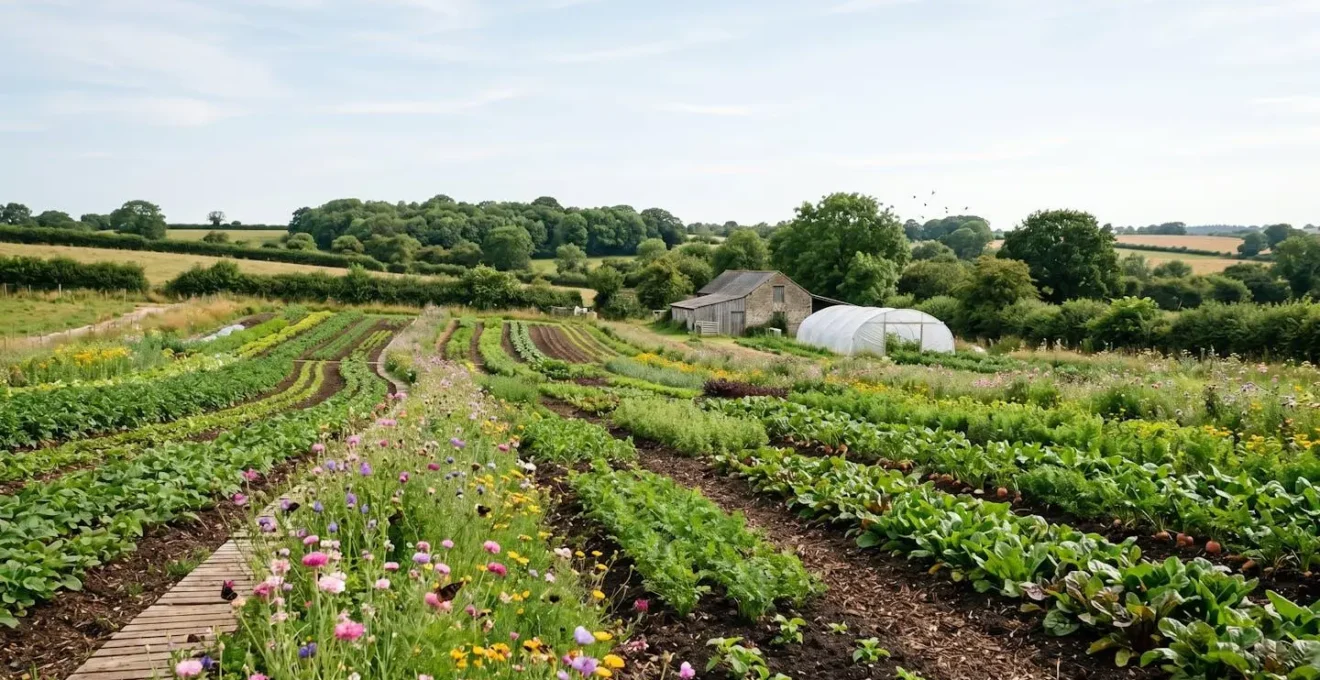
The most impactful food choice isn’t just “local” or “organic,” but one based on deep ecological literacy and an understanding of the real trade-offs involved.
- “Local” can sometimes have a higher environmental cost than imported goods, especially when it relies on high-energy, out-of-season production in heated greenhouses.
- “Organic” certifications in the UK vary widely; higher-standard labels like Soil Association or Demeter offer far greater and more verifiable biodiversity and soil health benefits.
Recommendation: Shift from being a passive consumer to an “Ecosystem Detective,” using the tools in this guide to investigate the true ecological story behind your food.
As an environmentally conscious person, you already know your food choices matter. You diligently check for “local” sourcing, favour “organic” labels, and think about food miles. Yet, a nagging feeling of confusion often remains. Are you truly making a difference, or just navigating a maze of well-intentioned but often misleading marketing? The common advice to simply “buy local” or “eat seasonally” provides a starting point, but it barely scratches the surface of our complex food system’s impact on the delicate ecosystems right outside our doors.
We’re told these simple rules are the answer, but they often fail to account for the intricate web of life that our food production supports—or decimates. This approach overlooks critical questions about soil health, water usage, genetic diversity, and the real, on-the-ground farming practices that separate a truly regenerative farm from a conventional one with a good marketing team. What if the key to healing our local environments wasn’t found in a simple label, but in a new way of thinking?
This guide proposes a shift in perspective: from a passive consumer to an active and informed Ecosystem Detective. It’s about developing your ecological literacy to look beyond the surface and understand the real trade-offs and hidden stories behind your food. We will move past the platitudes to explore which UK food choices genuinely support biodiversity, how to critically assess claims of “local” and “organic,” and how to pass on this vital awareness to the next generation. It’s time to empower your choices with knowledge that fosters real, tangible, and hopeful change in your local landscape.
To guide you on this journey, this article breaks down the essential steps and knowledge you need. Explore the sections below to build your skills as an Ecosystem Detective and transform your weekly shop into a powerful act of ecological restoration.
Summary: A Guide to Food Choices That Truly Heal UK Ecosystems
- How Your Weekly Food Choices Directly Impact Your Local Biodiversity and Soil Health?
- Which UK Food Choices and Growing Methods Actually Support Rather Than Deplete Local Ecosystems?
- How to Support Local Ecosystem Recovery Through Foraging, Growing or Buying Practices?
- The Danger of Idealising “Local” Without Understanding the Real Ecological Trade-offs
- How to Pass on Ecosystem Awareness to Children Through Cooking and Food Experiences?
- Why 70% of “Eco-Tours” in the UK Deliver Minimal or Negative Environmental Impact?
- Why “Organic” Labels in UK Supermarkets Don’t All Mean the Same Thing?
- How to Choose and Practise Eco-Tourism That Delivers Real Environmental and Community Benefit in the UK and Europe?
How Your Weekly Food Choices Directly Impact Your Local Biodiversity and Soil Health?
Every time you decide what to eat, you are casting a vote for a particular kind of agriculture and, by extension, a particular kind of world. This choice ripples directly into the health of the soil and the richness of wildlife in your own country. The modern, industrial food system, built on monocultures and chemical inputs, has simplified our landscapes to a devastating degree. According to research from the Royal Botanic Gardens, Kew, a staggering 97% of UK wildflower meadows have been lost since the 1930s. This isn’t an abstract environmental problem; it’s a direct consequence of agricultural practices that prioritise yield over ecological complexity, wiping out the habitats of essential pollinators like bees and butterflies.
The impact extends beyond what we see above ground. Your food choices are a primary driver of the health of our soils. Farming methods that rely on intensive tilling and synthetic fertilisers deplete soil organic matter, destroying the complex underground ecosystem of fungi, bacteria, and invertebrates that are the foundation of a healthy landscape. When soil becomes lifeless, its ability to hold water, sequester carbon, and provide nutrients to plants is severely compromised, leading to a vicious cycle of degradation.
Conversely, choosing foods grown with ecological principles in mind can actively reverse this damage. Consider the humble apple. The UK has a rich heritage of around 2,500 apple varieties, yet most supermarkets stock just two non-native types. Opting for a heritage variety from a local orchard does more than provide a unique flavour; it creates a market for genetic diversity. This is crucial for resilience against climate change and disease. By choosing these less common foods, you are directly funding the preservation of a wider genetic pool, a vital form of ecological insurance for the future.
Case Study: Preserving Britain’s Apple Heritage
In a crucial effort to safeguard our natural heritage, scientists at the Wellcome Sanger Institute recently sequenced the genomes of Britain’s native wild apple and several heritage varieties. As part of the Darwin Tree of Life project, this work provides a genetic blueprint to protect these unique apples from being hybridized out of existence by commercial varieties. With over half of UK apple sales dominated by just two non-native types, Gala and Braeburn, the genetic pool is shrinking. This project highlights how a consumer choice—seeking out and buying a heritage apple—sends a direct economic signal to preserve the genetic diversity essential for future climate resilience, as confirmed by this vital genome sequencing work.
Which UK Food Choices and Growing Methods Actually Support Rather Than Deplete Local Ecosystems?
To move from simply avoiding harm to actively supporting ecosystem health, we need to look for food produced through methods that mimic and enhance natural processes. This is the essence of regenerative agriculture, a philosophy that aims to leave the land better than it was found. Instead of depleting resources, these methods build them, creating a positive feedback loop of ecological health that you can support with your wallet.
One of the most powerful ways to do this is by connecting directly with farmers through a Community Supported Agriculture (CSA) scheme. When you join a CSA, you buy a “share” of the farm’s harvest for a season, creating a direct relationship with the person growing your food. This model frees farmers from the price pressures of supermarkets, allowing them to focus on long-term soil health and biodiversity rather than short-term yield. Practices like no-till farming, planting cover crops to protect bare soil, and creating habitats like beetle banks and wildflower margins become economically viable. These farms become vibrant hubs of life, teeming with pollinators, birds, and healthy soil microorganisms.
Agroforestry and silvopasture are other profoundly supportive systems. These methods integrate trees with crops or livestock, creating multi-layered, productive ecosystems. Trees provide shade, shelter for animals, and habitat for wildlife, while their deep roots help improve water infiltration and build soil carbon. Animals in silvopasture systems, like pigs foraging in a woodland or chickens ranging through an orchard, contribute to nutrient cycling and pest control naturally. Seeking out meat, eggs, or fruit from these integrated systems is a direct investment in a more complex and resilient agricultural landscape.
As you can see, these systems are a world away from the sterile monoculture fields that dominate much of the countryside. Choosing food from a CSA, an agroforestry system, or a farm practicing holistic planned grazing supports farmers who are actively stewarding the land. You’re not just buying a carrot; you’re funding the restoration of a small piece of your local ecosystem.
How to Support Local Ecosystem Recovery Through Foraging, Growing or Buying Practices?
Becoming an active participant in ecosystem recovery involves three key pathways: what you buy, what you grow, and what you forage. Each offers a unique way to deepen your connection and make a tangible difference. The most powerful tool in your buying practice is curiosity—learning to ask the right questions to uncover the real story behind your food.
When you connect with a farmer, whether at a market or through a CSA, you have the opportunity to become an Ecosystem Detective. Go beyond asking if something is “organic.” Ask about their soil. Ask how they encourage wildlife. Their answers will reveal the depth of their ecological stewardship. Farmers who are passionate about regenerative practices will be excited to share details about their cover cropping strategies, their efforts to build soil organic matter, or the specific bird species that have returned to their hedgerows. According to Dr. Lucie Büchi’s research, regenerative methods can be incredibly effective, noting that integrated arable rotations in the UK can boost on-farm biodiversity by as much as 30% compared to conventional farming.
If you have even a small space—a windowsill, a balcony, or a garden patch—growing some of your own food is a profound act of connection. Start with a pot of herbs or a single tomato plant. The act of tending a plant from seed to harvest builds ecological literacy. You’ll learn about your local soil, the insects that visit your plants, and the rhythm of the seasons in a way that reading never can. Focus on open-pollinated, heritage seeds to support genetic diversity and save your own seeds to participate in a timeless cycle of cultivation and adaptation.
Finally, responsible foraging can connect you to the wild ecosystems in your area. Learning to identify and sustainably harvest wild foods like nettles, wild garlic, or elderberries opens your eyes to the edible landscape around you. It’s crucial to follow the principles of responsible foraging: never take more than you need, be 100% certain of your identification, and respect the local environment. This practice fosters a deep appreciation for the abundance of nature and reminds us that we are part of, not separate from, the ecosystem.
Your 5-Point Audit Plan: Vetting a Farm’s Ecological Credentials
- Soil Health Inquiry: Ask about specific practices like cover crops, compost, and reduced tillage to gauge their commitment to building living soil.
- Biodiversity Check: Inquire about non-farmed land management, such as the maintenance of hedgerows, wildflower margins, or dedicated conservation areas on their property.
- Water System Scrutiny: Question their water management practices, including rainwater capture methods and their awareness of the farm’s impact on local water systems.
- Genetic Diversity Probe: Ask which heritage or rare breed varieties they cultivate and why, revealing their role in preserving genetic resilience and food heritage.
- Pest Management Philosophy: Understand their approach to pests and diseases without synthetic inputs to assess their depth of ecosystem-based farming knowledge.
The Danger of Idealising “Local” Without Understanding the Real Ecological Trade-offs
The mantra “buy local” has become a cornerstone of conscious consumerism, and for good reason—it can support local economies and reduce food miles. However, treating “local” as an infallible measure of sustainability is a dangerous oversimplification. To make truly ecological choices, we must look deeper and be prepared to assess the very real ecological trade-offs involved, where the most obvious choice isn’t always the best one.
Consider the case of a tomato in the UK in February. You have two options: a “local” tomato grown in a heated greenhouse or an organic tomato grown in a field in Spain and transported to the UK. The “local” option has near-zero food miles, but the carbon footprint of heating that greenhouse through a British winter is enormous. The Spanish tomato has travelled over 1,000 miles, but it was grown in its natural season using the sun’s energy. In this scenario, the imported tomato may well have a lower overall environmental impact. Idealising “local” without considering the energy inputs required for out-of-season production can lead us to make choices that are worse for the climate.
The same nuance applies to farming practices. A “local” farm using conventional methods—heavy tillage, synthetic fertilisers, and pesticides—can be far more damaging to soil health and biodiversity than a certified regenerative organic farm thousands of miles away. The method of production is often a more critical factor than proximity. A farm’s commitment to building soil, fostering biodiversity, and managing water responsibly carries more ecological weight than its postcode. This is where your “Ecosystem Detective” skills become essential: you must learn to prioritise practices over proximity.
This isn’t to say “local” is meaningless. A local, seasonal, regeneratively-grown product is the gold standard. But when faced with a choice, we must be willing to weigh the different factors. Is the primary concern carbon footprint, soil health, water use, or biodiversity? The table below illustrates how to think through these complex decisions, proving that the best choice requires a more sophisticated analysis than simply looking at a label. This nuanced thinking is the key to making choices that have a genuinely positive impact. The source for this table provides a more in-depth look into the complexities of food security and farming.
| Decision Factor | UK Winter Heated Greenhouse Tomato | Spanish Field-Grown Organic Tomato (Transported) | UK Summer Field-Grown Heritage Tomato |
|---|---|---|---|
| Carbon Footprint | High (heating energy intensive) | Medium (transport emissions offset by efficient production) | Low (seasonal, minimal inputs) |
| Soil Health Impact | Neutral (hydroponics or isolated growing medium) | Positive if regenerative organic practices used | Highly Positive (builds UK soil organic matter) |
| Local Biodiversity | Minimal impact (enclosed system) | No impact on UK ecosystems | High Positive (supports UK pollinators, soil microbiome) |
| Water Usage | Medium (controlled irrigation) | Variable (depends on Spanish water management) | Low (UK rainfall patterns suited to outdoor crops) |
| Seasonality Alignment | Poor (forcing out-of-season growth) | Good (grown in natural season for Spanish climate) | Excellent (perfectly aligned with UK growing season) |
| Food Miles | Zero | 1,000+ miles | Variable but typically under 50 miles |
| Overall Ecosystem Score | Medium-Low | Medium | High |
| Decision guideline: As this recent comparative analysis shows, for winter tomatoes, the Spanish field-grown option may have a lower overall environmental impact than the UK heated greenhouse despite transport. The UK heritage summer tomato is the clear winner when in season. | |||
How to Pass on Ecosystem Awareness to Children Through Cooking and Food Experiences?
Instilling a deep and lasting connection to our food systems and local ecosystems starts early. For children, this awareness isn’t built through lectures on carbon footprints, but through joyful, hands-on experiences that engage their senses and curiosity. The kitchen and the garden can become powerful classrooms for cultivating ecological literacy in a way that feels like play.
One of the most effective ways to start is by involving children in the entire food journey, from soil to plate. If you have a garden, let them dig in the dirt, plant seeds, and watch them grow. There is no better teacher about the magic of soil life than a child discovering an earthworm. This direct experience fosters a sense of wonder and a tangible understanding that food doesn’t just appear on a supermarket shelf. It helps them see that soil is not dirt, but a living, breathing ecosystem.
Cooking together is another powerful tool. Choose a recipe that uses seasonal, local ingredients. As you prepare the food, talk about where it came from. If you bought carrots from a local farm, talk about the farmer you met and the healthy soil they are building. This transforms cooking from a chore into an act of storytelling, connecting the meal to a specific place, a specific person, and a specific ecosystem. It teaches children that food has a history and a geography.
You can also turn the weekly shop into an adventure by creating a “Food Detective” project. Challenge your child to trace the journey of one item in your basket. Where in the UK was it grown? What does the landscape look like there? This simple activity encourages critical thinking and helps children visualize the vast network that brings food to their table. By making these connections fun and engaging, you are not just teaching them about food; you are nurturing a generation of citizens who understand their place within the ecosystem and feel empowered to protect it.
Your Action Plan: The ‘Food Detective’ Project for Kids
- Select the Subject: Let your child choose one UK-produced food item from the weekly shop with a clear origin label.
- Map the Journey: Research and locate the specific farm or region on a UK map, marking the distance from your home.
- Investigate the Habitat: Find photos of the landscape where the food was grown (countryside, soil type, surrounding wildlife).
- Analyse the Method: Discover if the growing method was organic, conventional, or regenerative, and discuss what that means for local wildlife.
- Create the Story: Make a visual storyboard or poster showing the complete journey, from the farm’s ecosystem to your plate, and present it to the family.
Why 70% of “Eco-Tours” in the UK Deliver Minimal or Negative Environmental Impact?
The desire to connect with nature often leads us to “eco-tourism,” but much like the “local” food label, the term “eco” can be a form of greenwashing. Many tours marketed as environmentally friendly are, in reality, little more than standard tourism with a green logo. They often cause disturbance to wildlife, contribute to carbon emissions through travel, and fail to provide meaningful economic benefits to the local communities who are the true stewards of the land.
The primary pitfall is a focus on passive observation rather than active contribution. A tour that simply drives you to a scenic viewpoint to look at wildlife may offer a pleasant experience, but its net impact can be negative. The presence of tour groups can stress animals, disrupt their natural behaviours, and degrade fragile habitats. Furthermore, if the tour company is not locally owned or doesn’t prioritise hiring local guides and sourcing local supplies, the majority of the profits are extracted from the community, undermining the local economy that is essential for long-term conservation.
A truly “eco” tour should be “net positive,” meaning it leaves the environment and community better than it was before. This requires a fundamental shift in what we look for. Does the tour contribute to scientific research through citizen science projects? Does it involve participants in hands-on conservation work, like footpath restoration or invasive species removal? Does it actively educate participants on the ecological challenges of the region and empower them to become advocates?
To avoid falling for greenwashing, you must once again become an Ecosystem Detective. Before booking, ask the operator pointed questions. What percentage of their profits stays local? How do they minimise wildlife disturbance? What are their specific contributions to local conservation projects? A legitimate eco-tour operator will welcome these questions and have transparent, detailed answers. If they are vague or dismissive, it’s a major red flag that their “eco” credentials are only skin deep.
Why “Organic” Labels in UK Supermarkets Don’t All Mean the Same Thing?
The “organic” label is one of the most trusted indicators of a more sustainable food choice. It guarantees that food is grown without synthetic pesticides and fertilisers, which is a significant step up from conventional agriculture. However, it’s a mistake to assume all organic certifications are created equal. In the UK, the “organic” label represents a spectrum of standards, and understanding the differences is key to making choices that deliver the greatest benefit for biodiversity, soil health, and animal welfare.
At the baseline is the standard UK/EU organic certification. This is the legal minimum required to label a product as organic. While it provides important assurances, its requirements for biodiversity and animal welfare are less stringent than those of other, higher-tier certifications. It’s a good start, but it’s not the whole story.
One level up is the Soil Association certification. This is the UK’s oldest and most well-known organic standards body. The Soil Association’s standards are stricter than the legal minimum in several key areas. They include higher animal welfare requirements, a complete ban on genetically modified organisms (GMOs) in animal feed, and a requirement for certified farms to have a clear biodiversity action plan. Choosing a Soil Association certified product means you are supporting a farm that has made a documented commitment to enhancing the ecosystem on its land.
For those seeking the highest level of ecological commitment, certifications like Demeter (for biodynamic farming) and Pasture for Life (for 100% pasture-fed livestock) offer an even deeper promise. Biodynamic farming views the farm as a single, self-sustaining organism, with a focus on closed-loop nutrient cycling and holistic soil health. Pasture for Life certifies that animals have been raised exclusively on pasture, a practice that restores grassland ecosystems and promotes the highest standards of animal welfare. The following table breaks down these key differences, helping you decode the labels and invest in the systems that deliver the greatest ecological return.
| Certification Type | Standard Level | Key Requirements | Biodiversity Impact | Animal Welfare |
|---|---|---|---|---|
| Basic UK/EU Organic | Minimum Legal Floor | No synthetic pesticides or fertilizers; crop rotation required; limited livestock density standards | Moderate (better than conventional but variable) | Basic standards (outdoor access required) |
| Soil Association Organic | Enhanced Standard | All EU organic requirements plus stricter animal welfare, lower stocking densities, pesticide restrictions, GMO-free animal feed | Good (includes biodiversity action plan requirements) | High (stricter space and welfare requirements) |
| Demeter (Biodynamic) | Holistic Premium | All organic requirements plus biodynamic preparations, farm as living organism philosophy, cosmic planting calendars, closed nutrient cycles | Very High (whole-farm ecosystem approach, mandatory biodiversity areas) | Very High (animals integral to farm system) |
| Pasture for Life | Specialist Standard | 100% pasture-fed (no grain), outdoor year-round where possible, mob grazing techniques | Excellent (actively restores grassland ecosystems, mimics natural grazing patterns) | Highest (natural behavior, permanent pasture access) |
| Note: As this comparison from Herefordshire Wildlife Trust illustrates, higher standards deliver measurably greater ecosystem benefits but typically command premium prices reflecting true environmental costs. | ||||
Key Takeaways
- Question the Obvious: “Local” isn’t a guarantee of sustainability; factors like seasonality and growing methods (e.g., heated greenhouses) are often more critical than food miles alone.
- Decode the Labels: Not all “organic” is equal. Look for higher-standard certifications like Soil Association or Demeter for genuine biodiversity and soil health benefits.
- Support Genetic Diversity: Choosing heritage fruit and vegetable varieties and rare-breed meats directly funds the preservation of a resilient genetic pool essential for our food future.
How to Choose and Practise Eco-Tourism That Delivers Real Environmental and Community Benefit in the UK and Europe?
The “Ecosystem Detective” mindset you’ve cultivated for your food choices can be seamlessly applied to other areas of your life, especially travel. Choosing to practice tourism that delivers real benefits requires the same critical thinking and curiosity. The goal is to move beyond being a mere spectator and become a positive force for the places you visit, ensuring your travel contributes to the environmental and social fabric of the community.
The first step is to seek out experiences that involve active participation. Instead of a passive sightseeing tour, look for “conservation holidays” where you can contribute directly to habitat restoration, such as repairing footpaths in a national park or participating in a coastal clean-up. Another powerful option is to join citizen science projects, like bird counts or butterfly monitoring schemes, where your observations become valuable data for researchers and conservation organisations.
Your economic choices are just as important. Make a conscious effort to support “keystone businesses”—the small, independent, locally-owned enterprises that form the heart of a community. This means choosing the family-run B&B over the national hotel chain, eating at the pub that sources its ingredients from nearby farms, and buying souvenirs from local artisans. By directing your spending to these businesses, you ensure that the economic benefits of tourism remain within the community, empowering local people to continue stewarding their own environment.
Ultimately, a truly regenerative travel experience is one that deepens your connection and understanding. Choose food experiences that include meeting the farmers and producers. Take the time to learn about the local ecology, the challenges the community faces, and the conservation efforts underway. This approach transforms travel from a simple vacation into a rich, educational, and mutually beneficial exchange, leaving both you and the place you visited better for the experience.
Your Action Plan: The Net-Positive Eco-Tourism Checklist
- Participate Actively: Seek out ‘Conservation Holidays’ or citizen science projects where you contribute to habitat restoration or research, rather than just observing.
- Support Keystone Businesses: Identify and allocate a portion of your budget to community-owned or cooperative businesses—the local pub, the independent shop, the family-run B&B.
- Eat with Intention: Book accommodations that source ingredients from local regenerative farms and choose food experiences that connect you with the producers and their land.
- Travel with a Purpose: Educate yourself on the local ecology and conservation issues before you go, and ask your tour operator how they contribute to solutions.
- Share the Story: Document and share (with permission) the sustainable practices you observe to inspire others and create accountability for tourism businesses.
Start today by applying this ‘Ecosystem Detective’ mindset not just to your plate, but to every choice you make. Your curiosity is the most powerful tool for building a healthier planet.