The key to a successful farm-to-table lifestyle in the UK isn’t perfection, but a practical, hybrid system that works with your real life.
- Instead of aiming for 100% local, strategically source high-impact items like seasonal fruit, asparagus, and pasture-raised meat where the difference in quality is greatest.
- Transform your freezer into a personal ‘farm shop’ by bulk-buying seasonal gluts, saving significant time and money while reducing food waste.
Recommendation: Start by replacing just one of your weekly supermarket purchases—like eggs or bread—with a direct-from-producer alternative to build momentum without overwhelm.
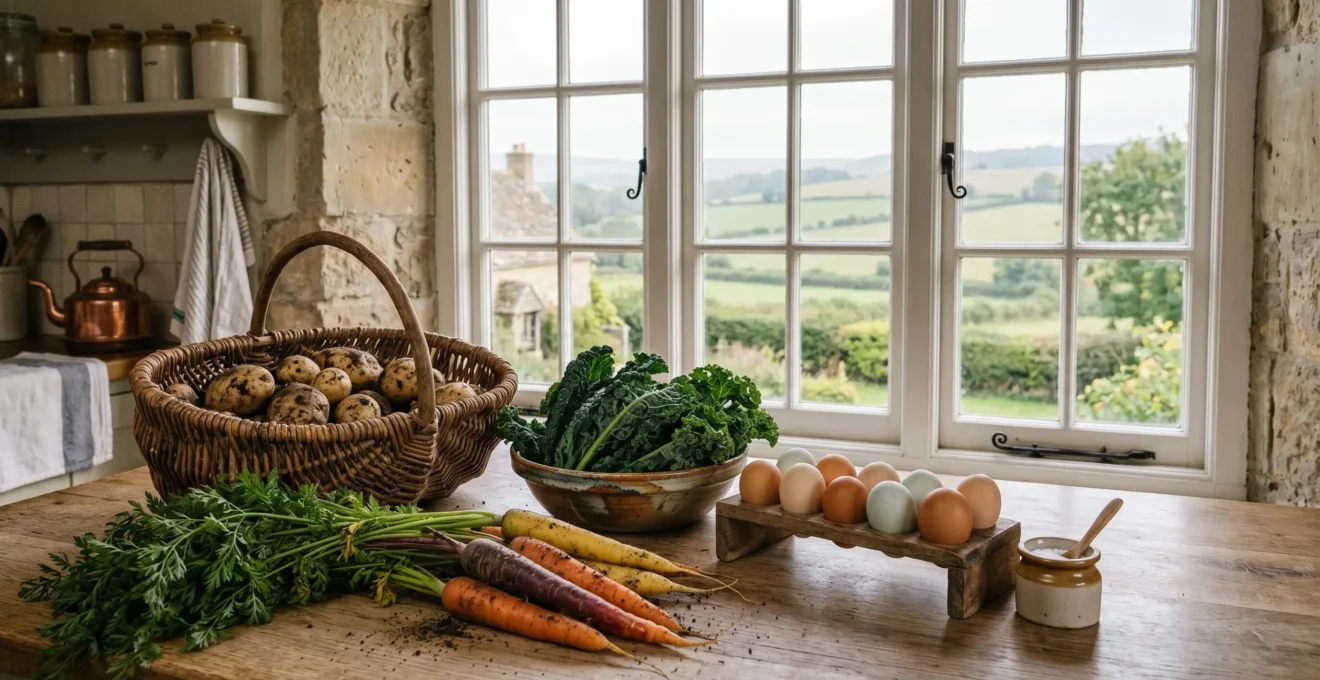
The image of a perfect farm-to-table life is a powerful one: a rustic kitchen table overflowing with vibrant, soil-flecked vegetables, sourced directly from a smiling farmer. For many UK families, however, the reality is a rushed supermarket trip under fluorescent lights, navigating aisles of shrink-wrapped produce from across the globe. The desire to eat more locally, seasonally, and ethically is strong, but the logistical hurdles of time, cost, and convenience feel insurmountable. Many are put off by the perceived ‘all or nothing’ approach, where success means a weekly veg box commitment and Saturdays spent entirely at the farmers’ market.
But what if this binary choice is a false one? What if the secret isn’t about abandoning the supermarket entirely, but about building a smarter, more flexible system around it? The key isn’t to achieve an Instagram-perfect ideal, but to create a realistic, hybrid model that strategically integrates high-impact local food into your existing routine. This approach frees you from the guilt and snobbery that can make sustainable eating feel exclusive and joyless. It’s about focusing on impact over dogma, prioritising flavour and connection where it truly counts, and using clever strategies to make it all work within a busy family schedule and budget.
This guide will walk you through building that very system. We will deconstruct the challenges unique to the UK, then provide practical steps to forge low-commitment connections with producers, identify which foods offer the biggest reward for your effort, and master the logistics that make it all sustainable in the long run. Get ready to ditch the pressure and rediscover the genuine pleasure of good food, sourced with intention.
Summary: A Realistic Guide to Farm-to-Table Living in the UK
- Why True Farm-to-Table Eating Is More Complicated in the UK Than Instagram Suggests?
- How to Create Personal Connections With Local Farmers and Producers Without Committing to a Full Veg Box?
- Which Foods Are Most Worth Sourcing Farm-to-Table in the UK Climate and Economy?
- The Farm-to-Table Snobbery Trap That Makes Sustainable Eating Feel Exclusive and Joyless
- How to Make Farm-to-Table Sourcing Work Around a Busy UK Family Schedule and Budget?
- Why “Organic” Labels in UK Supermarkets Don’t All Mean the Same Thing?
- How Your Weekly Food Choices Directly Impact Your Local Biodiversity and Soil Health?
- How to Source Authentic Organic Ingredients Without Falling for Greenwashing Marketing?
Why True Farm-to-Table Eating Is More Complicated in the UK Than Instagram Suggests?
If you’ve ever felt that eating locally in the UK is a constant uphill battle, you’re not wrong. The romanticised vision of daily farmers’ market trips often clashes with a food system structured for centralisation and global trade. The core of the challenge lies in the sheer dominance of the major supermarkets. With the traditional Big Four supermarkets still controlling over 60% of the grocery market, the entire supply chain—from logistics to distribution—is optimised for their large-scale, long-shelf-life model, not for small, independent producers.
This system creates a significant disconnect between consumers and the source of their food. Furthermore, the UK’s climate necessitates a heavy reliance on imports to meet year-round consumer demand for items that simply don’t grow here in winter. It’s a startling fact that during winter months the UK imports 95% of tomatoes and 90% of lettuces. This reliance not only increases food miles but also conditions shoppers to expect every type of produce to be available 365 days a year, making true seasonal eating feel restrictive.
The result is a landscape where accessing fresh, local food requires a conscious and often inconvenient effort to step outside the dominant system. It demands more planning, more travel, and more knowledge than a simple trip to the nearest superstore. Acknowledging these structural barriers is the first step to building a realistic system that works around them, rather than pretending they don’t exist.
This isn’t about assigning blame; it’s about recognising the environment you’re operating in so you can develop smarter strategies to navigate it effectively.
How to Create Personal Connections With Local Farmers and Producers Without Committing to a Full Veg Box?
The idea of a full-on veg box subscription can be intimidating. The fixed delivery, the lack of choice, and the pressure to use up a mountain of kale can lead to food waste and “veg box fatigue.” A more sustainable approach is to build “relationship-lite” connections—low-stakes, flexible interactions that foster rapport over time without a binding commitment. This is about slowly weaving local producers into your life, one item at a time.
This process can begin digitally. Following local farms on social media provides a zero-pressure window into their world. You’ll learn about their seasonal rhythms, what’s coming into peak flavour, and even their challenges, building a sense of connection before you even make a purchase. Another powerful strategy is to identify a “community keystone”—your trusted local butcher, cheesemonger, or baker. These individuals have already done the hard work of curating relationships with the best regional farms, and they can become your gateway to quality produce and meat.
When you do visit a farmers’ market, shift your mindset from a transactional shopping trip to an opportunity for conversation. Instead of just grabbing what you need, ask open-ended questions like, “What’s tasting best this week?” or “What would you do with this?” This simple act of showing genuine interest is the fastest way to build rapport and gain invaluable cooking advice directly from the source. It transforms a chore into a rewarding human exchange.
Ultimately, these small interactions accumulate, creating a rich network of food sources that is far more resilient and enjoyable than any single, rigid subscription.
Which Foods Are Most Worth Sourcing Farm-to-Table in the UK Climate and Economy?
The secret to a sustainable farm-to-table system isn’t trying to source everything locally; it’s about being strategic. The goal is to apply the 80/20 rule: focus your effort on the 20% of items where sourcing locally provides 80% of the benefit in terms of flavour, freshness, and quality. For many commodity items like onions or carrots outside of their peak season, the supermarket version is often of comparable quality and far less effort to obtain. The real wins are found elsewhere.
Case Study: The September Harvest Overlap
September in the UK is a prime example of strategic timing. It represents a “crossover” month where late summer crops like tomatoes, courgettes, and beans are still abundant, just as early autumn crops like apples, squash, and leeks become ready. This peak of diversity and availability, as highlighted by organisations like the National Trust, makes it the single most valuable month for sourcing locally and planning bulk preservation for the winter ahead.
So, which foods should be on your priority list? Think about items with a short shelf-life or a very defined peak season, where freshness is paramount. The difference between a locally-grown strawberry in June, picked ripe, and a hard, white-cored import in December is night and day. Here’s a practical list to guide your efforts:
- Priority 1: Soft fruits (June-August). The flavour and freshness of local strawberries, raspberries, and currants are dramatically superior to imported alternatives.
- Priority 2: British asparagus (April-June). The UK season is famously short and celebrated for a reason. Locally sourced spears have a sweetness and flavour that cannot be matched.
- Priority 3: New potatoes (May-July). Freshly harvested British new potatoes have an earthy sweetness and waxy texture that degrades quickly in storage and transport.
- Priority 4: Pasture-raised meat and dairy. Meat from UK grass-fed livestock, especially from Pasture for Life certified farms, not only has a superior nutritional profile but also supports vital grassland biodiversity.
- Priority 5: Heritage orchard fruits (September-November). Choosing traditional British apple and pear varieties supports the preservation of Priority Habitats identified in the UK Biodiversity Action Plan.
By deprioritising items like imported citrus or out-of-season root vegetables, you make your farm-to-table efforts more impactful and less of a chore.
The Farm-to-Table Snobbery Trap That Makes Sustainable Eating Feel Exclusive and Joyless
Let’s be honest: the world of local, sustainable food can sometimes feel intimidating. There’s an undercurrent of purism, a “snobbery trap,” that suggests if you’re not making your own sourdough from heritage grains and churning your own butter, you’re failing. This perfectionist mindset is the enemy of progress. It creates a culture of exclusivity and judgment that can suck the joy out of eating and alienate the very people who are trying to make better choices.
The irony is that the desire to connect with our food is almost universal. As an Industry Study from UK Farm-to-Table Consumer Research found, a significant majority—two-thirds of UK customers—care about the sourcing of their food. The interest is there in abundance. The problem isn’t a lack of will; it’s the cultural baggage and feelings of inadequacy that often come attached to the movement. When the conversation is dominated by unobtainable ideals, it discourages the small, imperfect steps that lead to real, lasting change.
Escaping this trap requires a radical shift in mindset: from purity to impact. It’s not about a perfect record; it’s about making a positive difference, however small. Buying local eggs once a week is a win. Choosing pasture-fed beef for your Sunday roast is a win. Visiting a pick-your-own farm once a summer is a win. These actions have a real, tangible effect on a farmer’s livelihood and the local ecosystem. The goal is to build a system that works for your family, your budget, and your life—not to perform for an imaginary panel of food judges.
By celebrating every small step and focusing on the pleasure and connection that good food brings, you can create a sustainable habit that lasts a lifetime.
How to Make Farm-to-Table Sourcing Work Around a Busy UK Family Schedule and Budget?
This is the crux of the issue for most families: how do you fit this into a life already packed with work, school runs, and a tight budget? The answer lies in smart logistics and transforming your freezer into your most powerful ally. The “farm-to-freezer” approach shifts your perspective from buying for this week’s meals to investing in your future food security and convenience.
The cornerstone of this strategy is a chest freezer. This single investment (a 150-200 litre model is ample for a family of four) allows you to engage with local producers on a completely different scale. It enables you to buy in bulk when prices are lowest and quality is highest. Purchasing a share of a pastured animal—like half a pig or a quarter of beef—directly from a farm can reduce your cost per kilogram by 30-50% compared to retail. The meat arrives professionally butchered and portioned, ready to become your “farm shop at home.” Similarly, buying “glut boxes” of seasonal produce like autumn apples or summer tomatoes specifically for batch-cooking and freezing means you can enjoy peak-season flavour year-round.
This approach also solves the time problem. Instead of multiple small trips, you can time-stack your sourcing. Make a single, larger trip to a farm shop that also has a café or children’s activities, turning a chore into a family outing. Modern logistics can help, too. New models are emerging to bridge the gap between producers and consumers.
Case Study: The Open Food Network UK Model
The Open Food Network UK provides a brilliant solution for the time-poor. Their open-source platform allows multiple local farmers and producers to sell through a single online shopfront or ‘hub’. Customers can order online from various producers during the week and then collect everything from one convenient location—like a village hall or pub car park—at a set time. Since 2014, this model has facilitated over £7 million in local food sales, proving that convenience and local sourcing can go hand in hand.
Your freezer becomes your secret weapon, decoupling the act of sourcing from the daily pressure of cooking, saving you time and money in the long run.
Why “Organic” Labels in UK Supermarkets Don’t All Mean the Same Thing?
The word “organic” on a label can feel like a simple guarantee of quality and sustainability. However, the reality within the UK’s food system is far more nuanced. While the legal standard for organic certification provides a crucial baseline—prohibiting synthetic pesticides and fertilisers—it doesn’t tell the whole story, especially when it comes to biodiversity, soil health, and scale.
The UK has a significant and growing organic sector, with a total area of 498 thousand hectares of organic farmland, according to DEFRA. However, a 1,000-hectare certified organic monoculture farm growing a single crop for a supermarket has a vastly different ecological impact than a 2-hectare polyculture farm that rotates crops, integrates animals, and fosters a diverse habitat—even if the latter isn’t certified. The ‘organic’ label can’t capture this crucial difference in approach.
This has led to a growing movement towards systems that focus on ecological outcomes rather than just input restrictions. Concepts like ‘regenerative agriculture’ are gaining traction, prioritising practices that actively rebuild soil health, sequester carbon, and enhance biodiversity.
Case Study: Waitrose’s Push Beyond Organic
Recognising this nuance, major retailers are starting to invest in more holistic systems. In a significant move, Waitrose has committed millions to support its UK farmers in adopting regenerative agriculture practices. As described in an analysis of the UK agriculture market, this initiative focuses on measurable outcomes like restoring soil health and protecting biodiversity. It signals a growing understanding that certifications focusing on the entire ecosystem can deliver more tangible environmental benefits than traditional organic certification alone, particularly for the health of UK soil and wildlife.
It shifts the focus from a simple label to a deeper inquiry about the farming philosophy and its real-world impact on the local environment.
How Your Weekly Food Choices Directly Impact Your Local Biodiversity and Soil Health?
It’s easy to feel like your individual shopping choices are a drop in the ocean. Yet, when it comes to local food systems, your weekly shop is one of the most powerful levers you have for directly funding biodiversity and regenerating the land beneath your feet. Every purchase of a thoughtfully produced item sends a direct financial signal to a farmer, enabling them to continue practices that benefit the wider ecosystem.
Consider the simple act of choosing meat or dairy from a ‘Pasture for Life’ certified animal. You’re not just buying food; you’re funding the maintenance of permanent grassland. These grasslands are vital habitats for insects, birds, and wildflowers, acting as crucial biodiversity hotspots in the UK landscape. When you buy a veg box with a wide variety of items, you are physically funding crop rotation, the number one practice for maintaining soil health and preventing the depletion of nutrients. Your diverse basket directly enables a farmer to rotate from nitrogen-fixing legumes to deep-rooted potatoes, healing the soil as they go.
This direct link between purchase and impact is everywhere once you know where to look. Choosing to buy heritage UK apple varieties helps preserve traditional orchards, which are classified as Priority Habitats in the UK Biodiversity Action Plan. You are literally eating to protect a vital piece of the national ecosystem. Supporting farms that practice agroecological methods—like cover cropping and reduced tillage—helps sequester carbon in the soil and improve water conservation for the entire local area.
Your choices are not passive. They are an active investment in the health of your local environment, the fertility of the soil, and the richness of its biodiversity.
Key takeaways
- Embrace a hybrid ’80/20′ model: Augment your supermarket shop with strategic local purchases, don’t try to replace it entirely.
- Focus on high-impact foods first: Prioritise items like soft fruit, asparagus, and pasture-raised meat where local sourcing offers the biggest leap in quality and flavour.
- Make your freezer your secret weapon: Use a chest freezer to bulk-buy seasonal produce and meat, saving time, money, and unlocking year-round access to local food.
How to Source Authentic Organic Ingredients Without Falling for Greenwashing Marketing?
As consumer interest in local and sustainable food grows, so does the marketing designed to capture it. The UK organic market is booming and, according to one report, IMARC Group expects the UK organic market to reach USD 7.2 Billion by 2033. With that much money at stake, the temptation for “greenwashing”—using vague or misleading terms to imply environmental responsibility—is immense. Phrases like ‘farm fresh,’ ‘country goodness,’ and ‘natural’ are often legally meaningless. So how do you cut through the noise and find truly authentic producers?
The key is to look for transparency and specificity over vague marketing claims. An authentic producer isn’t afraid of details. They will tell you the name of their farm, the breeds of their animals, and their specific growing methods. They will show you real, unpolished photos of their farm online, not just stock images. A crucial sign of authenticity is often a willingness to embrace imperfection. Misshapen carrots, slight blemishes on apples, or varied egg sizes are not flaws; they are hallmarks of a low-intervention, non-industrial system that works with nature, not against it.
It’s also vital to look beyond a single certification and understand the context. Many excellent small-scale UK producers follow organic principles to the letter but cannot afford the expensive certification fees. Their authenticity can be verified through direct conversation and a transparent operation. Conversely, a massive certified organic farm may still be practicing large-scale monoculture with limited biodiversity benefits. Your job as a conscious consumer is to become a detective, using a checklist of verifications to identify the producers who are truly walking the talk.
Your checklist for avoiding greenwashing
- Demand specificity: Check if producers name their farm location, animal breeds, and growing methods. Vague terms like ‘farm fresh’ are a red flag.
- Check digital transparency: Visit the producer’s website or social media. Look for real farm photos, seasonal updates, and open answers to customer questions.
- Embrace imperfection: Look for cosmetic variations in produce—like misshapen carrots or slug holes—as signs of authentic, low-intervention farming.
- Seek certifications beyond basic organic: Prioritise producers with ‘Pasture for Life’ certification, regenerative agriculture credentials, or other schemes that demonstrate measurable environmental responsibility.
- Verify ‘philosophically organic’ farms: Assess small-scale producers who follow organic principles without official certification through direct conversation and on-farm transparency.
Ultimately, this isn’t just about buying food; it’s about investing in a transparent, healthy, and resilient food system. Your first step is as simple as choosing one item on your next shopping list and applying this lens to find a truly authentic local alternative.