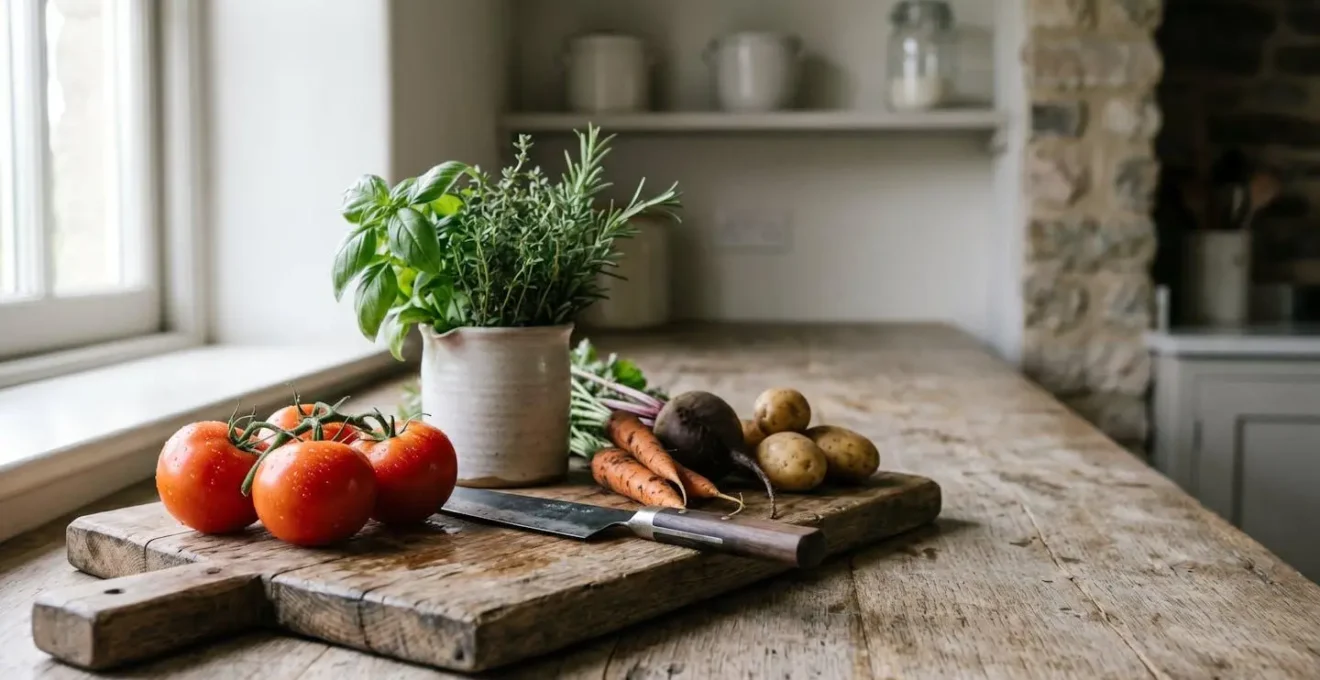
Contrary to popular belief, exceptional flavour isn’t found in expensive ingredients, but is engineered through the mastery of technique and timing.
- The flavour potential of any ingredient is dictated more by its seasonality and the cooking method applied than its price tag.
- Fundamental techniques—like precise heat control and the strategic use of salt and acid—are what transform simple ingredients into extraordinary dishes.
Recommendation: Shift your focus from buying “better” to cooking “smarter” by mastering the chemical transformations that build flavour architecture from the ground up.
That familiar disappointment is a universal experience for the home cook: one night, a simple dish of roasted vegetables or pan-seared chicken sings with incredible flavour; the next, the same recipe falls flat, tasting muted and uninspired. We often blame the ingredients, assuming we just got lucky with a “good batch” the first time. The common advice is to simply buy fresher, more expensive, or organic produce, but this advice misses the fundamental truth of culinary science. It treats flavour as a lottery, a happy accident you can’t replicate on demand.
This approach is fundamentally flawed. While ingredient quality is a factor, it is not the decisive one. The real reason for flavour inconsistency lies in a misunderstanding of what flavour truly is: a complex architecture built through deliberate chemical and physical transformations. The key to moving from an occasional success to a consistent master of flavour is to stop being a mere recipe follower and become a flavour architect. It requires understanding the principles of timing, the mechanics of heat, and the chemistry of seasoning.
This guide demystifies that process. We will dismantle the myth that premium ingredients are a prerequisite for peak flavour and instead focus on the controllable variables that anyone can master. We will explore why the *when* is as important as the *what*, how to wield heat, acid, salt, and fat like a master craftsman, and how to train your own palate to become the ultimate quality-control instrument. Prepare to shift your entire culinary perspective from hoping for flavour to engineering it with confidence.
Summary: Unlocking the Code to Consistent Culinary Excellence
- Why the Same Vegetable Can Taste Mediocre or Extraordinary Depending on When You Cook It?
- How to Use Heat, Acid, Salt and Fat at the Right Moments to Dramatically Increase Flavour?
- Why Proper Base Techniques Matter More Than Buying Premium Ingredients for Peak Flavour?
- The Most Common Flavour-Killing Mistakes Even Experienced Home Cooks Make
- How to Train Your Palate So You Can Consistently Recognise and Achieve Peak Flavour?
- When to Buy Which Organic Produce: The UK Seasonal Guide That Saves £60 Monthly?
- Which Foods and Eating Patterns Actually Deliver Steady Physical Vitality Throughout the Day?
- How to Source Authentic Organic Ingredients Without Falling for Greenwashing Marketing?
Why the Same Vegetable Can Taste Mediocre or Extraordinary Depending on When You Cook It?
The journey to peak flavour begins long before an ingredient ever touches a pan. It starts with understanding that an ingredient is not a static object but a living system whose flavour profile is in constant flux, dictated by time and environment. A tomato in August is a fundamentally different ingredient from a tomato in January. The latter is often a pale imitation, picked unripe and artificially ripened, lacking the complex sugars and aromatic compounds that define its peak state. This isn’t just a matter of opinion; it’s a matter of chemistry.
An ingredient’s flavour architecture is built by its environment. As the experts at Sugar Water Manor Farm explain, the unique combination of soil, water, and microbial life “helps determine how a plant develops sugars, acids, and aromatic compounds.” When a plant is harvested at its natural peak—when it has had the optimal amount of time and the right environmental cues to fully develop these compounds—its flavour potential is at its maximum. Cooking a vegetable out of season means you are starting with a deficient blueprint; no amount of brilliant technique can fully restore flavour that was never there to begin with.
This principle is backed by scientific evidence. A comprehensive study on flavour compounds confirmed that environment and season have a greater impact on aromatic sensory perception than the specific plant variety alone. In essence, the ‘when’ and ‘where’ of an ingredient’s life are more critical to its final taste than its genetic makeup. Understanding this concept of “time as an ingredient” is the first step toward flavour consistency. It means aligning your cooking with the rhythms of nature, choosing ingredients not just for what they are, but for when they are at their absolute best.
How to Use Heat, Acid, Salt and Fat at the Right Moments to Dramatically Increase Flavour?
Once you have a peak-season ingredient, your job is to unlock and amplify its inherent flavour. This is where the four pillars of flavour architecture come into play: heat, acid, salt, and fat. Mastering their application is not about following a recipe’s measurements, but about understanding their function and timing. Heat, for instance, is not just for cooking food; it’s for transforming it. When applied correctly, high heat triggers a process called the Maillard reaction, a chemical transformation between amino acids and reducing sugars.
This is the magical process responsible for the savoury, complex, and deeply browned crust on a seared steak, roasted vegetables, or even toasted bread. To achieve it, temperature is non-negotiable. As culinary science research confirms, the Maillard reaction happens rapidly at temperatures north of 350°F (176°C). Too low, and your food steams, becoming grey and bland. Too high, and it burns, creating bitter carbon. The goal is that perfect, sustained sizzle that indicates a world of flavour is being created.
Salt and acid are your flavour amplifiers and modifiers. Salt, when used early in cooking meats (a process called dry-brining), doesn’t just add saltiness; it denatures proteins, allowing the meat to retain more moisture while seasoning it from within. When used to finish a dish, it makes all the other flavours pop. Acid, like a squeeze of lemon or a splash of vinegar, acts as a counterpoint. It cuts through richness, balances sweetness, and brightens up an entire dish, preventing flavour fatigue on the palate. Finally, fat is the ultimate vehicle for flavour. It not only carries fat-soluble flavour compounds to your taste buds but also contributes its own richness and texture, creating a satisfying mouthfeel that is itself a key component of flavour perception.
Why Proper Base Techniques Matter More Than Buying Premium Ingredients for Peak Flavour?
Here lies the central thesis of flavour architecture: a skilled cook can make a simple, inexpensive onion taste extraordinary, while an unskilled one can render a prime cut of wagyu beef bland and forgettable. This is because technique is the catalyst that transforms potential flavour into actual flavour. The most expensive ingredients in the world are worthless if the foundational cooking methods are flawed. It’s the mastery of these base techniques that separates consistently great cooks from those who rely on luck.
These techniques are often the unglamorous, patient steps in a recipe that home cooks are tempted to rush or skip. Think of slowly sweating aromatics like onions and garlic until they are soft and translucent, not just quickly frying them. This patient application of low heat doesn’t just soften them; it initiates a chemical transformation, breaking down harsh sulfuric compounds and developing a deep, sweet, and complex base layer of flavour upon which the entire dish is built. This is the first floor of your flavour architecture; without it, the whole structure is unstable.
Case Study: The Onion Flavour Spectrum
A simple onion provides a perfect demonstration of how technique alone creates vastly different flavour profiles from the same ingredient. Sliced raw, it is pungent and sharp. Sautéed quickly for two minutes, it softens but remains assertive. However, by slowly sweating that same onion over low heat for 10-15 minutes, a profound chemical transformation occurs. The proteins and sugars interact, neutralizing the pungent sulfuric compounds and creating a foundational sweetness and gentle depth. By patiently applying the right technique, the cook has fundamentally altered the ingredient’s flavour architecture without changing the ingredient itself. This is the power of technique over sourcing.
Other crucial base techniques include creating a fond—the brown, caramelized bits stuck to the bottom of a pan after searing meat—and then deglazing with a liquid to lift all that concentrated flavour into a sauce. It includes properly resting meat after cooking to allow the juices to redistribute, ensuring every bite is succulent. These are not fancy, chef-level tricks; they are the non-negotiable fundamentals. Prioritising the mastery of these techniques over the pursuit of premium ingredients is the most direct path to closing the gap between the food you want to cook and the food you actually produce.
The Most Common Flavour-Killing Mistakes Even Experienced Home Cooks Make
Even with good ingredients and an understanding of technique, certain common habits can sabotage your efforts, effectively killing flavour before it has a chance to develop. These mistakes are often born from impatience or a simple misunderstanding of the underlying physics and chemistry of cooking. Perhaps the most widespread and destructive of these is overcrowding the pan. We’ve all done it: trying to fit all the chicken thighs or chopped vegetables into the pan at once to save time. This is a fatal error.
When you overcrowd a hot pan, the pan’s temperature plummets instantly. The food, instead of searing and browning, begins to release its moisture. With no space for that moisture to evaporate, the ingredients end up steaming in their own juices. This completely prevents the Maillard reaction. Instead of a deep, savoury crust, you get a pale, flabby, and disappointingly bland result. As professional chefs confirm, overcrowding is the primary reason food steams and boils rather than caramelizing. The solution is simple but requires discipline: cook in batches, ensuring each piece of food has space and direct contact with the hot surface.
Another common mistake is being afraid of salt or using it only at the end. As discussed, salt does its best work when given time to penetrate and transform the food’s texture. Under-seasoning is a guaranteed path to a flat dish. Similarly, not tasting and adjusting as you go is like flying blind. A recipe is a map, not a GPS; your palate must be the final judge, telling you if the dish needs more acid for brightness, more salt to elevate flavours, or a touch of fat for richness. Ignoring this crucial feedback loop means you are leaving the final outcome to chance.
Action Plan: Auditing Your Searing Technique
- Pan & Heat Check: Before adding food, is your pan properly preheated? Add a drop of water; it should sizzle and evaporate almost instantly. This is your baseline temperature for the Maillard reaction.
- Food Prep Audit: Is your food as dry as possible? Pat meat and vegetables thoroughly with paper towels. Excess surface moisture is the enemy of a good sear and a primary cause of steaming.
- Crowd Control Assessment: When you add the food, does the sizzling sound remain loud and vigorous, or does it die down to a gentle simmer? If it dies down, you’ve overcrowded the pan. Remove some pieces immediately.
- Contact & Patience Analysis: Are you giving each piece of food undisturbed contact with the pan for several minutes? Resist the urge to constantly stir or flip. Flavour is built through patient, direct heat transfer.
- Result Evaluation: After cooking the first batch, examine the fond (the browned bits left in the pan). A rich, dark brown fond indicates successful flavour creation. A pale or non-existent one signals your heat was too low or the pan was overcrowded.
How to Train Your Palate So You Can Consistently Recognise and Achieve Peak Flavour?
The final and most crucial tool in your flavour architecture toolkit is your own palate. A recipe can give you instructions, but only your senses can tell you if a dish is truly balanced and has reached its peak potential. Training your palate is the process of moving from a passive taster to an active analyst. It’s about learning to deconstruct what you’re eating into its component parts: salt, sweet, sour, bitter, umami, as well as aroma, texture, and temperature.
A simple and powerful exercise is component tasting. Instead of tasting a finished dish, taste its individual elements in isolation. Taste a flake of sea salt. Taste a drop of lemon juice. Taste a dab of honey. Pay close attention to the specific sensation each creates in your mouth. Then, start combining them. Add a pinch of salt to the lemon juice and notice how it rounds out the sharpness. This sensory calibration builds a mental library of flavours, allowing you to identify what a finished dish is missing. When you taste a sauce and think “it’s missing something,” a trained palate can identify that “something” is a touch of acidity to cut the fat, or a hint of sweetness to balance the salt.
This process of conscious tasting is transformative. As culinary expert Wendy Holloway of Flavor of Italy notes, this is the core of palate development. In her guide on the subject, she emphasizes that this practice is about “noticing flavor in a more conscious way and learning to work with taste” rather than just relying on intuition or recipe instructions. Start tasting your food at every stage of the cooking process. Taste the raw ingredients, taste after you add salt, taste after you add acid. Each taste is a data point that informs your next move. This active feedback loop is what ultimately frees you from the rigid confines of a recipe and empowers you to create consistently delicious food by instinct and understanding.
When to Buy Which Organic Produce: The UK Seasonal Guide That Saves £60 Monthly?
Applying the principle of “time as an ingredient” has a powerful, practical benefit: aligning your shopping with the seasons not only guarantees peak flavour but also significantly reduces your grocery bill. In the UK, buying organic produce out of season means paying a premium for ingredients that have been flown thousands ofmiles, sacrificing both taste and nutritional value. Conversely, buying seasonal organic produce means you are getting the best-tasting ingredients at their most abundant, and therefore, their cheapest.
The reason seasonal produce tastes better is tied to a concept from winemaking called ‘terroir’. Terroir refers to how a specific environment—soil, climate, and topography—affects a crop. A plant’s flavour is a direct expression of the challenges it faced. As an article in ScienceInsights explains, stressful conditions like rocky soils that drain quickly often force a plant to work harder, which concentrates its sugars and aromatic compounds, leading to a more intense flavour. Seasonal produce, grown in its ideal climate without excessive artificial support, undergoes just the right amount of productive stress.
For UK home cooks, this means building a mental map of the year. Spring is for vibrant, tender greens like asparagus and spinach. Summer brings an explosion of berries, tomatoes, and courgettes, all bursting with sun-ripened sugars. Autumn is the time for robust root vegetables like carrots and parsnips, whose flavour deepens after the first frost. Winter offers hearty brassicas like kale and cabbages. By planning meals around this natural calendar, you can easily save upwards of £60 a month compared to buying non-seasonal organic goods, all while ensuring everything you cook starts with the highest possible flavour potential. It’s a strategy where your wallet and your palate both win.
Which Foods and Eating Patterns Actually Deliver Steady Physical Vitality Throughout the Day?
The pursuit of peak flavour is intrinsically linked to the pursuit of vitality. The same biological processes that create deep, complex flavours in a plant also create a higher concentration of nutrients. A flavourful ingredient is, by its very nature, a more nutrient-dense ingredient. This connection provides a powerful framework for choosing foods that not only delight the senses but also deliver sustained, steady energy.
Think of two carrots: one, a watery, pale-orange specimen from a large-scale industrial farm, and the other, a deeply coloured, intensely sweet carrot from an organic farm with healthy soil. The latter’s superior flavour is a direct sensory signal of its superior nutritional content. As reported in The Daily World, an analysis of terroir’s effect on taste highlights that a “superior-quality fruit or vegetable will have more carbohydrates, proteins and minerals.” Because minerals are denser than water, a more nutrient-dense vegetable is physically heavier and packed with more flavour. When you eat for flavour, you are subconsciously eating for nutrition.
This principle guides an eating pattern for vitality. Instead of focusing on empty calories or highly processed foods that provide a quick spike and subsequent crash, an eating pattern built around peak-flavour ingredients provides complex carbohydrates, high-quality proteins, and essential micronutrients. This combination ensures a slower, more stable release of energy throughout the day. A meal of roasted seasonal vegetables, a well-prepared protein, and healthy fats is not only more satisfying and delicious than a processed meal, but it also fuels your body more effectively. By making flavour your primary guide, you naturally gravitate towards a way of eating that supports consistent physical and mental energy, turning every meal into an opportunity for both pleasure and vitality.
Key Takeaways
- Flavour is not an accident; it’s an outcome of controlling time, temperature, and chemistry.
- Mastering fundamental techniques like searing and slow-sweating aromatics is more impactful than buying expensive ingredients.
- Aligning your cooking with the natural seasons ensures you start with ingredients at their peak flavour and lowest cost.
How to Source Authentic Organic Ingredients Without Falling for Greenwashing Marketing?
In the final step of our flavour journey, we return to sourcing, but with a more discerning eye. Now that we understand that flavour is born from technique and timing, we can approach the market not just as consumers, but as informed curators. The term “organic” has become a marketing buzzword, but not all organic labels are created equal. True, flavour-rich organic produce comes from a specific philosophy of farming that goes beyond simply avoiding pesticides. It’s about actively building soil health.
This is the core principle of what is often called the “farm-to-table” movement. It’s a recognition that the most flavourful ingredients come from artisan cultivation practices. As the experts at Territorial Seed Company articulate, “growers pay attention to the health and biodiversity of the soil,” and this meticulous care results in the “very best tasting vegetables.” This is the authentic organic you should be seeking. It’s about looking past the flashy packaging and seeking out producers who see themselves as stewards of the land. Their focus on soil health directly translates to nutrient density, and as we’ve learned, nutrient density translates to flavour.
So how do you find these authentic sources? Look for transparency. Farmers’ markets are your best laboratory; talk to the growers. Ask them about their soil, their methods, and what’s tasting best right now. They are the ultimate experts on seasonality. Look for Community Supported Agriculture (CSA) programs in your area, which create a direct link between you and a farm. When in a supermarket, look for certifications that go beyond the basic organic label, such as “biodynamic,” which indicates a holistic approach to farming. By applying your newfound knowledge of flavour architecture, you can cut through the greenwashing and source ingredients that provide a truly superior foundation for your cooking.
Your journey to becoming a flavour architect starts now. Begin by applying just one of these principles to your next meal—perhaps by taking the extra time to properly sear your protein in batches, or by seeking out one vegetable that is at its absolute seasonal peak. Start building your flavour architecture, one delicious layer at a time.