Fashion & Beauty
Fashion and beauty have become increasingly complex territories, saturated with conflicting advice, fleeting trends, and endless product launches. Yet beneath this noise lies a simple truth: the most confident, polished individuals aren’t those who follow every trend or own the most products. They’re the ones who’ve developed a clear understanding of what works for their unique body, lifestyle, and identity.
This comprehensive resource cuts through the confusion to focus on what genuinely matters. Rather than chasing the latest Instagram aesthetic or accumulating products you’ll never use, you’ll discover how to build an authentic approach to fashion and beauty—one rooted in self-knowledge, strategic choices, and sustainable habits. Whether you’re overwhelmed by a wardrobe full of unworn clothes, confused about grooming essentials, or simply seeking a more intentional relationship with your appearance, the principles explored here will provide a practical foundation.
The journey toward genuine style confidence isn’t about transformation or reinvention. It’s about refinement, clarity, and developing systems that actually serve your daily life. Let’s explore the core pillars that make this possible.
Discovering Your Authentic Personal Style
Personal style functions like a visual language—it communicates who you are before you speak a word. Yet many people struggle to develop this language authentically, instead borrowing phrases from influencers, copying aesthetics that don’t suit their lives, or accumulating clothes that feel disconnected from their genuine identity.
Moving Beyond Trend-Driven Dressing
The difference between authentic style and trend-following resembles the difference between speaking your native language and reciting memorised phrases in a foreign tongue. One flows naturally; the other feels stilted and uncomfortable. When you copy an Instagram aesthetic wholesale, you’re attempting to inhabit someone else’s visual language—complete with their body type, lifestyle, budget, and cultural context. The result is a wardrobe that looks good in theory but feels inauthentic in practice.
Genuine style evolution happens when you identify the underlying elements that resonate with you—perhaps the colour palette from one inspiration, the relaxed tailoring from another, the minimal jewellery approach from a third—and synthesise these into something uniquely yours. This requires asking deeper questions: Do I feel confident in this? Does this align with how I spend my days? Can I see myself wearing this in five years?
Understanding Body and Proportion
Generic style rules—”pear shapes should avoid X” or “always tuck your shirt”—fail because they ignore individual proportion and personal preference. The most flattering approach involves identifying the three to four silhouettes that genuinely work for your specific frame, then building variations around these core shapes. This isn’t about rules; it’s about observation and experimentation.
Someone might discover that straight-leg trousers with a slight crop, structured shoulders, and defined waists consistently make them feel polished, whilst oversized proportions leave them feeling shapeless. Another person finds exactly the opposite. Neither is correct universally—both are correct individually. The goal is self-knowledge, not compliance with external standards.
Building a Wardrobe That Lasts
A functional wardrobe isn’t measured by quantity or label prestige, but by the percentage of items you actually wear regularly. Many people own wardrobes worth hundreds or thousands of pounds whilst repeatedly wearing the same fifteen pieces. This disconnect reveals a fundamental problem: acquisition without strategy.
Quality Markers That Actually Matter
The high street versus designer debate misses the essential point. Quality isn’t synonymous with price—it’s about construction, materials, and longevity. When evaluating any garment, regardless of origin, focus on these tangible markers:
- Fabric composition and weight: Natural fibres generally age better than synthetics, whilst fabric weight indicates durability and how a garment will drape
- Seam construction and finishing: Check internal seams—are they finished properly or fraying already? Are buttonholes clean and reinforced?
- Hardware quality: Zips, buttons, and closures should operate smoothly and feel substantial, not flimsy
- Pattern matching: On striped or patterned garments, quality pieces show careful pattern alignment at seams
A well-constructed high street piece will outlast a poorly made designer item every time. The key is knowing what to look for rather than relying on brand names as shortcuts to quality.
Avoiding the Aspirational Buying Trap
The most expensive items in your wardrobe are often those you never wear. Aspirational purchases—clothes bought for an imagined future self rather than your actual lifestyle—represent not just wasted money but cluttered decision-making every morning. You know these items: the formal dress for events you don’t attend, the delicate silk blouse incompatible with your wash-and-wear lifestyle, the trend piece that felt exciting in the shop but alien in your actual wardrobe.
Before any purchase, apply the seven-day test: Can you imagine wearing this item at least seven times in realistic scenarios from your actual life? If not, it’s likely an aspirational purchase masquerading as a need. This simple filter prevents the accumulation of expensive wardrobe deadweight whilst directing resources toward pieces you’ll genuinely use.
Streamlining Your Grooming Routine
The grooming industry thrives on complexity, constantly suggesting that polished appearance requires an ever-expanding arsenal of products and techniques. Yet the most consistently well-groomed individuals often follow surprisingly minimal routines—not because they’re naturally blessed, but because they’ve identified the essential steps that deliver reliable results.
The Five Essential Grooming Steps
Consistency trumps complexity in grooming. A simple routine you’ll actually follow daily outperforms an elaborate fifteen-step regimen you abandon after a week. The foundation of effective grooming rests on five core practices:
- Cleansing: Removing dirt, oil, and environmental buildup from skin and hair using appropriate products for your type
- Moisturising: Maintaining skin hydration to prevent dryness, irritation, and premature ageing
- Sun protection: Daily SPF application to prevent long-term damage, regardless of weather
- Hair management: A haircut and styling approach that works with your natural texture rather than fighting it
- Targeted treatment: One specific product addressing your primary concern—whether that’s shaving irritation, blemishes, or dark circles
This framework takes under fifteen minutes daily whilst delivering visible, consistent results. Additional steps beyond these five rarely provide proportional benefits and often lead to product buildup, skin irritation, or routine abandonment.
Strategic Product Investment
The grooming investment dilemma—quality tools with basic products versus cheap tools with premium products—has a clear answer: prioritise the tool. A quality razor with basic shaving cream outperforms a disposable razor with luxury cream because technique and equipment fundamentally determine results. The same principle applies across grooming categories: invest in good scissors, a proper hairbrush, or a decent electric trimmer, then pair them with mid-range products.
This approach also solves the bathroom shelf overflow problem. When you recognise that five or six well-chosen products deliver better results than twenty mediocre ones, decluttering becomes straightforward. Keep what you actually use daily; discard the trend purchases and duplicates that clutter your routine and decision-making.
Creating Truly Effortless Style
The term “effortless” is fashion’s most misleading adjective. What appears effortless is actually the visible twenty percent of work supported by eighty percent of invisible preparation. Understanding this ratio transforms effortless style from an unattainable ideal into an achievable system.
The Preparation That Enables Ease
Genuinely low-maintenance daily routines require high-investment setup. This means selecting a haircut that air-dries well without products, choosing fabrics that resist wrinkles and maintain shape throughout the day, and building a wardrobe of pieces that work interchangeably. The person who looks polished in ten minutes each morning has spent considerable time identifying what works for their hair texture, body shape, and lifestyle demands.
Consider fabric choices: linen wrinkles characterfully, wool holds its shape and breathes naturally, whilst most synthetics either cling uncomfortably or look cheap after minimal wear. Someone pursuing genuine effortless style invests time understanding these properties, then selects materials that align with their tolerance for maintenance. The resulting wardrobe requires minimal daily effort because the difficult decisions happened during acquisition, not while dressing.
Distinguishing Effortless from Unkempt
The line between effortless and unkempt rests on three non-negotiable elements: cleanliness, fit, and intentionality. You can wear wrinkled linen, unstyled hair, and minimal makeup whilst still appearing polished if these foundations are solid. Conversely, you can spend forty-five minutes creating an “undone” look that reads as unkempt if these basics are neglected.
Cleanliness is self-explanatory. Fit means clothes that suit your proportions—not necessarily tailored, but appropriately sized. Intentionality is the subtle signal that your appearance results from choice rather than neglect: the rolled sleeve that’s actually rolled rather than shoved up, the “undone” button that’s the right button, the tousled hair that’s clean and shaped even if unstyled. These details take seconds but communicate care.
Mastering this balance allows genuine low-maintenance routines without sacrificing polish. You’re not spending forty-five minutes engineering a look that appears casual; you’re spending ten minutes on the essentials that prevent casual from becoming careless.
The path toward confident personal style and efficient beauty routines isn’t about acquiring more—more products, more clothes, more techniques. It’s about developing clarity: understanding what genuinely works for your individual reality, then building sustainable systems around these insights. This foundation enables you to navigate fashion and beauty with intention rather than anxiety, making choices that serve your authentic self rather than chasing external validation. The result isn’t perfection, but something more valuable: consistency, confidence, and the freedom that comes from truly knowing what works for you.

How to Create an Effortless Appearance That Actually Requires Minimal Daily Effort
The belief that effortless style means less effort is a myth; it’s about front-loading that effort into designing a personal style system that works for you automatically. True “low-effort” looks come from high-leverage upfront choices in haircuts, fabrics, and silhouettes….
Read more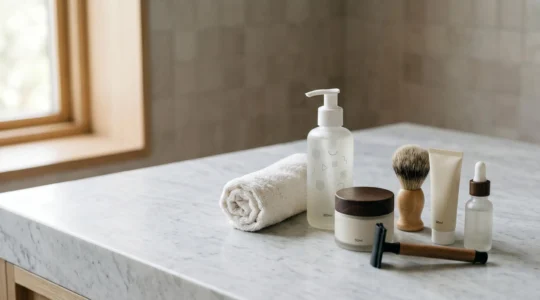
The 15-Minute Grooming System: How to Look Polished with Less Effort
The secret to a fast, effective grooming routine isn’t adding more products; it’s building a smarter system based on strategic subtraction and high-leverage habits. A simplified 5-step core routine is more sustainable and can be more effective than a complex…
Read more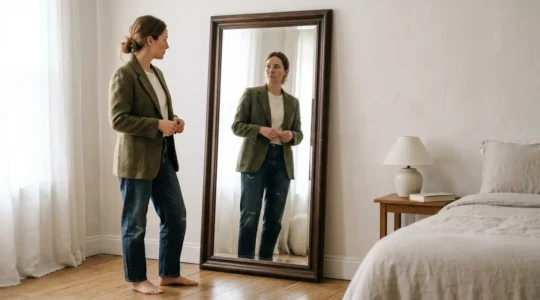
How to Cultivate a Sense of Style That Reflects Your Identity Rather Than Fashion Trends?
Contrary to popular belief, developing personal style isn’t about finding the right trends to follow; it’s about ceasing to follow them altogether. The key is to shift your focus inward, treating your wardrobe as an architectural project built on the…
Read more