Home & Decor
Your home is more than shelter—it’s the backdrop to your daily life, your creative work, and your moments of rest. Yet the decisions you make about workspace layout, furniture selection, and textile quality can feel overwhelming. Should you invest in solid wood or accept particleboard? Does thread count really matter? Will that minimalist white studio actually boost your creativity, or hinder it?
The truth is that thoughtful home and decor choices aren’t about following rigid rules or chasing expensive trends. They’re about understanding the fundamentals: how your physical environment affects your productivity, what construction quality actually means in practical terms, and which investments deliver lasting value versus fleeting satisfaction. This comprehensive resource connects the dots between workspace design, material quality, and furniture longevity—giving you the foundational knowledge to create spaces that truly serve you.
Whether you’re setting up your first dedicated creative space, evaluating a significant furniture purchase, or simply trying to assess fabric quality before checkout, the principles explored here will transform how you approach every home and decor decision.
Creating Functional Workspaces That Support Your Creative Process
The relationship between your physical workspace and your creative output is far more significant than most people realize. It’s not about perfection or expensive equipment—it’s about understanding how environment shapes focus, energy levels, and sustained productivity.
Understanding the Connection Between Space and Productivity
Your workspace layout influences your creative output in measurable ways. The arrangement of your desk, lighting sources, and materials creates either friction or flow in your work process. A dedicated workspace—even a modest corner—establishes psychological boundaries that signal your brain it’s time to focus. This mental separation is why many creatives report doubling their productive hours simply by defining a consistent work zone, regardless of square footage.
The debate between minimal white studios and inspiration-filled spaces isn’t about one superior approach. Instead, consider your work style: do you need visual calm to concentrate, or do surrounding materials and references fuel your ideas? There’s no universal answer, but understanding your natural tendencies prevents costly setup mistakes.
Ergonomic Principles for Extended Work Sessions
Ergonomics isn’t luxury—it’s the foundation of sustainable creative practice. For sessions lasting six hours or more, three elements become non-negotiable:
- Monitor or work surface height that maintains neutral neck position
- Seating that supports your lower back without restricting movement
- Sufficient space for your arms to rest at 90-degree angles
Poor ergonomics doesn’t announce itself immediately. Instead, it accumulates as chronic fatigue, reduced focus in afternoon hours, and physical discomfort that makes you avoid your workspace entirely. Testing your setup for these three factors takes fifteen minutes but prevents months of diminished output.
When to Optimize vs When to Relocate
Many creatives delay starting meaningful work for months, convinced their current space isn’t adequate. This workspace perfection myth causes more harm than any imperfect setup ever could. The decision matrix is simpler than it appears: optimize your current space unless you’re facing genuine physical constraints like insufficient natural light, constant interruptions you cannot control, or literally inadequate room for your essential tools.
Most workspace problems respond to optimization—repositioning your desk near a window, adding task lighting, or establishing boundaries with household members. Relocating to a larger studio solves space constraints but introduces new costs and commute time. Assess honestly whether your current limitation is truly physical space or the psychological barrier of not having started yet.
Evaluating Fabric and Textile Quality for Lasting Value
Textile purchases—from bedding to upholstery to garments—represent significant ongoing investment in your home environment. Yet quality assessment often relies on misleading shortcuts and marketing myths that cost you money while delivering inferior products.
Beyond the Natural Fibre Myth
The assumption that 100% natural fibres always outperform blends is one of the most expensive misconceptions in textile purchasing. While natural fibres like cotton, linen, and wool offer genuine benefits—breathability, comfort, biodegradability—they also have limitations. Pure linen wrinkles intensely. Cotton pills and fades. Wool requires careful maintenance.
Strategic fibre blends often deliver superior performance: a small percentage of polyester in cotton bedding dramatically reduces wrinkling and extends colour retention. Elastane blended with natural fibres provides recovery and shape retention. The key is understanding blend ratios and purpose—high-quality blends use small percentages of synthetic fibres to enhance natural fibre performance, while low-quality fabrics use minimal natural content as marketing decoration over cheap polyester bases.
Practical Quality Assessment Techniques
You can evaluate fabric quality in approximately thirty seconds using three reliable indicators that require no equipment:
- The stretch test: Pull fabric gently in both directions and release—quality fabrics return to shape immediately without distortion
- The light test: Hold fabric toward light source—uneven weaving, thin patches, or excessive transparency indicate poor construction
- The touch test: Feel for consistent texture, substantial weight for the fabric type, and smooth finish without pilling or roughness
These tests work because they reveal manufacturing quality directly. Rushed production, inferior fibres, and loose weaving all manifest as poor recovery, construction inconsistencies, and surface defects you can detect through simple observation.
Care Requirements as Quality Indicators
The relationship between care labels and fabric quality contradicts common assumptions. “Dry clean only” doesn’t automatically signal superior textiles—it often indicates dyes or finishes that weren’t properly set, or construction that won’t withstand normal washing. Conversely, quality fabrics designed for machine washing demonstrate manufacturer confidence in colorfastness and construction integrity.
The thread count trap in bed linens perfectly illustrates how marketing metrics mislead consumers. Thread counts above 400 rarely improve quality and often indicate multi-ply threads counted deceptively to inflate numbers. Consumers pay £80 premiums for 1000-thread-count sheets that actually sleep hotter and less comfortably than honest 300-thread-count long-staple cotton. Focus instead on fibre quality, weave type, and the practical tests above.
Selecting Well-Made Furniture That Stands the Test of Time
Furniture represents your largest home decor investments—and the category where quality differences create the most dramatic long-term value gaps. Understanding construction fundamentals transforms furniture shopping from overwhelming guesswork into confident decision-making.
Construction Quality That Matters
Solid wood frame construction consistently outlasts particleboard alternatives by twenty years or more, but spotting the difference requires knowing where manufacturers conceal cheap materials. The critical distinction isn’t always visible from showroom angles:
- Examine unexposed areas—flip chairs to inspect underside framing and corner blocks
- Check weight—solid wood feels substantially heavier than particleboard with veneer
- Test joints—quality pieces use mortise-and-tenon or dowel joinery rather than staples or glue alone
- Review specifications—vague terms like “wood frame” often mean particleboard; quality pieces specify wood species
This construction gap explains why some sofas collapse within five years while others serve families for decades. The price differential often seems significant at purchase but becomes trivial when calculated across the furniture’s actual lifespan.
Strategic Investment Priorities
Not all furniture categories deserve equal budget allocation. When facing decisions about where to invest your £1,000+ budget, prioritize based on usage intensity and replacement difficulty:
- Seating you use daily (sofa, office chair, dining chairs)—construction quality directly impacts comfort and longevity
- Bed frame and mattress—one-third of your life occurs here; quality affects sleep and health
- Storage pieces—solid construction enables decades of use and often moves between homes
- Occasional tables—lower priority unless you need durability for specific purposes
This hierarchy prevents the common mistake of allocating equal budgets to all furniture categories, then compromising on pieces that endure the most stress. A well-made dining chair used twice daily for ten years justifies significantly higher investment than a decorative side table.
Design Longevity vs Fleeting Trends
The aesthetic decision between modern classic and trendy contemporary styles carries financial implications beyond personal preference. Furniture that still looks current fifteen years after purchase shares specific characteristics: clean lines without excessive ornamentation, neutral foundations that accept varied accessories, and proportions that reflect human scale rather than dramatic statements.
The matching furniture set trap lures many buyers into spending £3,000 on coordinated collections that look generic within two years. These sets prioritize production efficiency over design integrity, resulting in spaces that feel showroom-staged rather than personally curated. Instead, select individual pieces with shared design language—similar wood tones, complementary leg styles, or consistent material quality—that create cohesion without uniformity.
Maintenance Practices That Extend the Life of Your Investment
Even quality furniture and textiles deteriorate without appropriate care. Understanding maintenance timing prevents the common pattern of neglect followed by expensive emergency repairs or premature replacement.
Leather conditioning should occur every six to twelve months depending on climate and use intensity. Leather dries and cracks when natural oils deplete—conditioning replenishes these oils before damage becomes visible. Wait for cracking to appear and you’re repairing damage rather than preventing it. The investment is minimal: a quality leather conditioner costs less than £20 and treats an entire sofa multiple times.
Wood furniture requires periodic re-oiling to maintain moisture balance and prevent splitting. The frequency depends on wood type and environment—dry climates and heated homes accelerate oil depletion. Most solid wood pieces benefit from treatment every twelve to eighteen months. The process takes thirty minutes and costs approximately £15 in oil, yet prevents splits and warping that render furniture unsalvageable.
Upholstery tells you when it needs attention through visible soil, odor absorption, or texture changes. Professional cleaning every eighteen to twenty-four months removes embedded dirt that abrading fibres and accelerates wear. This £100-150 investment typically doubles upholstery lifespan compared to never-cleaned alternatives. The decision point for replacement versus maintenance is straightforward: if the frame remains solid and fabric hasn’t torn or pilled beyond recovery, professional cleaning and minor repairs cost a fraction of replacement.
Creating a simple maintenance calendar—leather conditioning in spring, wood treatment in autumn, upholstery assessment annually—transforms these tasks from forgotten obligations into routine preservation that protects your investment.
The principles connecting workspace functionality, material quality assessment, and furniture longevity all point toward the same fundamental approach: understanding the underlying factors that create lasting value. Your home environment shapes your daily experience more than almost any other factor you can control. The difference between spaces that drain your energy and those that support your best work often comes down to informed decisions about layout, quality indicators, and maintenance practices—not expensive budgets or perfect aesthetics. Armed with these foundations, you can approach each home and decor choice with confidence, knowing you’re investing in function, quality, and designs that will serve you well for years to come.
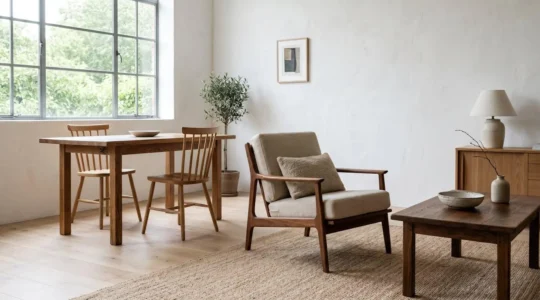
Building a Lasting Home: The Investment Strategy for Selecting Well-Made Furniture
The true cost of furniture is not its price tag, but its price divided by the years you’ll use it. Prioritise investment in high-contact items like sofas and dining chairs, which offer the highest return in daily function. Look beyond…
Read more
How to Assess Fabric Quality So You Never Waste Money on Poor-Quality Garments Again?
True garment quality is determined by material science and construction integrity, not by price tags or misleading marketing like thread count. Fabric blends often outperform 100% natural fibres in durability and function. Simple physical tests (stretch, light, weave) reveal more…
Read more
How to Set Up a Dedicated Workspace That Doubles Your Creative Productivity?
A ‘perfect’ looking workspace often sabotages creativity; the real key is designing a functional system that manages your cognitive energy. Your physical layout directly dictates your mental load, impacting focus more than you think. True ergonomics is about sustaining creative…
Read more