True garment quality is determined by material science and construction integrity, not by price tags or misleading marketing like thread count.
- Fabric blends often outperform 100% natural fibres in durability and function.
- Simple physical tests (stretch, light, weave) reveal more about quality than a care label.
Recommendation: Learn to perform a 30-second quality assessment using the hands-on techniques of a garment technologist to make smarter, more durable clothing investments.
For the conscious shopper, the cycle is frustratingly familiar: a promising new garment loses its shape, pills, or fades after just a few wears. The immediate suspect is often the material, leading to a common belief that only expensive, 100% natural-fibre items are worth the investment. This frustration pushes consumers toward what seems like a safe haven—high price points and familiar labels—only to be disappointed again when a premium price doesn’t deliver premium longevity.
Conventional wisdom offers a flawed toolkit for assessing quality. We’re told to check the thread count, favour natural fibres, and assume “Dry Clean Only” is a hallmark of luxury. These are the platitudes of the textile industry, surface-level metrics that manufacturers have learned to manipulate. The reality is that a high thread count can disguise poor-quality yarn, and a strategically engineered fabric blend can far surpass a pure natural fibre in terms of durability and performance for a specific end-use.
But what if the key to building a lasting wardrobe wasn’t about trusting the marketing, but about developing your own expertise? The secret isn’t in reading the tag; it’s in understanding the fabric itself. This article moves beyond the myths to equip you with the diagnostic mindset of a garment technologist. We will deconstruct the true markers of quality, from the science of performance blending and the truth about thread counts to the forensics of garment construction. By the end, you’ll be able to assess a product’s structural longevity, not just its shelf appeal, and make every purchase an informed investment.
This guide provides a structured approach to quality assessment. The following sections will walk you through the material science and construction details that separate truly well-made products from the merely expensive ones.
Summary: A Technologist’s Guide to Identifying True Fabric Quality
- Why 100% Natural Fibres Aren’t Always Superior: The Fabric Blend Quality Truth?
- How to Test Fabric Quality in 30 Seconds Using 3 Simple Touch-and-Stretch Techniques?
- Dry Clean Only vs Machine Washable: Which Care Requirement Actually Indicates Better Fabric?
- The Thread Count Trap That Makes Shoppers Pay £80 More for Inferior Bed Linen
- When to Repair Quality Garments vs When Fabric Deterioration Means Replacement?
- Why Premium Price Tags Don’t Always Equal Quality: The 5 True Markers of Well-Made Products?
- Why Solid Wood Frame Construction Outlasts Particleboard by 20+ Years and How to Spot the Difference?
- How to Recognise Genuinely High-Quality Products That Justify Premium Pricing?
Why 100% Natural Fibres Aren’t Always Superior: The Fabric Blend Quality Truth?
The belief that “100% natural” is the ultimate benchmark for quality is a pervasive myth. While fibres like cotton, wool, and silk have desirable properties, they also have inherent limitations. Cotton can stretch out and take a long time to dry, wool can be too warm for certain climates, and silk is delicate. This is where performance blending comes in, a textile engineering practice designed to create a superior material by combining the best properties of different fibres.
Instead of diluting quality, a well-designed blend enhances it for a specific end-use. Adding a small percentage of elastane (Lycra) to cotton provides stretch and recovery, preventing jeans from bagging at the knees. Blending polyester with wool can increase durability and wrinkle resistance for a travel suit. The market is increasingly recognizing this, with the global performance fabrics sector growing significantly, driven by demand from both technical apparel and everyday fashion where functionality is key.
The goal is to create a fabric that is greater than the sum of its parts. A prime example comes from the world of high-end apparel. As noted in a study on advanced textiles, “Blending 30% modal with 70% cotton can improve fabric drape by up to 15% and enhance softness for high-end loungewear collections.” This isn’t a cost-cutting measure; it’s a deliberate choice to achieve a specific feel and performance that neither fibre could achieve alone. A quality blend is a sign of thoughtful design, not a compromise.
Therefore, when you see a blend on a label, your first question shouldn’t be “Is this cheap?” but rather “What performance characteristic was this blend designed to achieve?”
How to Test Fabric Quality in 30 Seconds Using 3 Simple Touch-and-Stretch Techniques?
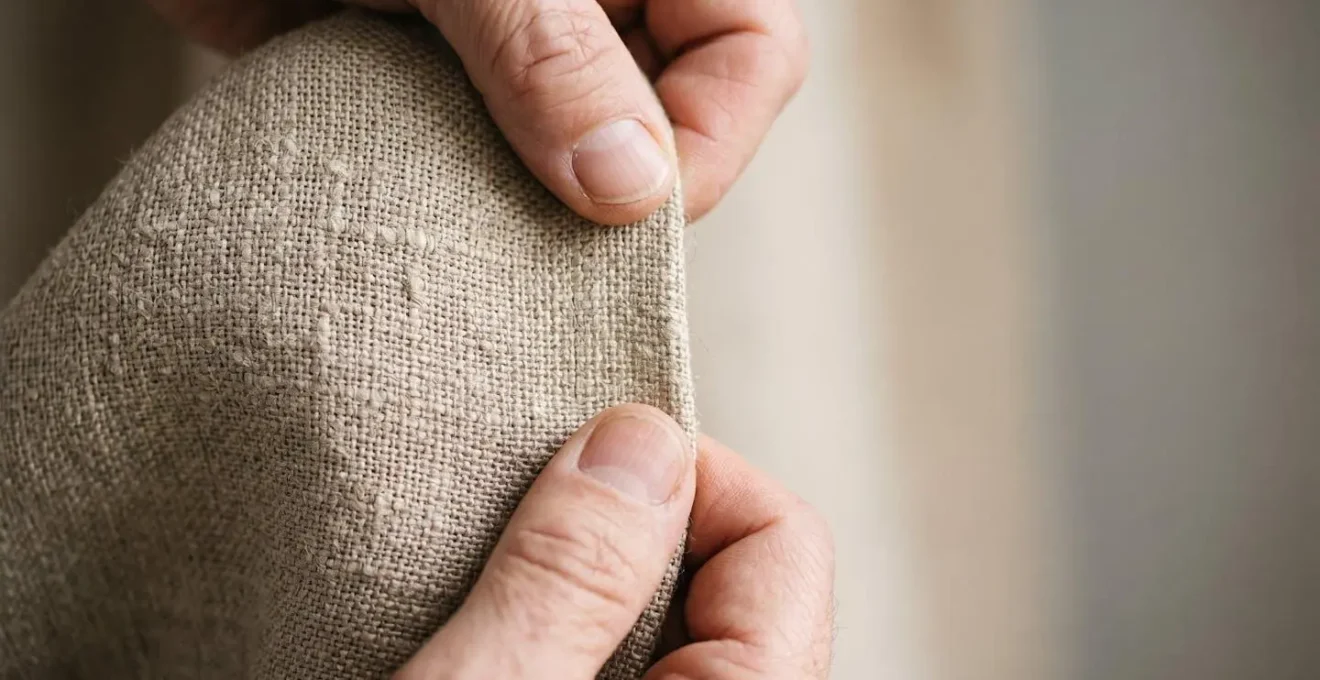
Your hands are your most effective and immediate tools for assessing fabric quality, provided you know what to look for. Going beyond a simple, subjective “feel,” a garment technologist employs a series of quick physical tests to evaluate a fabric’s material integrity. These tactile diagnostics can be performed in the store in under 30 seconds and reveal far more about a garment’s future performance than its price tag.
This “hand test protocol” involves scrutinizing the fabric’s core physical properties: its density, its recovery, and the consistency of its structure. These characteristics are direct indicators of the quality of the yarn and the precision of the weaving or knitting process. A fabric that feels flimsy or doesn’t spring back from a stretch is guaranteed to lose its shape, pill, or wear out prematurely, regardless of its fibre content.
The following three tests form the basis of a professional-level assessment. They require no special equipment and provide objective data on a fabric’s likely durability and longevity.
- The Stretch & Recovery Test: Gently stretch a small section of the fabric (ideally along the cross-grain) for a few seconds and release. High-quality fabric with good elasticity, whether from its natural properties or a blended fibre, will snap back to its original shape instantly and completely. Fabric that remains saggy or distorted, known as poor “modulus,” will not hold its shape on the body.
- The Transparency Test: Hold a single layer of the fabric up to a light source. A denser, tighter weave will block more light. While sheerness can be a design choice, in standard fabrics like cotton shirting or wool suiting, seeing a lot of light through the material often indicates a low thread count and a looser weave, which can lead to less durability and more seam slippage.
- The Weave Consistency Check: Examine the fabric surface closely. Look for a uniform, even weave without gaps, snags, or thicker/thinner sections (slubs, unless they are a deliberate design feature like in dupioni silk). Rub the fabric between your thumb and forefinger; a gritty or overly smooth, plastic-like feel can indicate finishing chemicals used to disguise poor-quality base fibres.
By internalizing these quick tests, you shift from a passive consumer to an active inspector, empowering yourself to identify well-made textiles before you even look at the price tag.
Dry Clean Only vs Machine Washable: Which Care Requirement Actually Indicates Better Fabric?
A “Dry Clean Only” label is often misinterpreted as a direct symbol of high quality. While it’s true that delicate luxury fabrics like silk, certain wools, and structured garments like tailored blazers require professional cleaning to preserve their shape and finish, the care tag is more an indicator of the garment’s construction and fibre sensitivity than its intrinsic quality.
Many high-quality, durable fabrics are perfectly machine washable. A dense, long-staple cotton, a well-made jersey, or a performance synthetic can be engineered for easy care and longevity. Conversely, a manufacturer might label a poorly constructed garment “Dry Clean Only” to protect it from falling apart in a washing machine, or to shield delicate but low-quality dyes from bleeding. The label absolves the manufacturer of responsibility for the garment’s failure under normal washing conditions.
Rather than relying on the care instructions as a proxy for quality, it is more reliable to assess the fabric’s inherent characteristics. As noted by the experts at Beth Smith Couture, fabric quality is often tangible: “High-quality fabrics often have a substantial feel—think of the crispness of good cotton or the softness of fine wool.” This substantiality, or density, is a far better indicator of quality yarn and a tight weave than a cleaning recommendation.
The critical takeaway is to evaluate the fabric on its own merits. A high-quality wool suiting will feel smooth and substantial, and its “Dry Clean Only” tag is appropriate for maintaining the garment’s structure. A high-quality pima cotton t-shirt will feel dense and soft, and its “Machine Washable” tag is a sign of its robust, practical nature. The quality lies in the material, not the washing method.
Ultimately, the best garments are those whose quality is evident in their feel and performance, with care instructions that are appropriate for their specific fibres and construction, rather than being a shield for inferiority.
The Thread Count Trap That Makes Shoppers Pay £80 More for Inferior Bed Linen
Thread count is perhaps the most successfully marketed—and most widely misunderstood—metric in the textile industry. Marketers have trained consumers to believe that a higher thread count number directly equates to superior quality, a simplification that allows them to charge premium prices for what can often be an inferior product. The “thread count trap” is the practice of inflating this number through misleading manufacturing techniques.
Thread count simply refers to the number of threads woven into one square inch of fabric, counting both lengthwise (warp) and widthwise (weft) threads. A 200-thread-count sheet might have 100 warp threads and 100 weft threads. The trap occurs when manufacturers use ultra-thin, low-quality, multi-ply yarns. A single thread might consist of two or three weaker fibres twisted together. They then count each of these individual plies, turning a 300-thread-count sheet into a “900-thread-count” product on the label. This creates a dense, heavy, and often non-breathable fabric made from weak, short-staple cotton that is prone to pilling and tearing.
The true markers of quality in bed linen are the fibre quality (long-staple cottons like Egyptian or Pima are superior), the type of weave (percale is crisp and cool, sateen is silky and smooth), and the finishing process. A well-made 300-thread-count sheet made from high-quality single-ply, long-staple cotton will feel far more luxurious, be more breathable, and last significantly longer than a 1000-thread-count sheet made from cheap, multi-ply yarn. In fact, many textile experts confirm that the optimal range for genuine quality and breathability in cotton percale or sateen sheets is between 300 and about 459 thread count.
Focus instead on the feel of the fabric, the reputation of the manufacturer for using long-staple cotton, and the quality of the weave. True luxury lies in the quality of the yarn, not the quantity of threads.
When to Repair Quality Garments vs When Fabric Deterioration Means Replacement?
In a world of fast fashion, the decision to repair a garment is a powerful act of sustainability and economic sense. However, not all garments are worth repairing. The decision hinges on a crucial distinction: is the problem one of construction failure or fabric deterioration? Repair is a viable and intelligent option for the former, but often a futile effort for the latter.
Construction failures are issues with how the garment was assembled. This includes split seams, a detached button, or a broken zipper. On a well-made garment, these are typically easy and inexpensive fixes for a tailor. Repairing a quality garment is highly effective because its core material—the fabric—retains its structural longevity. This is the essence of a “good investment” piece: its foundational fabric is robust enough to outlive its original stitching or hardware. The SKYPRO Small Fixes Program provides a compelling case study from the high-wear aviation industry. Their data shows that reusing a uniform through small repairs can reduce its carbon footprint by up to 90% compared to purchasing new, with repair costs being 2-3 times lower than replacement.
Case Study: SKYPRO Uniform Repair Program
SKYPRO’s Small Fixes Program demonstrates the measurable impact of garment repair over replacement. Through systematic inspection, expert repair using durable materials, and professional wet cleaning, the program extends uniform life in high-wear industries like aviation and hospitality. The data shows that reusing a uniform through small fixes can reduce the carbon footprint by up to 90% compared to purchasing new, while repair costs remain 2-3 times lower than replacement expenses.
Fabric deterioration, on the other hand, signals the end of a garment’s life. This includes issues like widespread pilling, fabric that has become thin and brittle, or fibres that have lost their elasticity and recovery (resulting in permanent sagging). These problems indicate that the yarn itself is failing. Attempting to repair a seam on fabric that is tearing alongside it is pointless; the material integrity is gone. This is the hallmark of a low-quality garment, where the fabric itself was the weakest link from the start.
Invest in repairing garments where the construction has failed but the fabric remains strong. For garments where the fabric itself is failing, it’s time for replacement—and a mental note to invest in higher-quality material next time.
Why Premium Price Tags Don’t Always Equal Quality: The 5 True Markers of Well-Made Products?
Price is often used as a mental shortcut for quality, but in the fashion industry, it is an unreliable indicator. A premium price tag can reflect genuine craftsmanship and superior materials, but it can also be the result of marketing overhead, brand licensing, or deliberate “luxury” positioning with no corresponding increase in quality. To become a discerning shopper, you must learn to look past the price and perform your own construction forensics, examining the hidden markers that separate truly well-made products from the merely expensive.
These markers are rarely advertised because they are costly and time-consuming to implement, and their value is only apparent upon close inspection. They are the details that mass-market producers consistently skip to save time and money. For a garment technologist, these details are everything, as they directly impact the garment’s durability, fit, and how it will age over time. Learning to spot them is the single most effective way to determine if a premium price is justified.
By focusing on how a garment is put together, you can identify true craftsmanship and make informed purchasing decisions based on tangible evidence, not just brand perception. The following checklist outlines five key construction quality indicators that reveal the difference between a high price and high value.
Action Plan: Your 5-Point Construction Quality Audit
- Pattern Matching: On garments with patterns like plaid, stripes, or florals, check if the pattern aligns seamlessly across seams, especially at the shoulders, side seams, and front placket. Perfect alignment requires more fabric and more skilled labour to cut, and is a hallmark of high-end construction.
- Hardware Quality: Examine the zippers, buttons, and snaps. Look for branded, heavy-duty zippers (like YKK or RiRi). Buttons should feel substantial and be made from natural materials like horn, corozo, or mother-of-pearl, not lightweight plastic. A smooth, snag-free zipper pull is a non-negotiable sign of quality.
- Stitching Density: Look closely at the seams. High-quality garments use a high number of stitches per inch (SPI), typically 10-14 SPI. This creates a stronger, more durable seam. Low-quality items often have a low SPI (6-8), with visible gaps between stitches, which are prone to breaking.
- Lining and Interior Finish: Check the inside of the garment. Is it fully lined? Is the lining material breathable (like Bemberg, cupro, or silk) or staticky and cheap (polyester)? Look for clean, enclosed seams (like French seams or flat-felled seams) instead of raw, overlocked edges, which can unravel.
- Buttonhole Integrity: A well-made buttonhole is a small but telling detail. It should be dense, tightly stitched, and cleanly cut with no fraying threads. A flimsy, frayed buttonhole is a clear sign of rushed production and a corner-cutting mentality.
This hands-on inspection process empowers you to see beyond the price tag and invest in products that are built to last, based on the tangible evidence of superior craftsmanship.
Why Solid Wood Frame Construction Outlasts Particleboard by 20+ Years and How to Spot the Difference?
While this article focuses on textiles, the principles of assessing quality extend to other high-value purchases, like furniture. Just as in garments, the true indicator of longevity in furniture is not its surface appearance but its underlying structural longevity. The starkest contrast is between solid wood frame construction and its cheaper alternatives like particleboard or MDF (Medium-Density Fiberboard).
A solid wood frame is built from single pieces of hardwood (like oak, maple, or ash), providing immense strength and durability. It can hold screws tightly, withstand stress from movement, and can be repaired and refinished over decades, often lasting for generations. Particleboard, by contrast, is an engineered wood product made from wood chips, sawdust, and resin compressed into sheets. It is heavy but structurally weak, susceptible to moisture damage, and does not hold screws well over time, making repairs difficult or impossible. A solid wood sofa frame can easily last 20+ years, while a particleboard frame may begin to fail in as little as 3-5 years under regular use.
Manufacturers often disguise particleboard with a thin layer of wood veneer or laminate to mimic the appearance of solid wood. However, a few simple physical tests can help you uncover the truth and avoid investing in a product that is designed to fail.
Just like with fabric, you can use a series of quick physical checks to determine the true nature of the material.
- The Lift Test: Solid wood is dense and heavy. Particleboard is also heavy, but often feels disproportionately so for its apparent “wood” type, or sometimes surprisingly light if it’s low-density. If a large, substantial-looking piece of furniture feels unusually light, it’s a red flag that it’s likely not solid wood.
- The Joinery Inspection: Look at how the pieces are joined. High-quality woodworking uses strong, interlocking joints like dovetails or mortise-and-tenon. Particleboard furniture is almost always assembled with simple screws, staples, and glue, which are visible signs of cheaper construction.
- The Grain Repetition Check: Examine a large surface like a tabletop or the side of a dresser. Real wood has a unique, varied, and non-repeating grain pattern. If you see the exact same knot or grain pattern repeated across the surface, you are looking at a veneer.
- The Edge and Underside Examination: Check the edges of shelves or the underside of the piece. This is where manufacturers often cut corners. If you see a raw, crumbly, sawdust-like texture, you have found particleboard. Solid wood will show a consistent end-grain.
By applying these forensic techniques, you can identify furniture with the inherent structural integrity to last, ensuring your investment pays dividends in longevity rather than leading to premature replacement.
Key Takeaways
- True quality is a function of material science and construction, not price or brand name.
- Fabric blends are often engineered for superior performance; 100% natural is not always better.
- Rely on physical tests (stretch, light, weave) over misleading metrics like thread count.
How to Recognise Genuinely High-Quality Products That Justify Premium Pricing?
Recognizing genuinely high-quality products is a skill that blends technical knowledge with mindful observation. It’s about shifting your mindset from a passive consumer, influenced by marketing and price signals, to an active evaluator who understands the fundamentals of material integrity and structural longevity. It’s the ability to see not just a garment or a piece of furniture, but to deconstruct it into its core components: the quality of its fibres, the precision of its assembly, and its fitness for purpose.
This expertise is not about chasing luxury brands, but about identifying craftsmanship wherever it exists. A well-made, unbranded item that has been thoughtfully designed with high-quality materials and robust construction is a far better investment than a poorly made item with a famous logo. The goal is to maximize value by focusing on durability and longevity, which ultimately lowers the “cost-per-wear” or “cost-per-use” and reduces waste.
The journey from a novice shopper to a discerning quality inspector involves integrating the principles we’ve discussed into a holistic assessment. It’s understanding that quality is a system where every element matters. As the experts at Reed Family Linen state, “The quality of the threads and the weaving technique are equally crucial. Authentic high thread count sheets with quality fibres and craftsmanship contribute to durability, ensuring your investment stands the test of time.” This principle applies universally, from bed linen to blazers.
Ultimately, by equipping yourself with this knowledge, you are not just buying better things; you are making a conscious investment in a more sustainable and satisfying relationship with the products you choose to bring into your life. Begin applying these assessment techniques today, and you will build a collection of belongings that deliver lasting value and timeless satisfaction.