Judging product quality by price tag alone is a flawed strategy that leads to costly mistakes.
- True value is found in objective markers like material integrity and proven repairability.
- Calculating ‘cost-per-use’ reveals that a higher initial price often saves money long-term.
Recommendation: Adopt a consultant’s mindset: analyse construction, verify claims with unbiased data, and prioritise longevity over luxury branding.
You have likely experienced the frustration: a seemingly premium item, purchased with the expectation of durability, fails long before its time. The zip on a winter coat breaks after one season, a “solid” bookshelf begins to sag, or an expensive gadget becomes an irreparable paperweight. This cycle of disposable purchasing is not just a drain on your finances; it’s a source of constant disappointment. The common advice—”check the materials,” “read the reviews,” “buy from reputable brands”—often feels like guesswork, leaving you uncertain about where your money is truly well-spent.
But what if the problem isn’t the products, but the way we evaluate them? The key to breaking free from this cycle is to stop thinking like a consumer and start thinking like a quality assessment consultant. It requires shifting your focus from the superficial allure of a price tag or brand name to a systematic analysis of a product’s entire lifecycle. This means learning to identify the tangible markers of superior craftsmanship, calculating the real cost over time, and understanding the crucial difference between genuine quality and mere luxury.
This guide provides that analytical framework. We will move beyond the platitudes to give you the tools to assess long-term value. You will learn to calculate cost-per-use, decode material labels, identify robust construction, and critically evaluate a product’s potential for a long and useful life. By the end, you will be equipped to make informed investment decisions, ensuring that when you do pay a premium, it is for products that truly deliver lasting worth.
To navigate this new approach to purchasing, we have structured this guide to build your assessment skills progressively. The following sections will equip you with the specific knowledge and frameworks needed to evaluate any product with confidence.
Summary: Recognising Genuinely High-Quality Products
- Why Premium Price Tags Don’t Always Equal Quality: The 5 True Markers of Well-Made Products?
- How to Calculate Whether a £200 Product That Lasts 10 Years Beats a £50 Product Replaced Annually?
- Independent Reviews vs Brand Claims: Where to Find Unbiased UK Product Quality Information?
- The Luxury Creep Trap: When Buying Quality Becomes Unnecessary Premium Spending
- When to Repair Quality Products vs When Replacement Is More Economical and Sustainable?
- Why 100% Natural Fibres Aren’t Always Superior: The Fabric Blend Quality Truth?
- Why Solid Wood Frame Construction Outlasts Particleboard by 20+ Years and How to Spot the Difference?
- How to Select Well-Made Pieces That Transform Your Home into a Lasting, Cohesive Environment?
Why Premium Price Tags Don’t Always Equal Quality: The 5 True Markers of Well-Made Products?
A high price can create a powerful “halo effect,” making us assume a product is inherently better. While premium items can sometimes hold their value exceptionally well—the luxury resale market is a testament to this, projected to grow from $25.78 billion in 2024 to $82.82 billion by 2032—the price tag itself is not a reliable indicator of quality. True quality is an output of deliberate design and manufacturing choices. To assess it accurately, you must look past the price and focus on five tangible markers.
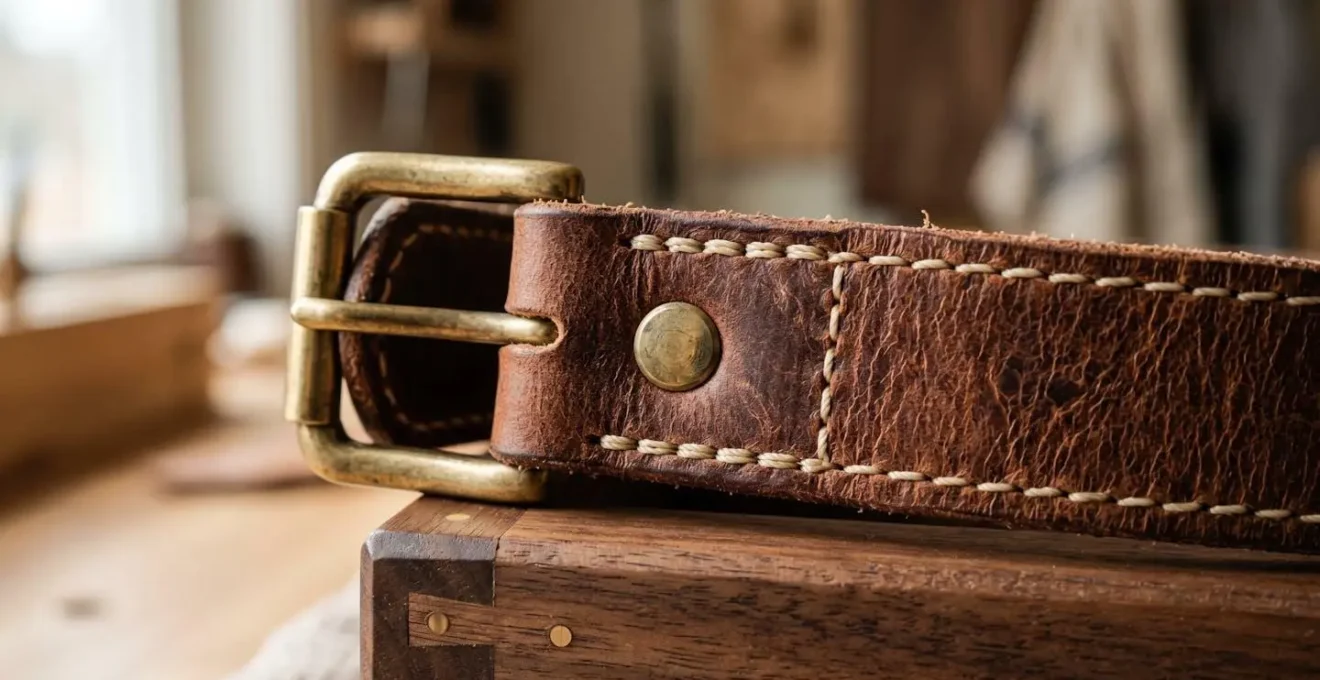
First, Material Integrity. This goes beyond a simple label. It’s about the grade and source of the material. Is it full-grain leather or bonded leather? Long-staple cotton or a cheaper short-staple variety? Second, look at the Construction and Craftsmanship. This is where you examine how the materials are put together. Are seams double-stitched? Are furniture joints dovetailed or just stapled? The details reveal the level of care invested in the product’s assembly.
Third, analyse the Component Quality. A product is only as strong as its weakest link. A high-end bag with a cheap, unbranded zip is a major red flag. Look for proven components like YKK zips, Vibram soles on shoes, or stainless-steel hardware. Fourth is Design for Longevity and Repairability. Is the product designed to be taken apart and fixed? Are replacement parts available? A product designed to be disposable is, by definition, low quality, regardless of its price. Finally, consider Brand Transparency and Support. A confident brand will offer a robust warranty, provide detailed product care information, and stand behind its product with accessible customer service.
How to Calculate Whether a £200 Product That Lasts 10 Years Beats a £50 Product Replaced Annually?
The most powerful tool for a value-focused mindset is moving beyond the initial purchase price to calculate the Cost Per Use (or Cost Per Wear for clothing). This simple metric reframes a purchase as an investment and reveals the true long-term financial impact. A £50 item that needs replacing every year costs £500 over a decade, not including the time and frustration of repeated purchases. In contrast, a £200 item that lasts the full decade has a total cost of just £200. The “cheaper” option is actually two and a half times more expensive.
Calculating this is straightforward. The goal is to determine how much each use of the item actually costs you. A good rule of thumb is that a cost per wear under £4 is considered a good benchmark, while under £1 represents exceptional value. To find this number, you need to honestly estimate how often you will use the product over its expected lifespan.
Here is a simple framework to apply:
- Estimate Total Cost: Start with the purchase price. Add any mandatory maintenance costs (e.g., professional cleaning) and subtract any realistic resale value if applicable.
- Estimate Total Uses: Be realistic. How many times per week or month will you use this item? Multiply that by 12 (for months in a year) and then by the number of years you expect it to last.
- Apply the Formula: Divide the Total Cost by the Total Uses. This gives you your Cost Per Use.
- Factor in “Invisible” Costs: Assign a monetary value to your time spent researching, shopping for, and dealing with replacements. Even at a modest £10/hour, this adds up significantly with disposable products.
- Compare Scenarios: Run the numbers for both the high-quality and the cheap option. A £200 coat worn 200 times is £1 per wear. A £50 coat worn 30 times before failing is £1.67 per wear, plus the hassle of four replacement cycles.
This calculation transforms your perspective. It forces you to consider longevity and utility, steering you away from impulse buys and towards items that deliver genuine, measurable value over time.
Independent Reviews vs Brand Claims: Where to Find Unbiased UK Product Quality Information?
In a world of sponsored content and curated testimonials, distinguishing authentic feedback from marketing spin is a critical skill. Brand claims should always be treated as the starting point, not the conclusion. The real insights come from independent, third-party sources and a critical reading of user reviews. For electronics and complex goods, engineering-based assessments offer the highest level of objectivity.
These resources cut through marketing noise by focusing on empirical evidence of build quality and design integrity. They provide a data-backed counterpoint to a brand’s promotional materials, empowering you to verify claims about durability and longevity.
Case Study: iFixit’s Repairability Scoring
iFixit provides objective product quality assessment through physical teardowns, scoring devices from 0 to 10 based on criteria like service manual availability, parts accessibility, and design for repair. Their methodology evaluates whether products can be disassembled non-destructively with common tools and whether critical components are accessible. This engineering-based approach offers consumers data-backed evidence of build quality independent of marketing claims, making it an invaluable resource for evaluating whether premium-priced products justify their cost through genuine repairability.
When professional teardowns aren’t available, user reviews are your next best source—if you know how to decode them. The key is to look for patterns that signal a systemic design or manufacturing flaw, rather than isolated incidents or user error. Learning to filter out the noise is essential for extracting actionable intelligence from crowd-sourced feedback.
Action Plan: How to Identify Genuine Quality Flaws in Reviews
- Look for Pattern Recognition: A genuine quality flaw appears repeatedly across multiple reviews with consistent descriptions (e.g., ‘sole separated after 3 months’ appearing 15+ times).
- Distinguish Systemic Issues from User Error: A systemic issue points to a design fault (e.g., ‘stitching failed at stress points’), whereas user error is an isolated incident (e.g., ‘broke when I dropped it’).
- Filter Out Logistics Complaints: Ignore reviews focused on shipping or packaging issues like a ‘damaged box’ or ‘missing parts’, as these do not reflect the product’s intrinsic quality.
- Check Review Timing: True durability flaws often emerge after 3-6 months of regular use. Negative reviews posted immediately after purchase may reflect unmet expectations rather than a quality failure.
- Cross-Reference with Professional Analysis: If possible, compare user complaints with findings from professional teardowns or expert reviews to validate claims about structural weaknesses.
The Luxury Creep Trap: When Buying Quality Becomes Unnecessary Premium Spending
There is a critical distinction between paying for quality and paying for luxury. Quality is about superior materials, robust construction, and thoughtful design that enhance function and longevity. Luxury, on the other hand, often involves paying a premium for brand prestige, exclusivity, or aesthetic embellishments that add little to no functional value. Falling into the “luxury creep trap” means you start paying for the story, not the substance.
This phenomenon is driven by factors like marketing and artificial scarcity, where value is created through perception rather than performance. A classic example is the collectible watch market, where price is dictated by rarity and brand heritage. Market analysis shows that 95% of rare and collectible watches are no longer in production, making scarcity, not necessarily superior time-keeping, the primary driver of their extreme value. While a beautifully crafted mechanical watch is a feat of engineering, a simple, durable quartz watch from a reputable maker will keep time just as accurately for a fraction of the cost.
To avoid this trap, you must constantly ask: “What functional benefit does this extra cost provide?” Are you paying for a more durable material, or for an exotic material that requires delicate care? Are you paying for stronger construction, or for a designer logo? Recognising this distinction is key. For example, a well-made leather bag justifies its price with durability and repairability. A bag made from the same quality leather but covered in logos and seasonal hardware may cost five times as much due to value dilution—where the price inflates based on branding, not an increase in utility or longevity.
When to Repair Quality Products vs When Replacement Is More Economical and Sustainable?
A core tenet of investing in quality is the ability to extend a product’s life through repair. However, the decision to repair versus replace is not always clear-cut; it requires a pragmatic, cost-benefit analysis. A growing repair culture, evidenced by projections that the global luxury resale market will grow to $95.2 billion by 2034, shows a clear shift towards valuing longevity. To make the right call, you need a simple framework that balances financial cost with post-repair value.
The most widely used guideline is the “50% Rule”. This principle provides a clear financial checkpoint for your decision. Beyond this, you must also consider the quality of the repair and the product’s remaining potential lifespan. A temporary patch-up is rarely a good investment, whereas a proper restoration can give an item a second life.
Use this five-point framework to guide your decision:
- Apply the 50% Rule: As a general guideline, a repair is financially smart if its cost is less than 50% of the price of a new, equivalent product.
- Calculate Post-Repair Lifespan Value: Will the repair restore the item to near-original condition and allow it to function for at least 50% of its original expected lifespan? If so, it is likely worthwhile.
- Evaluate Repair Quality vs. a Patch: A quality repair involves replacing a worn mechanism or reinforcing a structural weak point. A temporary patch, like gluing a broken plastic part, merely delays an inevitable failure and is often a waste of money.
- Factor in Future Parts Availability: Repair becomes a more viable long-term strategy if the manufacturer continues to produce replacement parts and provide service manuals. Check this before you buy.
- Consider Upgrade Opportunity Cost: For electronics, the decision is more complex. You must weigh the repair cost against the performance, security, and energy efficiency gains of a newer model. Sometimes, upgrading is the more sustainable and economical choice.
This disciplined approach ensures that your commitment to longevity is also a commitment to smart financial and resource management.
Why 100% Natural Fibres Aren’t Always Superior: The Fabric Blend Quality Truth?
The belief that “100% natural” is always a marker of superior quality is a common and costly misconception, especially in clothing. While natural fibres like cotton, wool, and silk offer wonderful properties like breathability and a pleasant feel, they also have inherent weaknesses, such as a tendency to wrinkle, lose shape, or wear out quickly under high friction. This is where performance blends come in.
A high-quality blend is not a cost-cutting measure; it is an engineering decision. By strategically adding a small percentage of a synthetic fibre, manufacturers can significantly enhance the performance and lifespan of a garment without sacrificing the benefits of the natural fibre. The key is to understand the ratio and the purpose. A good blend uses synthetics to solve a problem, whereas a bad blend uses them to dilute the natural fibre and reduce cost.
Here is how to decode the fabric label to distinguish between a “good” performance blend and a “bad” cost-cutting blend:
- Good Performance Blend (Stretch): Look for 95-98% natural fibre (like cotton or modal) combined with 2-5% elastane or spandex. This tiny amount of synthetic provides excellent stretch and shape recovery without affecting breathability.
- Good Durability Blend (Strength): A blend of 80-85% merino wool with 15-20% nylon is common in high-quality hiking socks. The nylon adds critical abrasion resistance in the heel and toe, dramatically extending the sock’s life.
- Bad Cost-Cutting Blend (Dilution): Be wary of blends like 50% cotton and 50% polyester in items like t-shirts. This ratio doesn’t significantly enhance performance; it primarily serves to lower manufacturing costs, resulting in a fabric that lacks the best qualities of either material.
- Care and Longevity Blend: A small percentage of a synthetic fibre can also reduce pilling, make washing easier, and extend the overall life of a garment by 30-50%, making it a smart long-term investment.
Ultimately, context is everything. A technical jacket designed for harsh weather will benefit from a nylon-heavy blend for its weather-resistant properties. For everyday wear, a small amount of stretch can be the difference between a shirt that looks great after 50 washes and one that is misshapen after five.
Why Solid Wood Frame Construction Outlasts Particleboard by 20+ Years and How to Spot the Difference?
When it comes to furniture, no choice has a greater impact on longevity than the core material. Solid wood and particleboard may look similar on the showroom floor, but their performance over time is drastically different. According to furniture durability research, solid wood furniture can last 20 to 50 years or more, while pieces made from particleboard often fail within 5 to 10 years under normal household use. Particleboard, which consists of wood particles bonded with adhesive, is susceptible to moisture damage, sagging under weight, and cannot hold screws securely after repeated movement.
Solid wood, by contrast, is a natural, dense material that can be sanded, refinished, and repaired over decades. Its structural integrity allows for strong joinery techniques that are impossible with particleboard. The higher upfront cost of solid wood is an investment in an asset that can potentially last a lifetime, whereas particleboard furniture is almost always a short-term expense.
Distinguishing between the two requires a quick physical inspection. Manufacturers often use thin wood veneers over particleboard cores, so you cannot rely on surface appearance alone. Here is a professional’s checklist for spotting the difference:
- The Weight Test: Solid wood is significantly denser and heavier than particleboard. Try lifting a corner of the piece; if it feels surprisingly light for its size, it’s likely not solid wood.
- Grain Consistency Check: Examine the edges and corners. In solid wood, the grain pattern will flow continuously from the top surface over the edge. On a veneered piece, you will see a thin, straight line of the veneer and a different, compressed particle pattern on the core underneath.
- Joinery Inspection: Look underneath or inside drawers. The hallmarks of solid wood construction are strong joints like dovetails or mortise-and-tenon. Particleboard is typically assembled with staples, glue, or simple metal fasteners.
- The Sound Test: Knock firmly on the surface. Solid wood will produce a deep, resonant tone. Particleboard will produce a dull, hollow thud.
By using these simple spot-checks, you can confidently identify furniture that is built to last, ensuring your investment pays dividends for years to come.
Key Takeaways
- True quality is defined by material integrity, robust construction, and repairability—not the price tag.
- Calculate the ‘Cost-Per-Use’ to make financially sound, long-term investments instead of short-term purchases.
- Prioritise repairable products with available parts and invest strategically in ‘anchor pieces’ to build a lasting environment.
How to Select Well-Made Pieces That Transform Your Home into a Lasting, Cohesive Environment?
Building a home environment filled with quality, lasting pieces can feel overwhelming. The secret is not to buy everything at once, but to adopt a strategic, long-term approach known as the “Anchor Piece Strategy.” This method focuses your budget and attention on the most important, most-used item in each room, ensuring this foundational piece is of exceptional, repairable quality. Everything else is built around it over time.
This strategy prevents you from spreading your budget too thinly across many mediocre items. By investing heavily in a high-quality sofa, bed frame, or dining table, you establish a core of durability and style that will serve you for decades. Longevity experts note that furniture made from hardwoods like oak, teak, or walnut can last anywhere from 30 to 100 years with basic care, making them perfect anchor pieces. This approach transforms furniture shopping from a series of disconnected purchases into a cohesive, long-term plan for your home.
Here is how to implement the Anchor Piece Strategy:
- Identify Your Anchor Piece: For each room, determine the single most important item. This is usually the living room sofa, the bedroom bed frame, or the dining room table.
- Allocate Your Budget: Dedicate 60-70% of the room’s furniture budget to securing this one anchor piece. This focused investment ensures its quality is non-negotiable.
- Verify Repairability and Expandability: Choose an anchor that has available replacement parts (like sofa cushion covers) or standard dimensions that allow for future matching. This is a key component of its long-term value.
- Apply the Cost-Per-Year Calculation: A £1,200 solid wood dining table that lasts 40 years has a cost of £30 per year. A £300 particleboard table lasting 5 years costs £60 per year—twice as much in the long run.
- Build Around the Anchor: Once your anchor is in place, you can gradually add secondary, complementary pieces (side tables, chairs, lamps) as your budget allows, using a consistent material palette (e.g., oak, wool, steel) to create a cohesive look.
By focusing your investment where it has the most impact, you can methodically build a home that is not only beautiful and functional but also a testament to enduring quality and smart planning.
Stop being a consumer and start being an investor in your own life. Before your next significant purchase, apply the cost-per-use framework. You won’t just be buying a product; you’ll be making a calculated decision for a more sustainable and valuable future.