The belief that effortless style means less effort is a myth; it’s about front-loading that effort into designing a personal style system that works for you automatically.
- True “low-effort” looks come from high-leverage upfront choices in haircuts, fabrics, and silhouettes.
- Focus on performance (wrinkle-resistance, shape retention) and personal fit over chasing fleeting trends.
Recommendation: Stop making daily style decisions and start designing a system. The first step is to analyze what truly works for your life, not what looks good in a magazine.
The promise of “effortless style” is one of the great illusions of modern culture. You admire the person who looks perfectly put-together in what appears to be a simple t-shirt and jeans, or whose hair falls just right without a single product. Yet, when you try to replicate it, you find yourself spending 45 minutes on a “messy” bun or constantly fighting with clothes that wrinkle the moment you sit down. This frustration is a shared experience; a recent report highlighted that over half of clients felt mentally overwhelmed or stressed when deciding what to wear, a feeling amplified by the pressure to appear effortlessly chic.
The common advice—build a capsule wardrobe, invest in classics—often misses the mark because it addresses the symptoms, not the root cause. The problem isn’t a lack of the “right” pieces; it’s the lack of a functional system. True effortlessness isn’t about trying less; it’s an engineering problem. It’s about making strategic, high-impact decisions upfront so that your daily routine becomes a simple matter of execution, not a series of exhausting creative choices. The secret is shifting from a daily reactive approach to a pre-planned, systemic one.
This guide abandons generic tips and instead provides a framework for designing your personal style system. We will deconstruct the three pillars of a truly low-maintenance appearance: foundational preparation, high-performance materials, and the non-negotiable details that separate “undone” from “unkempt.” By focusing 80% of your effort on this initial design phase, you can achieve a polished look with only 20% of the daily maintenance you’re currently investing.
This article provides a detailed roadmap to building your own low-effort, high-impact style system. The following sections break down each component, from strategic haircuts to the psychology of dressing, to help you reclaim your time and energy.
Summary: A Guide to Building a Truly Effortless Style System
- Why Truly Effortless Style Requires 80% Preparation and Only 20% Daily Maintenance?
- How to Choose Haircuts and Colour That Look Polished After Air-Drying with Zero Products?
- Linen vs Wool vs Synthetics: Which Fabrics Look Fresh After a Full Day Without Pressing?
- The “Undone” Styling Trap That Makes You Spend 45 Minutes Creating a “Just Woke Up” Look
- When Does “Undone” Become “Unkempt”: The 3 Non-Negotiable Elements of Effortless Polish?
- How to Identify the 3 Silhouettes That Flatter Your Body Rather Than Following Generic Rules?
- How to Navigate Personal Expression in Professional Settings Without Compromising Authenticity?
- How to Cultivate a Sense of Style That Reflects Your Identity Rather Than Fashion Trends?
Why Truly Effortless Style Requires 80% Preparation and Only 20% Daily Maintenance?
The concept of “effortless” style is fundamentally misunderstood. It doesn’t mean a lack of effort, but a strategic reallocation of it. The person who looks polished in five minutes didn’t just wake up that way; they invested significant effort upfront to design a personal style system that automates the outcome. This is the Pareto Principle—the 80/20 rule—applied to your appearance: 80% of your polished look comes from 20% of your actions, provided those actions are the *right ones* performed during a dedicated preparation phase.
This upfront investment involves auditing your lifestyle, understanding your ideal silhouettes, and curating a selection of items that work together seamlessly. This systematic approach is the engine behind the rising trend of capsule wardrobes, a market projected to reach USD 7.8 Billion by 2031. But a capsule wardrobe is not just a small collection of clothes; it is a meticulously engineered system where every piece serves multiple functions, reducing daily decision-making to almost zero. As Stitch Fix stylist Alicia Lloyd notes, the goal is “maximizing the cost per wear,” which is a direct result of smart, initial planning.
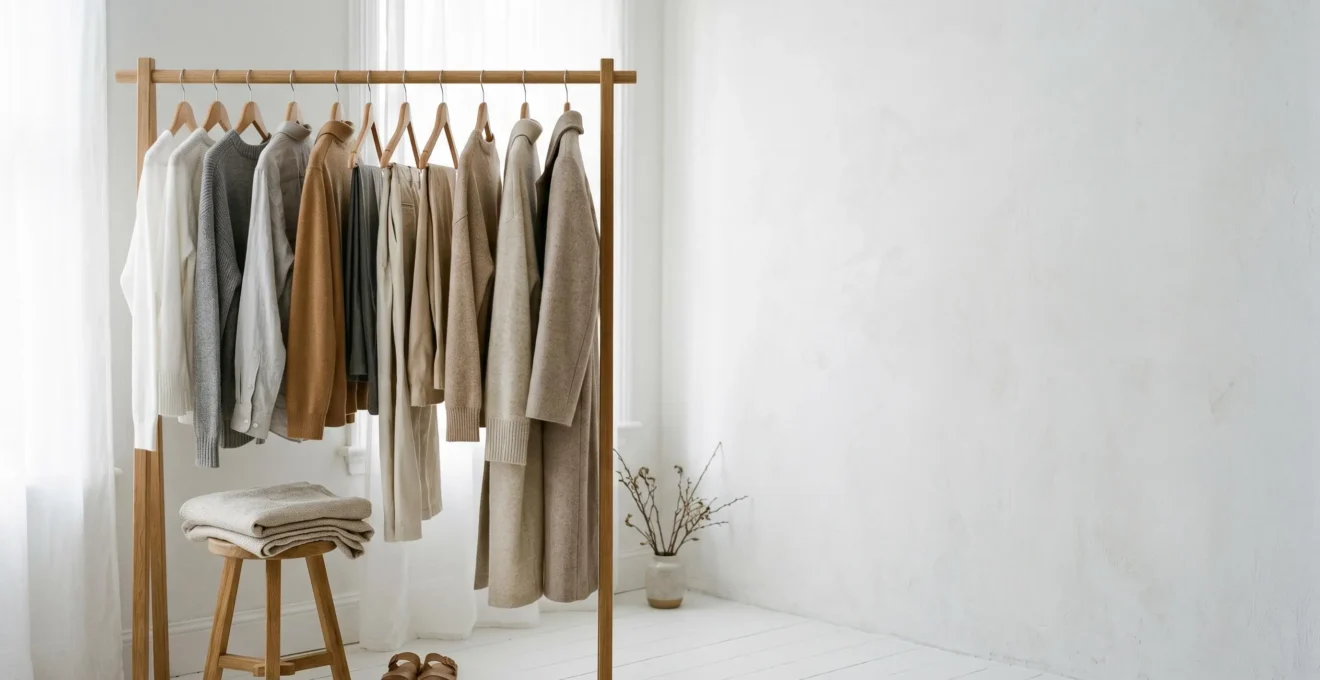
As the image illustrates, a well-designed wardrobe is like a piece of architecture. Each element has a purpose and relates to the others, creating a cohesive and functional whole. This initial design phase—choosing the right haircut, selecting performance fabrics, and tailoring key pieces—is where the real work happens. Once the system is built, the daily “effort” is merely activating it. You’re no longer a stressed creative director every morning; you’re simply an executor of a brilliant pre-written plan.
How to Choose Haircuts and Colour That Look Polished After Air-Drying with Zero Products?
Your hair is arguably the most critical component of a low-maintenance look, as it’s the one thing you wear every single day. Asking a stylist for a “low-effort” cut is often too vague and leads to disappointment. The key is to be highly specific and have a consultation that focuses on the hair’s performance when left to its own devices. A truly low-maintenance cut is not one that *can* look good with styling, but one that is *designed* to look good with almost no intervention.
This means selecting a cut that works with your hair’s natural texture, not against it. According to professional stylists, cuts like blunt bobs, lobs, and long, soft layers are top performers in this category. As noted in an analysis of haircut performance, blunt edges are effective because they retain their shape for longer between trims, making them look intentional even as they grow. Meanwhile, well-placed layers can remove bulk and encourage natural movement, allowing hair to air-dry into a flattering shape without the need for heat or products. The goal is a cut that has structure built into its very architecture.
For color, the same principle applies. Techniques like balayage, foilyage, or shadow roots are designed to blend with your natural color as your hair grows. This eliminates the harsh demarcation line that comes with all-over color, extending the time between salon visits from every 4-6 weeks to every 3-6 months. When you consult with your stylist, be prepared with specific questions that focus on long-term wear and air-dried results. This upfront communication is the most important step in achieving hair that truly works for you, not the other way around.
Your Action Plan: Consulting for a Zero-Product Haircut
- Ask for soft, blended layers that start around mid-length to reduce weight and create natural movement.
- Request subtle face-framing layers that taper around the chin or collarbone for a flattering shape.
- Specify you need a cut that grows out gracefully, maintaining its shape for 3-5 months between trims.
- Discuss how the cut will work with your natural hair texture when air-dried, not when professionally styled.
- Inquire about the exact maintenance routine required and the realistic daily styling time, which should be near zero.
Linen vs Wool vs Synthetics: Which Fabrics Look Fresh After a Full Day Without Pressing?
The secret to looking polished and unwrinkled after a full day of activity isn’t constant vigilance; it’s choosing the right materials from the start. Fabric selection is a core component of your style system, and focusing on “performance fabrics” will do more for your appearance than any amount of ironing. Some textiles are simply engineered to resist wrinkles and recover their shape, while others are destined to crease at the slightest movement.
Wool, particularly merino wool, is a natural performance champion. Its fibers have a natural crimp that acts like a spring, allowing the fabric to bounce back into shape after being compressed. On the other end of the spectrum, 100% linen is famous for its tendency to wrinkle, but this is often embraced as part of its aesthetic for casual wear. For professional or travel settings where a crisp look is non-negotiable, synthetic blends are often the superior choice. For example, tests on business travelers showed that TR (Tetron-Rayon) suiting fabric, a polyester-viscose blend, retains its smooth appearance exceptionally well. Understanding these properties is crucial for building a wardrobe that performs under pressure.
The following table, based on extensive fabric performance analysis, breaks down the key characteristics of common textiles, helping you make strategic choices for your low-maintenance wardrobe.
| Fabric Type | Wrinkle Resistance | Breathability | Recovery Rate | Best Use Case |
|---|---|---|---|---|
| Wool / Merino Wool | Excellent (5/5) | High | Natural resilience | All-day office wear |
| Polyester Blends (TR Suiting) | Very High | Moderate | 92-96% shape recovery | Travel and long commutes |
| 100% Linen | Low (2/5) | Excellent | Intentional wrinkle aesthetic | Casual warm-weather wear |
| Cotton with Durable Press Finish | High (4.78/5) | Good | Chemical treatment dependent | Business casual settings |
| Nylon / Spandex Blends | Very High | Low-Moderate | Inherent synthetic resilience | Athletic-inspired workwear |
By prioritizing materials like wool and high-quality synthetic blends for key items like trousers, blazers, and dresses, you are building an “anti-wrinkle” system directly into your wardrobe. This upfront material selection saves you countless hours of steaming, pressing, and worrying throughout the day.
The “Undone” Styling Trap That Makes You Spend 45 Minutes Creating a “Just Woke Up” Look
One of the greatest paradoxes in the pursuit of effortless style is the “undone” look. It’s the artfully messy bun, the perfectly half-tucked shirt, or the “no-makeup” makeup that, ironically, often requires more time and skill than a straightforward, polished alternative. This is the “undone styling trap,” where the pursuit of calculated nonchalance leads to diminishing returns and decision fatigue. In fact, a 2024 McKinsey report found that 30-35% of US consumers have postponed or abandoned purchases simply because they were overwhelmed by choice—a fatigue that extends to our closets each morning.
The psychology behind this is simple: perfection is often easier to achieve than studied imperfection. A sleek ponytail has clear rules; a “messy” one involves a dozen micro-adjustments to look just right. This is where the 80/20 rule becomes a powerful mental model. As one analysis from The Fashion Psychology highlights:
The first 5 minutes of effort yield 80% of the result, while the next 40 minutes only add 20% that is often unnoticeable to others.
– Fashion Psychology Analysis, The Fashion Psychology
This insight is liberating. The endless tweaking and perfecting you do beyond the first few minutes is largely for your own benefit and goes unseen by the outside world. Escaping the trap requires a conscious decision to embrace “good enough.” This means accepting the natural texture and wrinkles of a fabric or the way your hair naturally falls, rather than fighting to achieve a flawless yet “natural” look.
The real path to an “undone” look is not through elaborate styling, but through an upfront investment in quality and fit. A beautifully cut linen shirt doesn’t need a perfect half-tuck to look chic; its inherent quality does the work. A great haircut doesn’t need to be wrestled into a messy bun; its shape is designed to look good on its own. The goal is to let your well-chosen foundations speak for themselves, freeing you from the trap of over-styling.
When Does “Undone” Become “Unkempt”: The 3 Non-Negotiable Elements of Effortless Polish?
There is a fine line between an “undone” look that reads as chic and confident, and one that simply looks “unkempt” or sloppy. The difference is not in the clothes themselves, but in the presence of a few deliberate points of polish. These are the grooming anchors: small but powerful signals that communicate your entire look is intentional, even if the rest of it is relaxed. No matter how simple your outfit, maintaining these anchors ensures you always look put-together.
These anchors act as a framework for your overall appearance. When these specific details are attended to, they create a halo effect of polish that elevates everything else. For instance, well-maintained nails and groomed eyebrows provide structure and a sense of care that a simple t-shirt and jeans alone cannot. Similarly, the quality of your shoes can single-handedly define the entire outfit’s level of formality. As celebrity hairstylist Marc Ballance explains, the same principle applies to your hair: “The key is designing a shape that grows out seamlessly, so your hair looks just as good weeks later as it did on day one.” This is an anchor point achieved through upfront investment.
Mastering the balance between undone and unkempt is about being strategic. You don’t need to control every element of your look. Instead, you focus your minimal daily effort on maintaining these three non-negotiable areas: your grooming endpoints (hair, nails, brows), the fit of your clothes, and one deliberate point of intention. By securing these anchors, you give yourself permission for the rest of your style to be relaxed and truly effortless.
Your Audit Checklist: The 3 Pillars of Effortless Polish
- Grooming Endpoints: Check your “anchor points.” Are your nails clean and tidy? Are your eyebrows shaped to frame your face? Does your hair have a healthy appearance and a deliberate shape?
- Quality of Fit: Assess your main garments. Do they follow your body’s lines without pulling, sagging, or bunching? A perfect fit communicates conscious choice, even in casual wear.
- A Point of Intention: Identify one deliberate detail in your outfit. Is it a high-quality accessory, a striking lip color, or immaculate shoes? This single element signals the entire look is purposeful.
How to Identify the 3 Silhouettes That Flatter Your Body Rather Than Following Generic Rules?
For decades, style advice has been dominated by generic, fruit-based body-type rules (“pear,” “apple,” “hourglass”) that are often confusing and restrictive. A far more effective and empowering approach is to ignore these labels and instead identify your personal silhouette architecture. This involves discovering the 3-4 core clothing shapes that consistently make you feel confident and comfortable, regardless of trends or external rules. This is a process of self-discovery, not prescription.
The most reliable way to do this is the “Photo Lineup Method.” Mirrors are deceptive because we often pose and see what we want to see. Photos, on the other hand, provide objective data. By taking simple, full-body photos of yourself in various outfits over several weeks, you create a dataset to analyze without the real-time emotional bias of a mirror. When you review these photos as a batch, patterns will emerge.
You’ll start to notice which outfits you gravitate towards and, more importantly, *why*. Focus on the architectural lines of the clothes. Do you feel best in A-line skirts? Straight-leg or wide-leg trousers? Garments with a defined waist or a more relaxed, columnar shape? Look for recurring themes in the silhouettes that not only look good in a static photo but also allowed for free movement and comfort throughout a real day. These are your foundational silhouettes. Once you identify your top three, you can use them as a filter for all future purchases, creating a wardrobe where everything is guaranteed to flatter and feel good. This transforms shopping from a game of chance into a targeted, successful mission.
How to Navigate Personal Expression in Professional Settings Without Compromising Authenticity?
The modern workplace presents a unique style challenge: how to express your personal identity while adhering to professional norms. The fear of appearing “unprofessional” can often lead to a bland, uniform-like wardrobe that feels inauthentic. However, authenticity and professionalism are not mutually exclusive. The solution lies in the 80/20 Professionalism Framework, a strategic approach that allows for personal expression within a professional context.
The framework is simple: 80% of your outfit should form a professional baseline, while the remaining 20% is reserved for your personal signature. The 80% baseline is built from classic elements: traditional cuts, neutral colors, and quality suiting fabrics. This could be a well-fitting pair of black trousers, a navy blazer, or a simple sheath dress. These pieces communicate competence and respect for the environment. This aligns with what consumers are already seeking; according to Stitch Fix’s 2024 Style Forecast, 88% of clients cited foundational “wardrobe builders” like knits and basic tops as the trend they are most interested in.
The magic happens in the 20%. This is where you inject your personality. It could be through a signature piece of jewelry, a brightly colored scarf, a pair of architecturally interesting shoes, or even the unexpected lining of a classic blazer. This small but impactful element is what makes the look *yours*. It’s a form of “code-switching” with clothes: the same base outfit can be transformed for a corporate meeting or a creative brainstorming session simply by changing these signature accessories. This approach allows you to maintain your authentic self without ever compromising your professional credibility.
Key Takeaways
- True effortless style is a result of upfront system design, not a lack of daily effort.
- Focus on performance fabrics (like wool and high-tech blends) and strategic haircuts that work with your natural texture.
- Define your look with “grooming anchors” (nails, brows, shoes) to ensure “undone” never becomes “unkempt.”
How to Cultivate a Sense of Style That Reflects Your Identity Rather Than Fashion Trends?
The ultimate goal of designing a style system is to create a look that is an authentic extension of your identity. In a world saturated with fleeting trends and social media pressure, this can be challenging. The key is to shift your focus inward, away from what fashion dictates and toward what resonates with your core self. This requires a deliberate process of self-inquiry, starting with a lifestyle inventory.
Instead of looking at fashion magazines, look at your own life. What are your daily activities? What are your core values? What is your aspirational lifestyle? Your clothes should be a uniform that serves the life you actually live, while nodding to the one you want to live. A powerful exercise is to create a mood board that contains zero clothing images. Instead, fill it with art, architecture, nature, textures, and objects that you are instinctively drawn to. Analyze this board for recurring themes: Are the colors warm or cool? Are the lines clean and minimalist or ornate and organic? These visual cues are a direct reflection of your innate aesthetic.
Once you have this internal compass, you can use it to guide your clothing choices. Before making a purchase, apply the “Decade Test”: ask yourself, “Will I still love and respect this piece in 10 years?” This simple question filters out trendy items and favors timeless pieces that align with your core identity. Cultivating a personal style is a long-term conversation with yourself. It’s about building a visual language that communicates who you are without you having to say a word, creating a wardrobe that is not only effortless to wear but also deeply and authentically you.
By shifting your focus from daily styling to upfront system design, you can finally achieve the polished, effortless appearance you admire. The next logical step is to begin your own lifestyle audit and start building a style that is not only easy to maintain but also a true reflection of who you are.