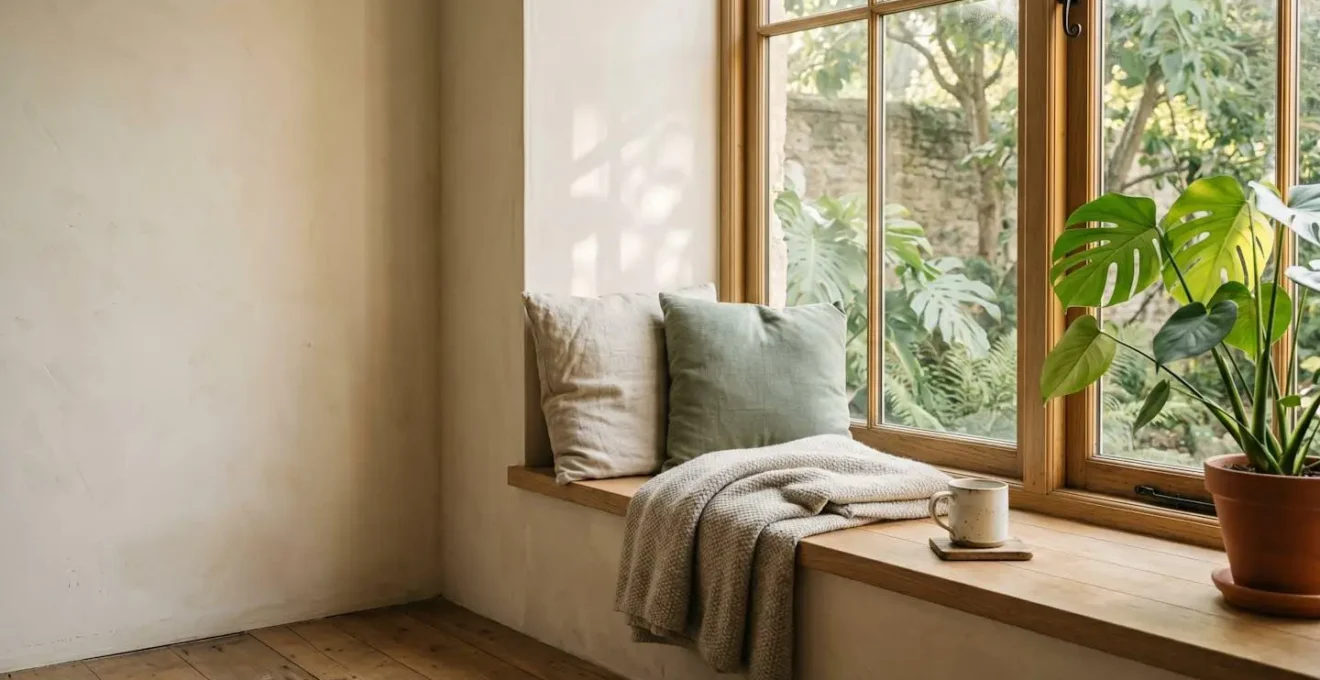
A truly restorative UK staycation has little to do with being a tourist in your town and everything to do with psychological design.
- Lasting rest comes from an intentional structure (rest-first, then explore), not a packed itinerary.
- The atmosphere and rituals you create are more impactful for mental reset than the location or expense.
Recommendation: Stop planning what to do and start designing how you’ll feel, using your home or a UK cottage as a tool for genuine renewal.
There’s a familiar, sinking feeling that often arrives a week or two after a staycation: the exhaustion creeps back in, the mental clarity evaporates, and you find yourself thinking, “I need a holiday from my holiday.” Faced with the spiralling costs and logistical headaches of international travel, more of us are opting to stay within the UK. Yet, we often sabotage our own time off. We fall back on the usual advice—”be a tourist in your own city,” “finally tackle that DIY project,” or “do a big spring clean.”
This approach is fundamentally flawed. It treats a staycation as an extension of our regular lives, filling it with checklists, chores, and the same pressure to be productive that causes burnout in the first place. We replace work stress with a different kind of performative stress, never allowing our minds to enter a state of true recovery. The result is a break that skims the surface, offering fleeting distraction but no deep, lasting restoration.
But what if the key wasn’t in finding a new place to visit, but in creating a new rhythm to inhabit? The solution lies not in a better itinerary, but in a better architecture for your time off. This is about designing your staycation as an intentional experience, using your environment and your schedule as tools to facilitate a genuine mental and sensory reset. It’s about shifting focus from what you *do* to how you *feel*.
This guide will provide a practical blueprint for this new approach. We will deconstruct why typical staycations fail, offer a framework for designing one that works, and explore how to find authentic UK experiences without falling into the usual tourist traps. It’s time to build a break that actually leaves you rested and inspired.
Summary: How to Create a Staycation That Delivers Real Rest
- Why Your Typical Staycation Leaves You Needing Another Holiday Within Two Weeks?
- How to Design a 5-7 Day Staycation That Combines Deep Rest With Gentle Exploration?
- Boutique Hotel, Cottage, or Home-Based Staycation: Which Environment Best Supports Mental Reset in the UK?
- The Dangerous Habit of Using Your Staycation to Finally “Catch Up” on Life Admin
- When Is the Optimal Time for a UK Staycation to Maximise Seasonal Benefits and Mental Health?
- Why Most “Hidden Gem” Lists on Social Media Are No Longer Hidden or Special?
- Why Atmosphere, Sequence and Intention Matter More Than Expensive Ingredients?
- How to Find and Experience UK Hidden Gems Without Contributing to Their Overcrowding?
Why Your Typical Staycation Leaves You Needing Another Holiday Within Two Weeks?
The core problem with most staycations is a failure of disconnection. We may have physically left the office, but mentally, we remain tethered to our daily lives, anxieties, and routines. This isn’t just a feeling; it’s a well-documented psychological phenomenon. Research consistently shows that the mental health benefits of a holiday, such as reduced stress and improved mood, are directly tied to our ability to achieve “psychological detachment” from work and daily pressures. When this detachment is incomplete, the benefits are fleeting. In fact, one study reveals a stark reality: for 40% of people, the positive effects of a vacation fade in just a few days.
A typical staycation is a minefield of familiar triggers. Your laptop sits in the corner, the unopened bills are on the counter, and the garden is silently judging you. These cues keep your brain in its default “to-do list” mode, preventing the deep cognitive rest required for genuine restoration. Instead of creating a boundary, you’re simply trying to relax in the middle of your life’s command centre. This is why even a week off can feel unproductive from a rest perspective; you’ve had a change of activity, not a change of mental state.
The Science of Fading Benefits
A meta-analysis of 22 studies on post-vacation recovery provided a clear verdict on why holiday benefits disappear so quickly. The research, synthesized by de Bloom et al., found that while holidays do produce significant short-term boosts in mood and reductions in exhaustion, the critical factor for lasting change is psychological detachment. Employees who failed to completely disconnect—by checking emails, thinking about work problems, or engaging in work-like tasks—reported lower energy and higher fatigue upon their return. This highlights that incomplete mental boundary-setting during a break effectively sabotages the entire purpose of restorative time off.
Ultimately, a poorly designed staycation violates the first principle of recovery. It fails to create a distinct psychological space where the nervous system can downshift. Without this deliberate separation, you are merely pausing your obligations, not recovering from them. The result is that you return to your routine without the replenished mental and emotional reserves needed to face it, leading to that all-too-common feeling that you need a holiday to recover from your holiday.
How to Design a 5-7 Day Staycation That Combines Deep Rest With Gentle Exploration?
A successful staycation is not an accident; it is an act of intentional design. The goal is to architect a week that actively counters the patterns of daily life. This means abandoning the idea of a frantic “tourist at home” itinerary and instead embracing a structure built around a restorative rhythm. The most effective model is one that prioritises deep rest first, creating a foundation of calm before layering in any form of activity.
The first step is to create clear “threshold rituals” to signal the start of the break. This is a deliberate, symbolic action that tells your brain the rules have changed. It could be packing away your work laptop, changing the scent of your home with an essential oil diffuser, creating a new ambient playlist, or even just clearing the kitchen counters of all the usual clutter. This small act of environmental control creates a powerful psychological boundary. Only once this boundary is established can the process of deep rest begin.
The structure of the week should follow a clear sequence:
- Days 1-2: Enforced Stillness. These days are dedicated to nervous system regulation. This is not the time for big plans. It’s for sleeping in without an alarm, long baths, reading for pleasure, and gentle, mindless activities. The goal is to allow your cognitive batteries to fully drain of their residual stress before you even think about recharging them with new experiences.
- Days 3-5: Gentle Exploration. Once a baseline of rest is established, you can introduce low-pressure activities. The key word here is “gentle.” This might be a visit to a local artisan’s studio you’ve always been curious about, a long walk in a nearby wood you’ve never explored, or trying a new recipe that requires slow, focused attention. The activity should be guided by curiosity, not a sense of obligation.
- Days 6-7: Reflection and Re-entry. The final phase is about preserving the benefits you’ve gained. This involves gradually re-introducing structure: waking up a little earlier, doing some light journaling about your experiences, and planning the first few priorities for your return to normal life. This managed re-entry prevents the “Sunday night dread” and ensures the feeling of calm extends beyond the staycation itself.
By front-loading rest and separating it from activity, you give your mind and body the distinct phases they need to recover. You are no longer just “not working”; you are actively participating in a structured process of restoration. This intentional sequence is what transforms a simple week at home into a deeply renewing experience.
Boutique Hotel, Cottage, or Home-Based Staycation: Which Environment Best Supports Mental Reset in the UK?
The choice of environment is a critical piece of your staycation’s psychological architecture. There is no single “best” option; the right choice depends entirely on your personal triggers and what is required to achieve genuine detachment. For many, a home-based staycation is the hardest to get right, as the environment is saturated with the cues of daily responsibility. For others, the familiarity of home is a prerequisite for comfort and deep relaxation.
A boutique hotel or a high-quality B&B offers the most forceful separation from your life. By removing you from your own space, it instantly eliminates the possibility of doing chores. The environment is designed for your comfort and requires nothing of you. This can be the most effective option for those who find it impossible to switch off at home. However, it can also introduce its own low-level pressures: fixed meal times, the presence of other guests, and a subtle feeling that you need to “make the most” of the expense.
Renting a private cottage in a quiet corner of the UK offers a powerful middle ground. It provides a change of scenery and removes you from your daily triggers, but offers the privacy and autonomy that a hotel lacks. You have control over your schedule, your food, and your social interactions. This option is ideal for creating a contained “world” for a week, allowing you to establish new routines and rituals in a fresh, neutral space. It is perhaps the most direct way to build a new temporary reality, which is the essence of a restorative break.
A home-based staycation is the most challenging but can be deeply rewarding if executed with discipline. Its success hinges on your ability to transform a familiar space into a temporary sanctuary. This requires rigorous boundary-setting: all work materials must be put completely out of sight, a moratorium must be placed on all but the most essential chores, and you must actively use “threshold rituals” to redefine the space. As experts on the link between environment and wellbeing have noted, the quality of a space is about more than just its physical attributes.
For students to flourish in their new homes, accommodation providers must consider relational wellbeing, making places that foster a sense of belonging where students feel sufficiently connected to others.
– Dr. Laura Bailey et al., Journal of Mental Health
While this quote refers to students, the principle is universal. A restorative environment, whether a hotel, cottage, or your own living room, is one that fosters a sense of belonging to your rested self, not your stressed self. It’s a space that feels safe, supportive, and disconnected from the demands of the outside world. The best choice is simply the one that makes this feeling of disconnect easiest for you to achieve.
The Dangerous Habit of Using Your Staycation to Finally “Catch Up” on Life Admin
In a culture where busyness is worn as a badge of honour, the temptation to use a week off to “get things done” is immense. The logic seems sound: clear the decks of all those nagging life-admin tasks—the tax return, the overflowing garage, the mountain of ironing—so you can enjoy “real” life with a clear slate. This is a dangerous illusion. Treating your staycation as an overspill for your to-do list is the fastest way to negate its restorative purpose entirely. It’s not a break; it’s just a different kind of work.
This habit is a direct symptom of a wider problem. Burnout is not a personal failing; it’s an epidemic. In the UK, the problem is stark, with a recent report finding that a staggering 65% of UK workers experienced burnout in Summer 2024. When you are running on empty, any unstructured time feels like an opportunity to catch up. But your brain and body don’t differentiate between professional work and the “work” of managing a household. The mental load of organising, planning, and executing tasks, whether for a work project or a home project, draws on the same finite cognitive resources.
The Non-Negotiable Need for Mental Disengagement
The work of researchers Fritz and Sonnentag provides compelling evidence against using holidays for “catch-up” activities. Their studies demonstrated that employees who achieved genuine psychological detachment during their time off reported significantly higher energy levels and lower fatigue upon return. The key finding was that complete mental disengagement from goal-oriented tasks is not optional but essential for recovery. Workers who remained mentally tethered to tasks—even non-work ones—experienced minimal restorative benefits. This perpetuates cycles of exhaustion, as the time designated for recovery is instead used for more output, albeit of a different kind.
Engaging in life admin during a staycation keeps your brain in a state of high alert and problem-solving. It reinforces the very mental state you are trying to escape. True rest requires a period of non-goal-oriented being, where your mind is allowed to wander without a purpose. It requires idleness, boredom, and spontaneity. By filling every moment with productive tasks, you deny yourself the very conditions necessary for your mind to reset, repair, and recover. You may end the week with a tidy garage, but you will also have a depleted spirit, having squandered your most precious resource: the opportunity for genuine rest.
When Is the Optimal Time for a UK Staycation to Maximise Seasonal Benefits and Mental Health?
The default timing for a British holiday is often the summer school break, a period defined by crowded destinations, peak pricing, and the frantic energy of everyone trying to have fun at once. While summer has its obvious charms, designing a truly restorative staycation involves looking beyond the conventional and considering the unique benefits of the UK’s other seasons. The optimal time for your break might not be August, but the quieter, more atmospheric “shoulder seasons.”
The period from September to early November is arguably the UK’s golden hour for a staycation. The landscapes of regions like the Peak District, the Scottish Highlands, or the New Forest are transformed into a spectacle of amber and gold. The air is crisp, the summer crowds have dispersed, and a sense of calm descends. This is the perfect time for long, contemplative walks followed by evenings by a pub fireplace. The specific quality of autumn light and the natural cycle of decay and preparation for winter can be profoundly grounding, encouraging a slower, more introspective pace that is ideal for mental reset.
Similarly, the spring window from late April to early June offers another prime opportunity. You get the benefit of lengthening days, blossoming landscapes, and the optimistic energy of nature reawakening, but without the intensity of high summer. This is a time of gentle beginnings, making it a perfect backdrop for a staycation focused on renewal and fresh perspective. Recent tourism trends suggest people are catching on to this flexibility, as recent UK tourism data shows that the average booking window is shrinking, with many breaks now planned with less notice, allowing for more spontaneous trips to capitalise on good weather in these off-peak times.
Ultimately, the best time for a UK staycation is when you need it most, but aligning your break with these seasonal shifts can dramatically amplify its benefits. Choosing a misty October week in a cosy cottage over a bustling August beach can provide a deeper, more profound sense of peace. It’s about matching the mood of the season to the needs of your soul, swapping the pressure of a “summer blockbuster” holiday for the quiet beauty of an “indie film” experience.
Why Most “Hidden Gem” Lists on Social Media Are No Longer Hidden or Special?
There’s a powerful and understandable desire among travellers to discover the “real” version of a place—the secret cove, the quiet pub, the viewpoint untouched by the masses. This yearning for authenticity is particularly strong among UK holidaymakers; in fact, the 2024 Sykes research revealed that 65% of us report getting deep satisfaction from uncovering lesser-known destinations. The paradox is that the very tools we use to find these places—social media, travel blogs, and viral “Top 10” lists—are the instruments of their destruction.
The moment a location is labelled a “hidden gem” on a platform like Instagram or TikTok, a countdown begins. The tag geotags the location, the algorithm promotes the content, and a digital pathway is forged. What was once a place discovered through serendipity or local knowledge becomes a destination on a digital checklist. The experience shifts from one of discovery to one of replication. People arrive not with a sense of open-ended curiosity, but with a specific, pre-visualised photo they want to capture, often queuing to stand in the exact same spot as the influencer they saw online.
This process, often termed “over-tourism,” doesn’t just impact the crowds; it fundamentally alters the character of a place. The quiet pub is no longer quiet. The pristine beach is littered with cars parked on the verge. The focus shifts from the intrinsic quality of the place to its value as a piece of content. The “gem” is no longer special because its discovery is no longer personal. It has been commodified, its magic diluted by its own popularity.
The pursuit of these social media-certified spots is therefore a fool’s errand for anyone seeking genuine peace and authenticity. It inserts the competitive, comparative, and performative nature of social media right into the heart of your time off—the very things you are trying to escape. To have a truly restorative staycation, you must abandon this digital treasure map and learn to navigate by a different compass, one that values personal curiosity over algorithmic recommendation.
Key takeaways
- True restoration requires “psychological detachment,” a state that a poorly planned staycation, filled with chores and familiar triggers, actively prevents.
- The most effective staycation structure is to “front-load” deep rest for the first few days before introducing any form of gentle, low-pressure exploration.
- Discovering authentic UK gems means abandoning influencer lists and adopting clever strategies, like following local artisans or asking residents specific, lifestyle-based questions.
Why Atmosphere, Sequence and Intention Matter More Than Expensive Ingredients?
In our quest for a perfect break, we often focus on the “ingredients”—the luxurious hotel, the gourmet meal, the spectacular view. We believe that by assembling a collection of high-quality components, we will automatically create a high-quality experience. This is a fundamental misunderstanding of what makes a holiday restorative. The most luxurious hotel is worthless if you spend your time there worrying about work. The finest meal is wasted if you eat it while scrolling through your phone. The real magic lies not in the ingredients, but in the recipe: the atmosphere, sequence, and intention with which you combine them.
Atmosphere is the sensory backdrop of your break. It’s the conscious curation of your environment to signal a shift from the norm. It’s about swapping the harsh blue light of your work-from-home setup for the warm, soft glow of lamps and candles in the evening. It’s about silencing the incessant pings of notifications and replacing them with a carefully chosen playlist or the sound of birdsong from an open window. This sensory reset is a powerful, non-verbal cue to your nervous system that it is safe to stand down.
Sequence and intention are the narrative threads that tie the experience together. As research continues to confirm, the structure of our time off is as crucial as the activities within it. It’s the difference between a chaotic jumble of activities and a story that unfolds logically. Intention is the “why” behind your actions. You are not just “going for a walk”; you are going for a walk with the intention of noticing five things you’ve never seen before. You are not just “making a cup of tea”; you are performing a small ritual with the intention of being fully present for those five minutes. This infusion of purpose into simple acts transforms them from mundane routines into moments of mindful presence.
The Architecture of Well-Being
A 2024 study on psychological well-being and holidays confirmed this very principle. Investigating 200 participants, the research explored how indicators like stress and burnout are affected by vacation structure. The conclusion was clear: the sequence and design of time away from daily stressors are as important as the destination or duration in determining restorative outcomes. The study reinforces the idea that how we structure our rest is a critical component of its effectiveness, validating the theory that a well-designed staycation can be more beneficial than a poorly planned trip abroad.
This is ultimately liberating news. It means a truly magnificent break is not dependent on a large budget or exotic location. It is an act of creativity, available to anyone. By focusing on crafting the right atmosphere and being intentional about the sequence of your days, you can create a profoundly restorative experience in a simple cottage, or even within the four walls of your own home.
How to Find and Experience UK Hidden Gems Without Contributing to Their Overcrowding?
So, if the digital breadcrumb trails of social media lead only to crowded, commodified facsimiles of discovery, how do we find the real thing? How do we uncover the quiet corners and authentic experiences of the UK in a way that is both personally rewarding and responsible to the places we visit? The answer lies in adopting a different set of search tools—ones that are more analogue, more curious, and more human.
The first step is to trade the screen for a map. An Ordnance Survey map of your chosen area is the single greatest tool for finding hidden gems. Look for the little green dashed lines that indicate footpaths and bridleways. Trace them away from the main tourist car parks and well-known landmarks. By applying what could be called the “Perpendicular Exploration Method”—walking one or two kilometres at a right angle away from a tourist hotspot—you can often access the same stunning landscapes with a fraction of the crowds.
Next, you must change the question you ask. Asking a local for a “hidden gem” will almost certainly elicit a generic, tourist-friendly answer. Instead, ask a specific, lifestyle-based question that reveals how they actually live in the area. Questions like: “Where do you go for a walk when you need some quiet?” or “Which is the best pub for a pint after a muddy dog walk?” or “Is there a local bakery that does great sourdough on a Saturday morning?” These questions bypass the “visitor” script and tap into the real, lived experience of a place.
Finally, follow the people, not the posts. Instead of looking for influencers, look for artisans. Research the local craftspeople in a region—the potters, weavers, cheesemakers, or blacksmiths. Find them through regional craft guild websites or by visiting farmers’ markets. The landscapes and communities that support these skilled individuals are almost always authentic, un-hyped, and rich with local character. A visit to a potter’s studio in a small, forgotten village will tell you more about the soul of a region than a thousand pictures of a famous cove.
Your Action Plan: Finding Authentic UK Locations
- Perpendicular Exploration: Use Ordnance Survey maps to identify footpaths or hamlets 1-2km perpendicular to known tourist hotspots, accessing the same beauty with fewer people.
- Follow the Artisan, Not the Influencer: Research local UK craftspeople (potters, weavers, cheesemakers) via craft guilds or farmers’ markets, then explore the villages that inform their work.
- Master the Specific Question: Instead of asking for ‘hidden gems’, ask locals targeted questions like ‘Where do you walk your dog when you need quiet?’ to uncover genuinely local spaces.
- Travel in Shoulder Seasons: Visit popular regions during April-May or September-October, when landscapes are beautiful but visitor numbers are significantly lower, allowing for authentic connection.
- Use Negative Filters: When researching, actively exclude any location tagged with ‘Instagram-worthy’ or ‘viral’, and instead seek out National Trust or Natural England sites with low social media presence but high conservation ratings.
This approach requires more effort than a simple Google search, but the rewards are infinitely greater. It shifts the focus from consumption to connection, from performance to presence. It is how you find places that aren’t just hidden, but are waiting to be discovered by you.